Appetite Suppressants vs. Fat Burners. Most people don’t fail because they’re lazy. They fail because they’re solving the wrong problem. This guide breaks down what appetite suppressants and fat burners actually do inside the body—and how to choose the right one without guesswork.
Jump to:
- Why this comparison matters more than calories or workouts
- What appetite suppressants actually do
- What fat burners really do
- Side-by-side comparison
- Which one is right for you? (Decision matrix)
- Can you use both together? (Stacking logic)
- Common myths that keep people fat
- Products / Tools / Resources
- FAQs
Fast filter
If cravings and “food noise” are your main enemy, you’re usually dealing with decision fatigue. If you already eat clean but feel stuck, you may be dealing with metabolic resistance. Appetite suppressants tend to target the first. Fat burners target the second.
Table of Contents
Why This Comparison Matters More Than Calories or Workouts
The Real Bottleneck in Fat Loss (Decision Fatigue vs. Metabolic Resistance)
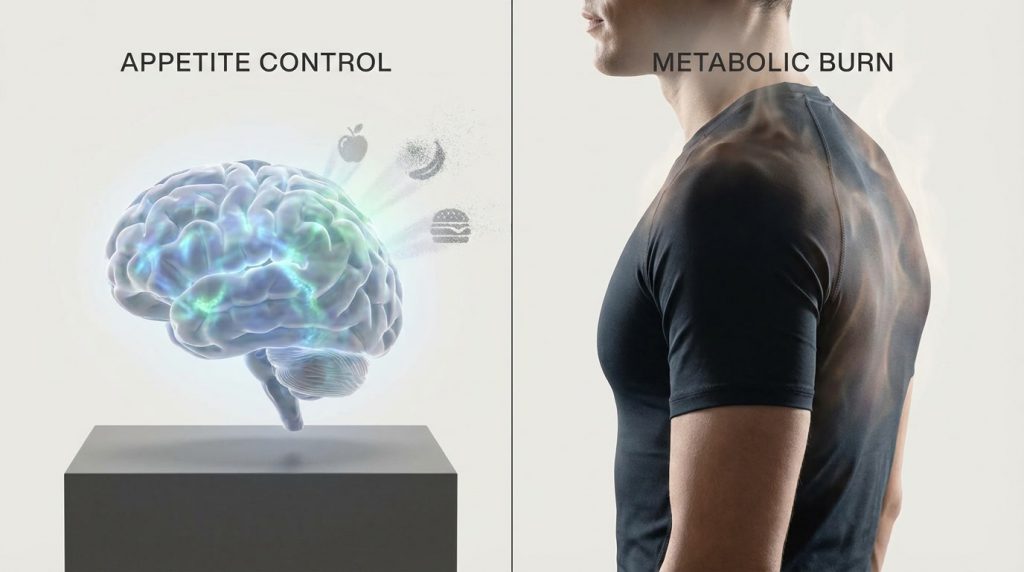
When people say, “My body won’t lose fat,” they’re usually describing one of two realities: decision fatigue (hunger, cravings, binge-restrict cycles) or metabolic resistance (plateaus, low output, sluggish fat oxidation).
Here’s the key: these are different problems—and they require different tools. Appetite suppressants can reduce the mental and physiological friction of eating less. Fat burners aim to increase energy expenditure or fat utilization pathways.
Why “Weight Loss Supplements” Is a Misleading Umbrella Term
“Weight loss supplements” is a marketing bucket, not a clinical category. It lumps together products that work via completely different mechanisms—like ghrelin/leptin signaling (appetite) versus thermogenesis (metabolism). If you pick based on hype, you can end up amplifying the wrong bottleneck.
What Appetite Suppressants Actually Do (Mechanism, Not Marketing)
Hormonal Pathways (Ghrelin, Leptin, Serotonin)
Appetite isn’t a character flaw. It’s a signal system. Many appetite suppressants work by supporting: ghrelin (hunger signaling), leptin sensitivity (satiety recognition), and neurotransmitters like serotonin that influence cravings and impulse loops.
CNS Signaling vs. Stomach-Volume Tricks
You’ll typically see two categories: central nervous system (CNS) signaling support (hunger perception) and mechanical satiety agents (bulk/volume that increases fullness). Clinically, the most useful outcome is often quieter “food noise”—not just feeling full for an hour.
Who Appetite Suppressants Are Designed For
- Cravings that feel louder than logic
- Binge-restrict cycles or “I’m good all day then lose control at night” patterns
- Emotional eating during stress, fatigue, or boredom
- Diet adherence collapsing from mental exhaustion (decision fatigue)
What Fat Burners Really Do Inside the Body

Thermogenesis, Lipolysis, and Metabolic Rate Explained Simply
Fat burners typically aim to increase thermogenesis (heat production), support lipolysis (releasing stored fat), or slightly raise metabolic rate. But here’s the catch: these mechanisms don’t automatically override hunger or overeating.
Stimulant-Based vs. Stimulant-Free Fat Burners
Some formulas lean on stimulants (like caffeine-based blends) to increase energy and thermogenesis. Others are stimulant-free, designed for people who are sensitive to jitters, crashes, or sleep disruption.
Why Fat Burners Fail When Hunger Isn’t Controlled
If appetite is still loud, boosting “burn” can backfire. You push harder, feel hungrier, sleep worse, and end up compensating. In practice, fat burners often amplify discipline—but they rarely create it.
Appetite Suppressants vs. Fat Burners — Side-by-Side Comparison
| Category | Appetite Suppressants | Fat Burners |
|---|---|---|
| Primary goal | Reduce hunger/cravings and improve adherence | Support thermogenesis, lipolysis, and energy expenditure |
| Best for | Decision fatigue, cravings, binge cycles, emotional eating | Plateaus with stable intake; “metabolically stuck” feeling |
| Speed vs sustainability | Often steadier adherence → more consistent results | Can feel fast early; may stall if appetite remains high |
| Risk profile | Can reduce nutrient intake if meals get too small | Stimulants can affect sleep/tolerance; crashes possible |
Speed of Results vs. Sustainability
The “fast” option isn’t always the effective option. Sustainable fat loss is usually an adherence game—week after week. Appetite suppressants often win there, because they lower friction.
Appetite Control vs. Energy Expenditure
One tool reduces input. The other pushes output. If you push output while input stays chaotic, the system breaks.
Risk Profile and Tolerance Buildup
Tolerance is real—especially with stimulant-heavy approaches. Appetite tools can also be misused if they lead to under-eating and poor nutrition. The “best” option is the one you can use responsibly and consistently.
Which One Is Right for You? (Decision Matrix)

If You Struggle With Cravings, Binge Cycles, Emotional Eating
Start with appetite support. If cravings dominate your day, trying to “burn more” often just increases hunger and frustration. You don’t need more intensity—you need quieter signals.
If You Already Eat Clean but Feel “Metabolically Stuck”
If intake is stable and you’re still plateaued, metabolic support may help. But it works best when appetite is already calm and sleep is protected.
If You’re Over 35 / Insulin-Resistant / Dieting Repeatedly
Repeated dieting can increase friction through hormones, stress, and adherence fatigue. Many people do best prioritizing appetite regulation first, then layering metabolic support only if needed.
Can You Use Both Together? (Stacking Logic)
When Stacking Works
- Appetite is already stable (no constant cravings)
- Sleep is solid and stress is managed
- You’ve hit a plateau after consistent adherence
When Stacking Backfires
- Stimulants reduce sleep quality (sleep loss increases hunger)
- Stress rises and cravings spike
- You start relying on products instead of patterns
Safe Sequencing vs. Reckless Combinations
A practical sequence many people tolerate well: Phase 1: appetite regulation → Phase 2: habit stabilization → Phase 3: metabolic optimization (optional). Skipping straight to “stack everything” is usually where people get jittery, hungry, and inconsistent.
Common Myths That Keep People Fat
“More Metabolism = More Fat Loss” Fallacy
Metabolism support can help, but it rarely beats the fundamentals: consistent intake, enough protein, sleep, and a plan you can repeat without white-knuckling.
Why Suppressing Appetite Isn’t “Cheating”
Nobody calls glasses “cheating.” Appetite regulation is the same concept: a tool that reduces friction so the plan is easier to follow. The real win is making the process livable.
Products / Tools / Resources
Below are popular, commonly searched options people use when comparing appetite suppressants vs. fat burners. Always check the label, your stimulant tolerance, and any personal contraindications.
Appetite Support (Satiety & “Food Noise”)
- Glucomannan (konjac fiber) — a common “stomach-volume” satiety option
View on Amazon - Protein powder — supports satiety and helps hit protein targets
Compare options - Electrolytes — hydration support during calorie deficits (often overlooked)
See bestsellers
Tip: if appetite is the bottleneck, prioritize tools that make adherence feel easier—not louder.
Fat Burner Support (Thermogenesis & Metabolic Help)
- Green tea extract — commonly used for metabolic support
Browse on Amazon - L-carnitine — popular for training-focused routines (varies by individual)
Compare brands - Stimulant-free fat burners — for people sensitive to caffeine/jitters
See stimulant-free options - Caffeine (if you tolerate it) — common thermogenic ingredient (sleep matters)
View caffeine options
Tip: if sleep gets worse, hunger usually gets louder. Protect sleep before you “boost burn.”
Optional add-on resource: A simple kitchen scale improves adherence more than most supplements. Shop kitchen scales
FAQs (Real Questions People Ask Themselves)
Why do I keep choosing the wrong weight loss supplement?
Because most people choose based on promises (“melt fat fast”) instead of bottlenecks. If hunger and cravings are the main issue, appetite support usually beats metabolic hacks. If appetite is stable and you’re plateaued, metabolic support may help.
Do fat burners work if I’m still hungry all the time?
They can be undermined by compensatory eating. If appetite is loud, boosting “burn” often just increases hunger and stress, which makes adherence harder.
Can I stack an appetite suppressant with a fat burner?
Sometimes. The safest approach is usually sequencing: stabilize appetite and habits first, then consider metabolic support if progress slows. If stacking harms sleep or spikes cravings, it’s a net loss.
Amazon Affiliate Disclaimer: As an Amazon Associate, I earn from qualifying purchases.