
Performance Nutrition • Appetite Control • No Crash
Table of Contents
Best Appetite Suppressants for Busy Professionals (No Energy Crash): What High Performers Use to Stay Sharp, Focused, and Lean
Table of Contents
A professional-grade guide to appetite control that protects cognition, stabilizes energy, and fits real workdays—meetings, coffee, fasting, deadlines.
Busy professionals don’t lose momentum because they’re “undisciplined.” They lose it because hunger spikes at the wrong time—and energy crashes at the worst possible time. If appetite control is part of your performance system, the goal isn’t intensity. It’s stability: steady energy, calm focus, and predictable satiety.
This article covers the best appetite suppressants for busy professionals who want results without the “wired-then-wrecked” cycle. You’ll learn how appetite suppressants work, what high performers prioritize, and how to use them without sacrificing cognition.
Related (internal links): Appetite suppressants vs fat burners • Best stimulant-free appetite suppressants • Supplements for intermittent fasting
Why Busy Professionals Can’t Afford Energy-Crashing Appetite Suppressants
The cortisol–crash cycle and decision fatigue
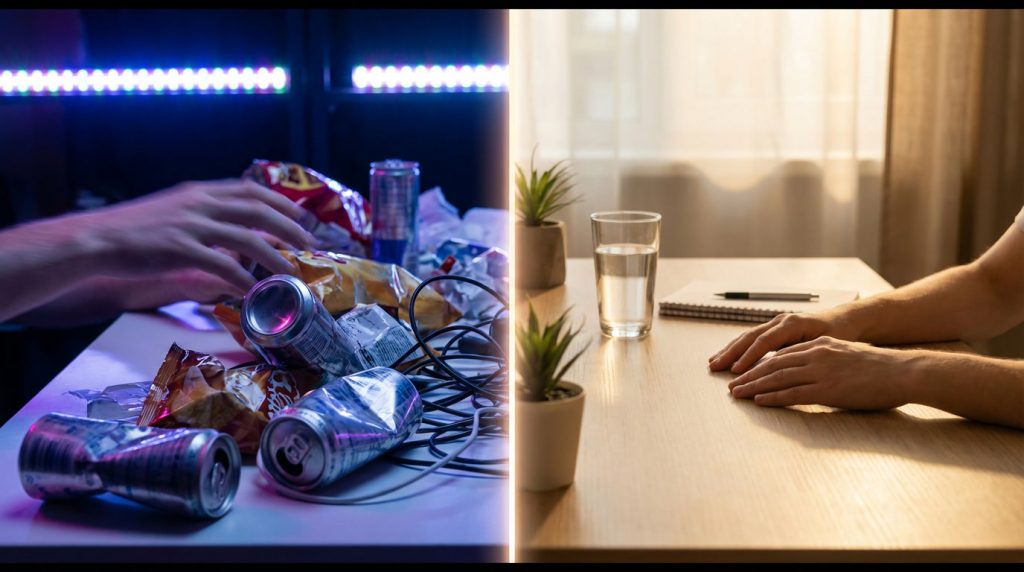
Many suppressants reduce appetite by pushing the body into “upshift mode.” Hunger fades fast—but so does calm. Elevated stress signaling can lead to a later crash, and crashes amplify decision fatigue: slower thinking, weaker impulse control, and the “I’ll just grab anything” moment.
Why “stronger” suppressants backfire cognitively
Strong doesn’t mean sustainable. The harshest options often trade short-term appetite silence for downstream costs—irritability, mental fog, and reduced working memory. High performers don’t need appetite control that steals their edge.
The productivity cost of blood-sugar volatility
Appetite suppression that causes under-fueling can destabilize blood sugar, which destabilizes attention. Professionals win with steady glucose, steady mood, steady output—not peaks and collapses.
How Appetite Suppressants Actually Work (In Plain English)
Ghrelin vs leptin vs insulin (entity mapping)
Appetite isn’t one signal—it’s a system. Ghrelin nudges hunger up. Leptin signals fullness. Insulin shapes energy stability. Better suppressants don’t “fight” your body—they support predictable signaling so hunger doesn’t hijack your schedule.
Central nervous system vs peripheral appetite control
Some suppressants act primarily through the brain (CNS)—fast, noticeable, and often more crash-prone. Others work through digestion, fullness, and glucose management—slower, quieter, and generally more compatible with long workdays.
Why stimulant-free ≠ ineffective
Stimulant-free options can still be powerful when the mechanism is right: fullness support, slower gastric emptying, and steadier blood sugar. For professionals, “effective” means repeatable.
The Non-Negotiable Criteria for Professionals (No Crash Framework)

Sustained satiety without dopamine depletion
Appetite control should feel calm—not chemically forced. If motivation drops, mood flattens, or you feel “off,” that’s not a win. The best appetite suppressants for busy professionals help hunger fade while your drive stays intact.
Focus preservation during long work blocks
The perfect product is the one you forget you took—because it doesn’t pull attention. You stay in flow, meetings feel lighter, and you stop negotiating with hunger.
Compatibility with coffee, fasting, and desk work
Most professionals run a caffeine routine, a time-restricted eating window, or both. Great suppressants play well with coffee and don’t punish your gut during long seated hours.
Best Appetite Suppressants for Busy Professionals (Ranked)

Best stimulant-free option for long meetings
Soluble fiber blends + glucomannan — steady fullness, minimal cognitive impact, very “workday-friendly.” Check glucomannan options on Amazon →
Pro tip: Take with a full glass of water 20–30 minutes before a meal for best fullness.
Best for intermittent fasting professionals
Amino-acid appetite support blends — helpful for morning focus when fasting hunger is loud. Browse amino acid appetite support on Amazon →
Look for blends positioned for “focus + appetite” rather than high-stim fat-loss.
Best for high-stress, deadline-driven roles
Adaptogen-supported formulas — stress and appetite are linked; adaptogens can reduce stress-driven cravings. See stress-support adaptogens on Amazon →
Best fit: high-pressure weeks where stress snacking is the real enemy.
Best natural option with clinical backing
Low-caffeine green tea extract + fiber — conservative, predictable, and easier to tolerate than heavy stimulants. Find low-caffeine green tea extract on Amazon →
Pairing a gentle extract with fullness support often feels smoother for professionals.
Next read: How to stop cravings at work • Supplements for focus and energy
How to Use Appetite Suppressants Without Tanking Energy
Timing relative to caffeine and meals
If you rely on coffee, avoid stacking multiple stimulants. Non-stimulant fullness support generally pairs better with caffeine routines. Many professionals do well taking a fiber-based option 20–30 minutes pre-meal.
Stack vs standalone usage
Start with one tool. Run it long enough to understand your response. Stacking too soon creates noise—then you can’t tell what’s helping and what’s hurting.
Common misuse mistakes professionals make
- Overdosing “for results” and triggering jitters or crashes
- Skipping protein and then wondering why cravings spike later
- Treating suppressants like a meal replacement instead of a support tool
- Ignoring hydration (especially with fiber-based products)
FAQs Busy Professionals Ask (Featured Snippet Capture)
Will appetite suppressants hurt my focus?
They can—if the product is stimulant-heavy or you’re stacking with caffeine. Professionals often do better with stimulant-free fullness support or stress-linked appetite tools that don’t spike and crash.
Can I take them with coffee?
Usually yes—especially non-stimulant options. The main risk is doubling stimulants and creating a productivity-killing crash later in the day.
Are stimulant-free suppressants strong enough?
For most professionals, “strong enough” means consistent and predictable. Appetite control that’s calmer but repeatable tends to outperform extreme suppression that rebounds.
Products / Tools / Resources
If you want to build a no-crash appetite system that fits a real workday, these are the categories to start with:
- Glucomannan / Soluble Fiber Capsules (fullness support for long meetings) — shop on Amazon
- Amino Acid Appetite Support (fasting-friendly focus support) — browse options
- Ashwagandha / Rhodiola Stress Support (stress-linked appetite control) — see bestsellers
- Low-Caffeine Green Tea Extract (gentle, conservative appetite support) — view products
Amazon Affiliate Disclosure: As an Amazon Associate, I earn from qualifying purchases.