Green Tea Extract for Fat Loss: What 59 Studies Show
If you searched “green tea extract for fat loss,” you want a straight answer, not a sales pitch. So here it is up front. There’s a bottle on a shelf right now with a big number on it. “1,000 mg EGCG.” The promise is simple. Take it, burn more fat.
The most skeptical person reading this already rolled their eyes. They’ve heard it before. Raspberry ketones. Garcinia. Green coffee bean. A parade of “fat burners” that turned out to be nothing.
So they’ve landed on a conclusion. Green tea extract is more of the same hype. Useless. A scam.
Here’s the thing. That skeptic is mostly right. But they got there through a shortcut, and the shortcut hides something worth knowing. Let’s not take shortcuts. Let’s build from the ground up.
Table of Contents
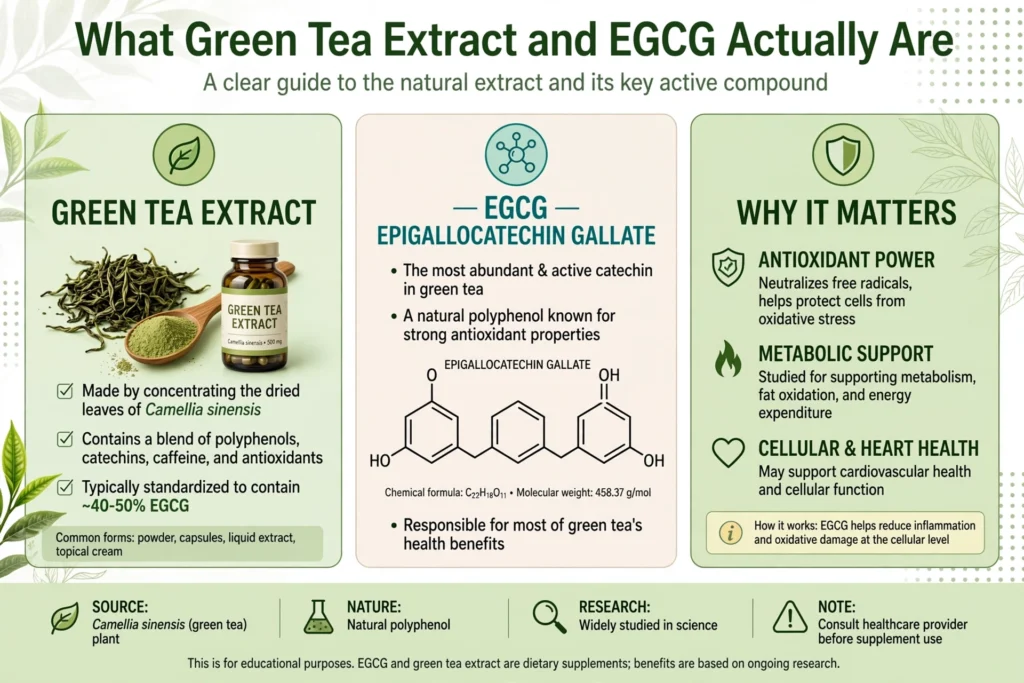
What Green Tea Extract and EGCG Actually Are
Green tea is a drink made from leaves. People have drunk it for a very long time. This is not controversial.
Inside those leaves are compounds called catechins. The most studied one is EGCG. That’s just a fact of plant chemistry.
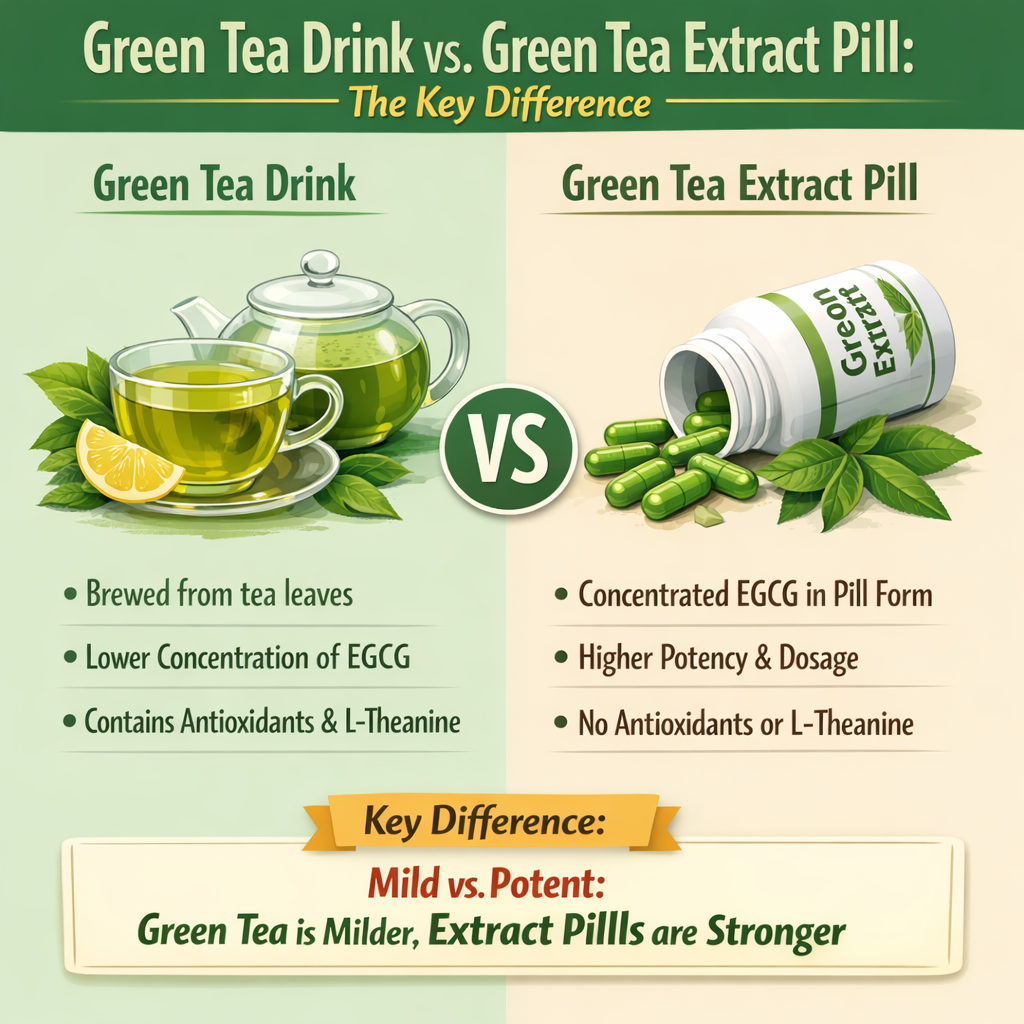
Green tea extract is different from the drink. It’s the catechins pulled out and packed into a capsule. One capsule can hold what many cups of tea would.
So far, no opinions. Just what things are.
Does Green Tea Extract Help Burn Fat?
Does EGCG do anything in the human body? Here the answer is yes, and even the skeptic has to nod.
Green tea extract does have a real fat-burning mechanism, but the effect in people is small. Pooled data from dozens of randomized trials shows average weight loss of around one kilogram or less, and results vary widely from study to study. It is a minor tool, not a fat-loss solution.
In lab studies, EGCG can nudge the body to burn a bit more fat. It seems to slow how fast the body breaks down norepinephrine, a signal that tells cells to burn energy. The NIH’s review of green tea catechins lays out this mechanism in detail.
That’s a real mechanism. It’s not magic. But it exists.
The mistake people make is jumping from “real mechanism” to “works as a pill.” Those are two different claims. A thing can be real and still be too small to matter.
So we can’t stop here. We have to look at what happens in actual people.
What Green Tea Extract Weight Loss Studies Really Found
This is where the honest picture gets built. Researchers have run this test many times, then pooled the results.
One large review in the British Journal of Nutrition gathered 59 studies. Others gathered nine, or a dozen. When you line them all up, a pattern shows.
Here’s the pattern, plainly:
- The average weight loss is tiny. Often around one kilogram, sometimes less.
- The results jump around a lot from study to study.
- Some studies show a small effect. Some show basically nothing.
One respected review found green tea extract had no clear effect on the weight of overweight adults at all. It found only a small change in fat percentage.
Why Green Tea Extract Results Are So Inconsistent
Scientists have an ugly word for the jumpiness in these results. Heterogeneity. It means the studies disagree with each other, badly.
One recent meta-analysis measured this disagreement. On a scale where anything above 75% counts as very high, it hit 92%.
Think about what that means. If the effect were strong and steady, the studies would mostly agree. They don’t. That much disagreement is a warning sign.
The reviewers who found a “significant” result said so themselves. They called it statistically real but likely not clinically meaningful. In plain words: the math says something moved. It just didn’t move enough to change your life.
Is Green Tea Extract for Fat Loss a Scam?
Remember the skeptic from the start. They said “useless scam.” Let’s check that against the facts we’ve built.
Is it a scam? Not exactly. There is a real mechanism, and there is a real, measurable effect in some studies.
Is it a fat-loss solution? Also no. A kilogram of jumpy, inconsistent effect is not a solution. It’s a footnote.
The skeptic was right about the outcome. But they were right by accident. They called it fake. The truer story is that it’s real and just very small.
That distinction matters for the next part.
The Green Tea Extract Liver Risk Nobody Prints on the Label
Here’s where the concrete facts turn from “meh” to “pay attention.”
If a tiny bit of EGCG gives a tiny effect, a reasonable person might think: take more, get more. Load up on the 1,000 mg capsules.
This is exactly where the danger lives.
High doses of concentrated green tea extract have been linked to liver injury. This isn’t a fringe claim. Major health authorities have said it out loud.
- The European Food Safety Authority (EFSA), the EU’s official food-safety body, linked doses of 800 mg of EGCG per day or more to liver damage.
- In one long study cited in the U.S. Pharmacopeia’s 10-year review, the extract group had seven times the rate of liver enzyme abnormalities compared to placebo.
- Case reports describe real people getting acute liver injury, and rarely, liver failure. The NIH’s LiverTox database documents these cases, including instances that led to liver transplant or death.
Green Tea Drink vs. Green Tea Extract Pill: The Key Difference
This is the cleanest fact in the whole story, and it settles a lot.
Brewed green tea, two to four cups a day, is broadly safe. The catechins come in small, natural amounts, spread out.
The concentrated extract is a different animal. It dumps a big slug of EGCG at once. People often take it on an empty stomach, which makes absorption spike.
Regulators drew this exact line. Traditional tea, safe. Concentrated supplement at high dose, risky. The EU even capped how much EGCG a product can contain and forced a warning label onto it.
One safety review couldn’t name a dose that’s safe for everyone. Why? Because at least one person developed liver damage at a low dose.
Green Tea Extract for Fat Loss: The Verdict
Let’s stack what we’ve built. Every brick is something a fair person must accept.
- EGCG has a real fat-burning mechanism. True.
- In real people, the effect is small and wildly inconsistent. True.
- The pooled data shows around a kilogram at best, with huge disagreement. True.
- Pushing the dose higher to chase more effect raises liver risk. True.
- The safe, effective sweet spot for fat loss basically doesn’t exist. This is where the bricks land.
You can’t get a meaningful fat-loss effect at a low dose. And the high dose that might do slightly more is the same dose tied to liver harm. The window closes on itself.
So here’s where the facts land. Not “it works.” Not “it’s a total scam.” Green tea extract is a weak tool for fat loss with a real safety ceiling. As a shortcut, it fails on both ends.
What to Do Instead of Green Tea Extract
Green tea extract for fat loss isn’t the villain the skeptic imagined. It’s something quieter and more disappointing. It’s a compound that does a little, at doses too small to matter, and turns risky at the doses where it might do more. That’s not a fat burner. That’s a footnote with a liability.
So drink the tea if you like it. Two or three cups a day are pleasant, safe, and give you EGCG the way the leaf packaged it. But put your real effort where the evidence is strong: a calorie deficit you can live with, more protein, resistance training, and sleep.
And skip the high-dose capsule. Next time a bottle waves a big milligram number at you, strip it to the facts and follow them. Do that today, before the next shiny “fat burner” lands on the shelf.