How to Read a Supplement Label in 60 Seconds
If you’re searching for how to read a supplement label, you probably already suspect the bottle in your hand is lying to you. Good. Hold onto that instinct. Here’s the twist: learning how to read a supplement label isn’t about believing the marketing on the front. It’s about catching it in the act on the back. Most people flip the bottle over, see a wall of tiny type, and give up — which is exactly what the label is designed to make you do.
Stop giving up. In the next few minutes, I’ll walk you through the same 60-second scan a skeptic uses to spot a junk supplement before it ever reaches checkout. No chemistry degree required. I’ve run this exact check on dozens of bottles in my own cabinet, and it has never once failed to reveal something the front label was hiding. If you want to see this checklist applied in practice, browse our reviewed diet pills to compare how different brands actually stack up label-to-label.
Table of Contents
Prefer to watch it broken down step by step? Here’s a quick visual walkthrough before you keep reading:
Does the FDA Approve Supplements Before They’re Sold?
Let’s kill the biggest myth first. A lot of people assume the government tests supplements before they’re sold. It doesn’t. In the U.S., supplements fall under a 1994 law called DSHEA. Under that law, the FDA does not approve dietary supplement labels for safety or effectiveness before they hit shelves. Read that again. The company decides its own product is safe. The FDA usually only steps in after something goes wrong.
This isn’t a hypothetical risk. In 2015, the New York Attorney General’s office tested store-brand supplements sold at four major national retailers and found that many bottles didn’t contain the ingredients listed on the label at all — some contained none of the herb advertised, just fillers like rice and houseplant powder. That case is a big reason third-party testing seals now matter as much as they do. The FDA has published its own guidance on dietary supplement regulation that confirms manufacturers are responsible for safety before marketing.
So who’s protecting you? Right now, it’s you. Your only real-time defense is the label itself. That’s not a reason to panic. It’s a reason to read. The label is a legal document, and companies can get in trouble for lying on it. That makes it the most honest thing on the whole package. The bright, shouty claims on the front? Those are marketing. The boring panel on the back is where the truth hides. So we start there.
How to Read the Supplement Facts Panel
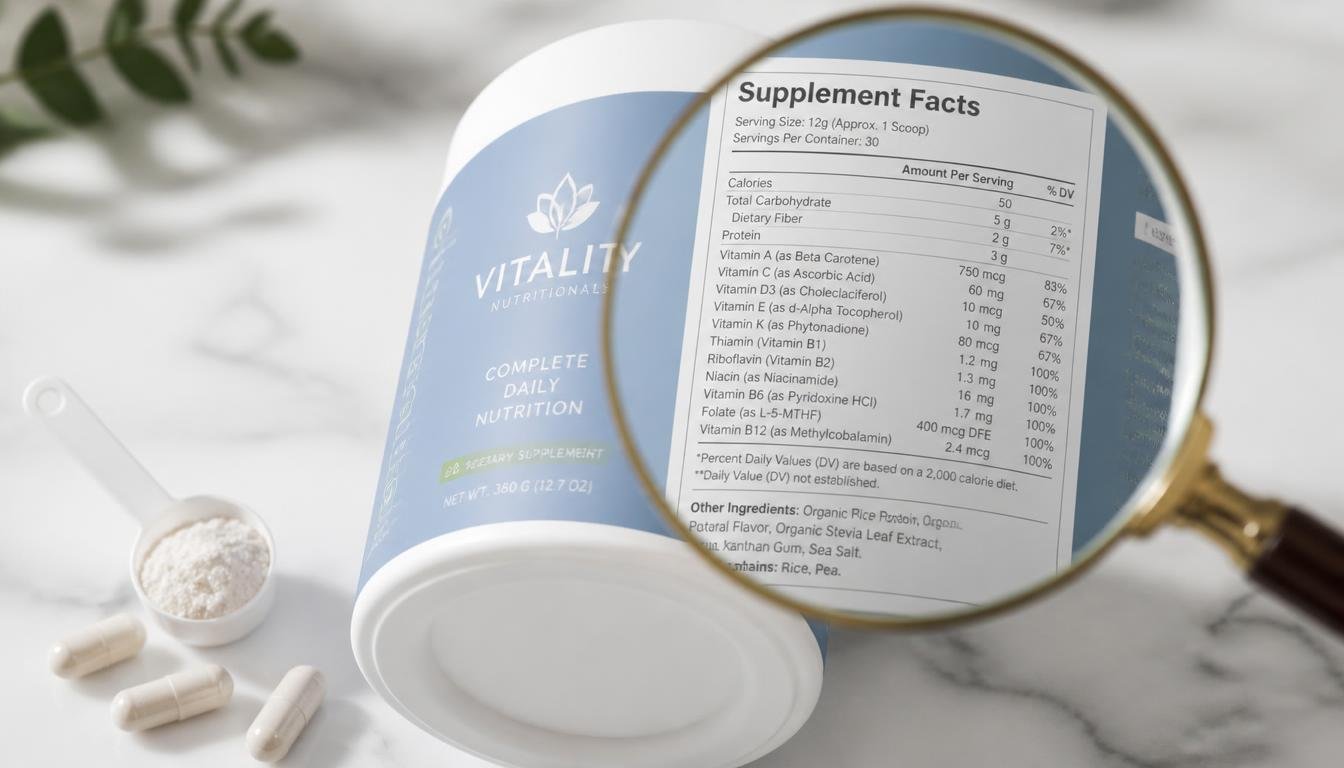
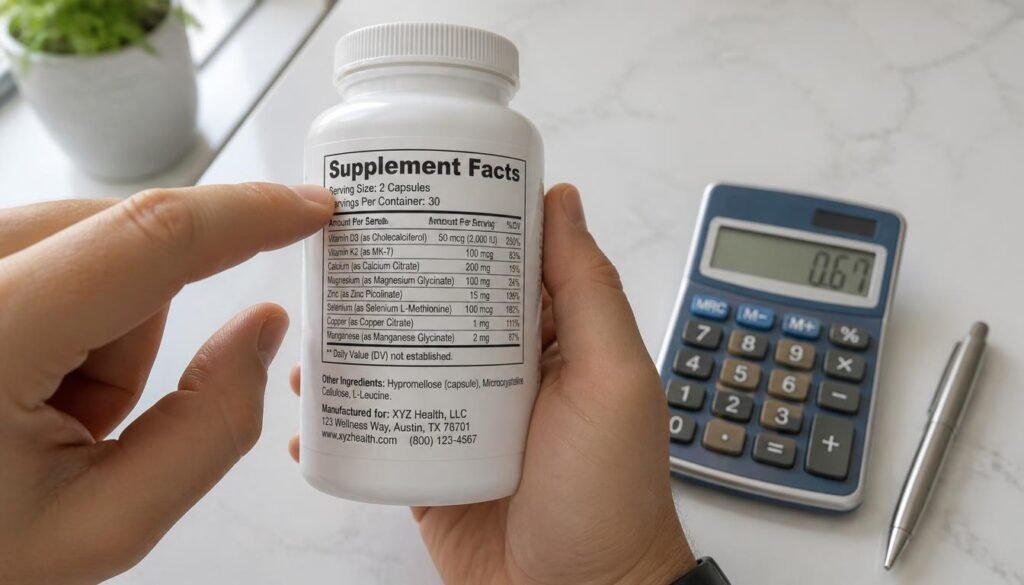
Flip the bottle. Find the box labeled Supplement Facts. This is ground zero. The first two lines are the ones people skip and shouldn’t:
- Serving Size — how much you take at once
- Servings Per Container — how many doses are actually in the bottle
Here’s the trick they hope you miss. A label might promise “1,000 mg of magnesium.” Sounds strong. But check the serving size. Sometimes that 1,000 mg means four capsules, not one. So a “90-capsule bottle” is really a 22-day supply. The big number was real. The value was a mirage.
Always do this quick math: price ÷ number of servings = cost per dose. Not price per capsule. Per serving. That one habit reprices half the shelf. It’s the same math we use when we rank and compare weight loss supplements — cost per effective dose almost always tells a different story than the sticker price.
How to Read “Amount Per Serving” on a Supplement Label
Under those first lines, you’ll see each ingredient and how much you get per serving. This is where you compare what’s in the bottle to what you actually need. A vitamin D product with 400 IU is very different from one with 2,000 IU. Same name on the front. Wildly different product inside.
Don’t be dazzled by a long ingredient list either. A label packed with 30 fancy-sounding plant ingredients is a warning sign, not a bonus. It usually means each one is added in a tiny, useless amount. More names on the label doesn’t mean more value. It often means less of everything that actually matters.
What Does % Daily Value Mean on a Supplement Label?
Next to many ingredients, you’ll see a % Daily Value (%DV). This compares the dose to a standard daily reference amount set by the FDA. Think of it as a quick reality check:
- Under 10% DV — a small amount, often just for show
- Around 100% DV — a full standard daily dose
- Way over 100% DV — a mega-dose (sometimes helpful, sometimes pointless, sometimes risky)
Some ingredients have a † symbol and no %DV. That symbol means no official daily value has been set for that ingredient. It’s not a red flag by itself. It just means you can’t lean on the percentage — you have to know the ingredient. The panel isn’t there to impress you. It’s there to be compared. So compare it.
What Is a Proprietary Blend on a Supplement Label — and Why Should You Be Suspicious?
Now the big one. This is the trick that separates people who read labels from people who just look at them. Watch for the words “Proprietary Blend.”
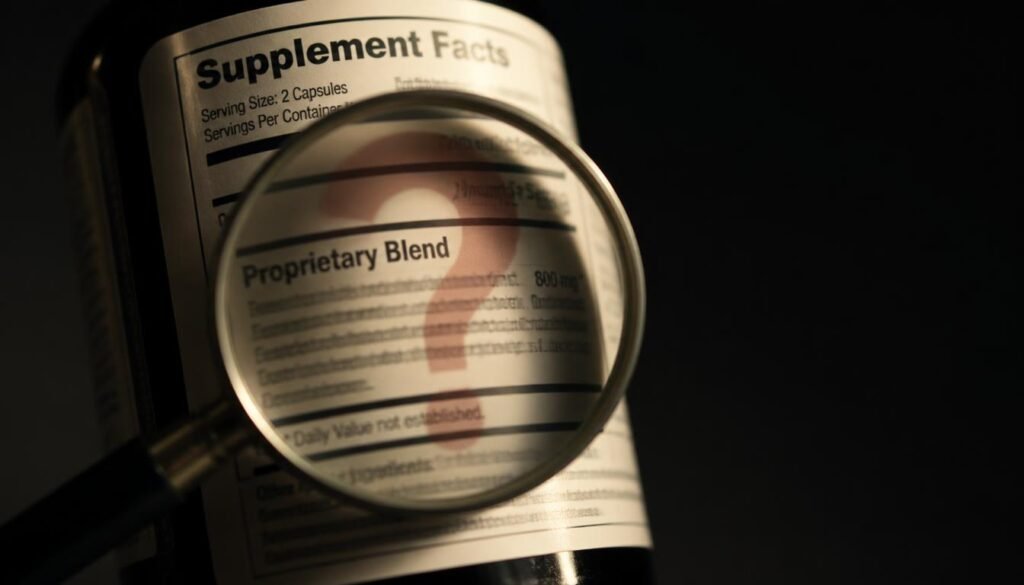
A proprietary blend is a group of ingredients listed under one combined weight instead of individual amounts — for example, “Energy Blend — 500 mg.” It doesn’t tell you how much of each ingredient is actually inside that 500 mg. Why would a company hide that? Usually, the cheap filler ingredient makes up most of the blend. The good stuff is just a sprinkle on top.
Here’s your one clue. Ingredients in a blend are listed heaviest first. So the first name in the list is the biggest share. If a fancy ingredient is listed last, you’re getting a pinch of it.
A proprietary blend isn’t always a scam. But it’s always a company choosing to tell you less. And you should ask why. When two products cost the same, and one lists exact amounts while the other hides them in a blend, pick transparency every time. This is exactly the kind of red flag we flag first in our in-depth supplement reviews.
How to Read “Other Ingredients” on a Supplement Label
Below the Supplement Facts box, there’s a line called Other Ingredients. Most people never read it. That’s a mistake. This is where the fillers, binders, and coatings live — the stuff that holds the pill together or helps machines make it fast.
You’ll often see harmless stuff like rice flour or cellulose. Fine. But this line also flags things you might want to avoid:
- Artificial colors and dyes
- Added sugars or sweeteners
- Allergens like soy, gluten, dairy, or shellfish
- Fillers like magnesium stearate (harmless for most, but some people avoid it)
If you have allergies or dietary rules, this line matters more than the front of the bottle. Read it before you buy, not after.
Which Supplement Certifications Actually Mean Something?
The front of the package is a graveyard of meaningless badges. “Premium.” “Doctor formulated.” “Clinically inspired.” These words have no legal weight. Anyone can print them.
But a few seals are earned through outside testing, and these are the ones a skeptic trusts:
- USP Verified — an independent group confirms what’s on the label is in the bottle
- NSF Certified — tested for contents and contaminants
- NSF Certified for Sport — extra screening for banned substances (big for athletes)
- ConsumerLab or Informed Sport — other respected third-party checks
Why does this matter? Studies keep finding supplements with more, less, or entirely different ingredients than what’s listed on the label. A third-party seal means an outside group with nothing to gain from the sale opened the bottle and checked it themselves. That’s the difference between a promise and proof. Organizations like NSF International and USP exist specifically because the FDA doesn’t verify supplement contents before they’re sold — third-party testing is the closest thing this industry has to a referee. You can review the official USP verification program and NSF certification standards directly on their sites.
No seal doesn’t automatically mean a bad product. But a real seal is one of the few things on the package you don’t have to take on faith. We prioritize this exact standard when we test and rank diet pills for our readers.
How to Read Supplement Label Claims and FDA Disclaimers
See a claim like “supports immune health” or “promotes focus”? Look right below it for tiny text. It almost always says something like:
“This statement has not been evaluated by the FDA. This product is not intended to diagnose, treat, cure, or prevent any disease.”
That disclaimer is the law’s way of admitting the claim wasn’t proven. Companies are allowed to say a product “supports” or “promotes” something. They are not allowed to say it treats or cures a disease. So learn the code:
- “Supports,” “promotes,” “helps maintain” — soft, unproven, legal wiggle words
- “Treats,” “cures,” “prevents [disease]” — if you see these on a supplement, run
The louder the health promise on the front, the harder you should study the fine print on the back.
Supplement Form and Expiration Dates: What to Check Before Buying
Two quick final checks that people skip constantly.
The form matters. “Magnesium” isn’t one thing. Some forms absorb well; others mostly pass right through you. The same goes for many vitamins and minerals. The exact form is printed on the label — so the label tells you if you’re buying the good version or the cheap one.
The date matters. Find the expiration or “best by” date. An old bottle of fish oil can go rancid. A vitamin can lose its punch over time. A deep discount on a supplement that expires in two months isn’t a deal. It’s clearance for a reason.
The 60-Second Supplement Label Check (Full Checklist)
How do you read a supplement label correctly? Check these eight things: serving size, servings per container, amount per serving, whether it’s a proprietary blend, the other ingredients list for allergens, third-party seals like USP or NSF, the FDA disclaimer language, and the expiration date. Done properly, this takes about 60 seconds per bottle.
Here’s the whole scan, start to finish. Do this in the store or before you click buy:
- Serving size — how many pills is one dose, really?
- Servings per container — how many days does this bottle last?
- Amount per serving — is the key dose actually high enough?
- Proprietary blend? — if yes, be suspicious, and check what’s listed first
- Other ingredients — any allergens, dyes, or junk you avoid?
- Third-party seal — USP or NSF present, or just marketing badges?
- The disclaimer — soft “supports” language, or illegal cure claims?
- The date — is it fresh?
Eight checks. About a minute. That minute is the difference between a smart buy and a shelf full of expensive regret.
The Bottom Line on Reading Supplement Labels
You were right to be skeptical. That instinct is the whole system. Nobody at the FDA is checking these bottles before they land on the shelf — but the label is legally required to tell the truth in that little box on the back, and now you know exactly where to look.
Here’s what to do with that. Walk to your kitchen cabinet or bathroom shelf right now, grab any supplement you own, and flip it over. Run the eight-point check on it before you read anything else today. You’ll find something on that first bottle you never noticed before, and once you see it, you won’t be able to shop the supplement aisle the old way again. Ready to put this checklist to work on your next purchase? Check our full diet pill comparisons before you spend another dollar.
One note: rules and label formats differ by country, and this isn’t medical advice. If you have a health condition or take medication, talk to a doctor or pharmacist before adding a supplement.