Glucomannan for Weight Loss: Does This Fiber Really Work?
If you’re looking into glucomannan for weight loss, you’ve probably already been burned. A fat-burner that did nothing. A “clinically proven” gummy that just made your wallet lighter. So when someone says a konjac fiber helps you lose weight, your first instinct is to roll your eyes.
Good. Keep that instinct. I’m not going to ask you to switch it off. I’m going to ask you to point it at the actual evidence instead of the marketing. Do that, and glucomannan stops looking like another scam—and starts looking like the one boring, cheap tool that quietly does what it says. (New to all this? Start here before you buy anything.)
What Glucomannan Is (and Isn’t) for Weight Loss
Glucomannan is not magic. Let’s kill that idea now. It will not melt fat while you sleep. It will not let you eat whatever you want. If a bottle promises that, throw it out. The people selling miracles are the reason you stopped trusting supplements in the first place.
Here’s what it actually is: a fiber from the root of the konjac plant. That’s it. A konjac fiber that people in Asia have eaten for centuries. So why would a plant fiber matter for weight loss? Because of one strange property.
How Glucomannan Works to Curb Appetite
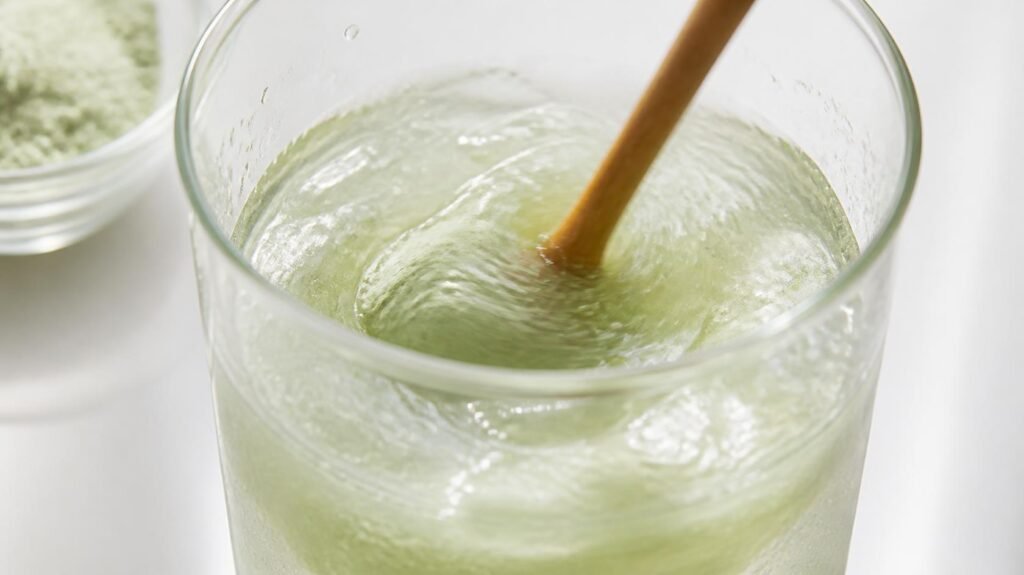
Glucomannan soaks up water like almost nothing else in nature. It can absorb up to 50 times its own weight. Drink it before a meal and it swells into a thick gel in your stomach.
That gel takes up space. It slows how fast your stomach empties. Your body reads that as “full.” This isn’t a theory someone dreamed up to sell capsules—it’s basic physics you can feel. A fuller stomach sends fewer hunger signals. Fewer hunger signals mean a smaller appetite, so you eat less without white-knuckling it. That’s the whole idea behind a fiber appetite suppressant: it works on the physical feeling of fullness, not on your nervous system.
And eating less is the whole game. Every real weight-loss method on Earth works by helping you take in fewer calories than you burn. Glucomannan doesn’t break that rule. It makes following the rule easier. That’s the honest pitch. Not “it burns fat.” Just “it makes eating less feel less like torture.”
Does Glucomannan Actually Work for Weight Loss?
Glucomannan can support weight loss, but only under specific conditions. Taken as 3 grams a day—one gram before each meal with water—alongside a reduced-calorie diet, it forms a gel that curbs appetite. Europe’s EFSA approved this exact claim. Without the right dose, timing, and diet, the results disappear.
That’s the short answer. Now here’s why people fight about it.
The 2014 Meta-Analysis That Skeptics Cite
Back in 2014, scientists combined several studies. On average, people taking glucomannan lost about half a kilo more than people on a fake pill—and the gap was small enough that it could have been chance. (Researchers call that “not statistically significant.”)
Critics love this study. They wave it around as proof. I’m not going to pretend it doesn’t exist. I’m going to tell you why it doesn’t sink the case.
Look closer at those trials and a pattern shows up:
- The doses were all over the place, and some were too low to matter.
- The study lengths were short and inconsistent.
- Many didn’t pair the fiber with a real calorie-cut diet—the exact thing it’s supposed to support.
A tool that helps you eat less can’t prove itself in a study where nobody was dieting. That’s like testing a seatbelt in cars that never crash and deciding seatbelts do nothing.
What the 2020 Glucomannan Studies Found
In 2020, scientists ran the numbers again with cleaner methods. This time glucomannan won. A pooled analysis of six trials found a real, statistically significant drop—close to a kilo more than the placebo group. The effect was biggest in women and in shorter studies.
So we have conflicting studies. A skeptic hears “conflicting” and thinks “worthless.” Wrong lesson. Conflicting results usually mean a thing works under some conditions and not others. The job is to find the conditions.
With glucomannan, we already know them: the right dose, taken before meals, while you’re actually cutting calories. Use it that way and the evidence leans in its favor. Use it wrong and you get the null result. That’s not a scam. That’s a tool with instructions.
Why the EFSA Approved a Glucomannan Weight-Loss Claim

Here’s the fact that should stop even a hostile reader cold. Europe’s food safety regulator—the EFSA—approved a weight-loss claim for glucomannan. That regulator is famously brutal. It reviewed thousands of health claims for foods and supplements and rejected the large majority of them. Green tea for weight loss? Rejected. Countless “fat-burning” ingredients? Rejected. This agency built its reputation on saying no.
It said yes to glucomannan. The EFSA panel signed off in 2010, and the decision was later written into EU law as Commission Regulation 432/2012. The approved claim is specific: glucomannan contributes to weight loss in the context of an energy-restricted diet, at 3 grams a day. That’s the same honest framing I gave you above—it works alongside eating less, not instead of it. Compared with most non-stimulant fat burners, that regulatory green light is something almost none of them can claim.
Think about what that means. A body built to crush hype looked at the trials and the mechanism and signed off. When the toughest gatekeeper in the room votes yes, “it’s just a scam” gets very hard to say.
Why Glucomannan Didn’t Work for You Before
Maybe you tried glucomannan once and nothing happened. Let me guess how it went. You took a random dose. You didn’t take it before meals. You weren’t in a calorie deficit. You expected the scale to move on its own. And when it didn’t, you filed glucomannan under “another lie.”
That’s not glucomannan failing you. That’s a hammer failing to drive a screw. The people who get results treat it like a system, not a sprinkle:
- Right dose. About 1 gram, three times a day, for 3 grams total.
- Right timing. Take each dose 15 to 30 minutes before a meal.
- Right partner. Pair it with a real, modest calorie cut.
- Right liquid. Take it with one to two full glasses of water—always.
Do those four things and you’re running the exact protocol the research supports. Skip them and you’re testing a seatbelt in a parked car.
Glucomannan Dosage and the Water Safety Rule
That water rule isn’t a suggestion. It’s the most important line in this whole post. Glucomannan expands fast. If you take it dry, or with too little water, it can swell in your throat or gut before it reaches your stomach. That’s a real choking and blockage risk—so real that EFSA requires a choking warning on the label, and some countries restrict certain tablet forms for exactly this reason.
This scares people off. It shouldn’t. It should reassure you. Why? Because it proves the stuff actually does something physical. A sugar pill can’t choke you. Glucomannan can—because it genuinely forms a thick gel in your body. Respect the water rule and that same gel works for you instead of against you. Take it with plenty of water, sit upright, and don’t take it right before bed. Simple.
Glucomannan Benefits Beyond Weight Loss: Cholesterol and Digestion
Here’s what tips glucomannan from “maybe” to “smart bet.” Even in studies where weight loss was debated, glucomannan kept showing other wins.
It lowers LDL cholesterol—the bad kind—by a meaningful amount; one large review put the drop around 16 mg/dL. That same EFSA regulator approved a separate cholesterol claim for it too, at 4 grams a day. It also helps with regularity. The thick gel that keeps you full also keeps things moving—a real quality-of-life fix for a lot of people cutting calories.
So even in the worst-case reading of the weight data, you still walk away with proven cholesterol and digestion benefits. Now weigh that against the cost.
Suggested lead-in line to place just above the embed, so the video earns its spot on the page:
Prefer to watch it explained? This short breakdown covers the same ground — how the fiber affects fullness, what the trials actually found, and the safety rules — before we dig into the two studies everyone argues about.
Is Glucomannan Worth It? The Cost-Benefit Case
Forget belief for a second. Run the numbers like a cynic.
- Cost: dirt cheap. Pennies a day.
- Risk: near zero, if you follow the water rule.
- Downside if it fails: you’re out a few dollars and you ate more fiber.
- Upside if it works: easier dieting, lower cholesterol, better digestion, real weight loss.
Smart gamblers have a name for this: a bet where you risk a little to maybe win a lot. Tiny cost. The worst case barely stings. The best case is real. You make bets like this every day—you don’t need to be a believer, just someone who likes good odds. Line it up against the other appetite suppressants on the shelf and few of them offer odds this friendly.
The Bottom Line on Glucomannan for Weight Loss
Here’s the thing. Every scam supplement falls apart the second you actually read the research. Glucomannan for weight loss doesn’t. And I’m not going to hide its weak spots—the weight-loss evidence is genuinely mixed, and anyone who tells you it’s a slam dunk is selling something.
But mixed isn’t fake. It’s a cheap konjac fiber that makes eating less feel less like a fistfight, nudges your LDL down, and keeps you regular while it does it—and the strictest food regulator on the planet put its name on that. Stack it against the rest of the best diet pills on the market and the scam supplements can’t say any of it.
How to Take Glucomannan for Weight Loss (Start Here)
Do this today, not “someday”:
- Buy a plain glucomannan powder or capsule—no proprietary blends, no miracle labels (here’s how to read a supplement label so you don’t get fooled).
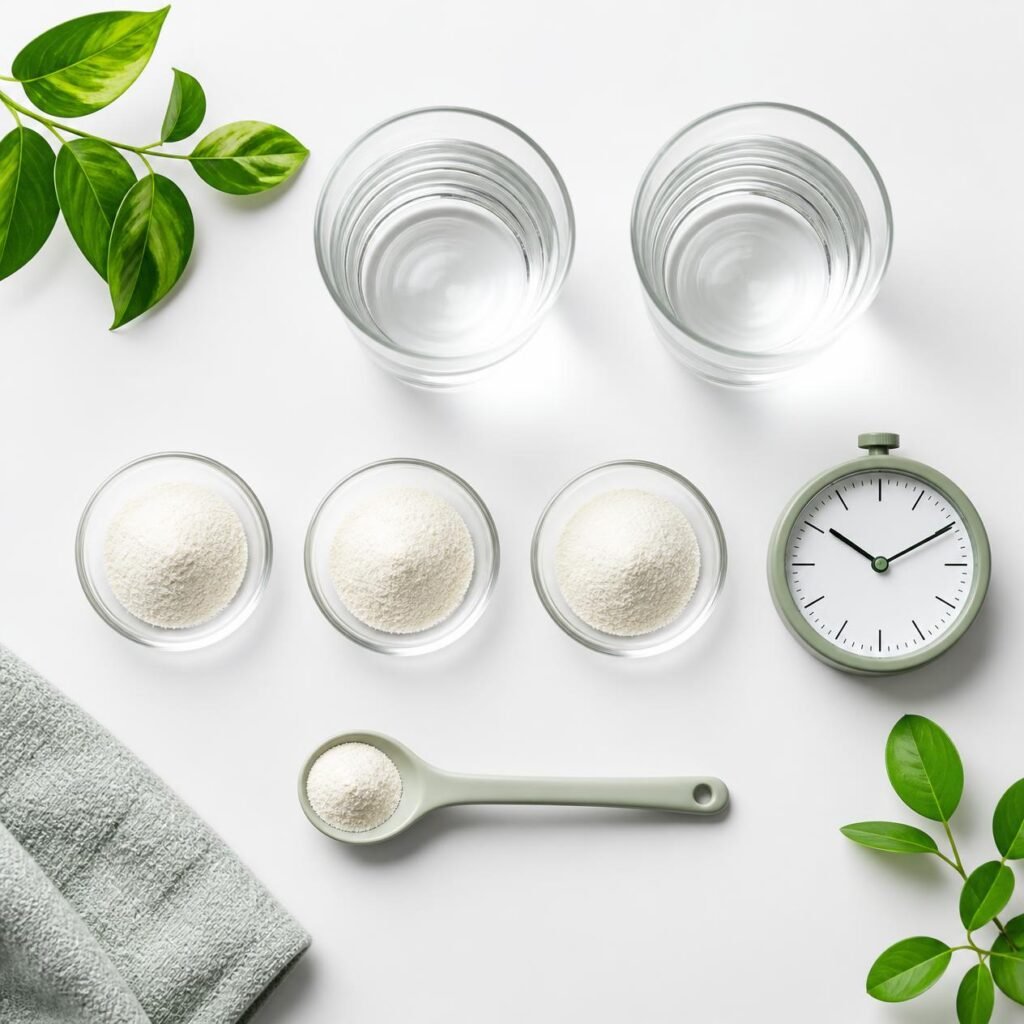
- Take 1 gram, three times a day, each dose 15 to 30 minutes before a meal, with two full glasses of water.
- Pair it with a small, livable calorie cut.
- Give it a fair 8 to 12 weeks.
You’ve spent years getting burned by supplements that couldn’t survive a second look. Grab a plain glucomannan today, run the protocol above for eight honest weeks, and let the scale settle the argument.
Want the plain, no-nonsense version described above?
A straightforward konjac-root glucomannan supplement — no proprietary blends, no miracle labels. Take with a full glass of water, before meals.
Check Price on Amazon →As an Amazon Associate we earn from qualifying purchases.