
How Long Does It Take for a Fat Burner to Work?
How long does it take for a fat burner to work? You bought the bottle, took the pill, and now you’re staring at the mirror waiting for the magic to kick in. Here’s the straight answer most labels won’t give you—and I’ve spent years reading the fine print on these bottles. Let’s break down what really happens with fat burner results, week by week, and when you’ll actually see them.
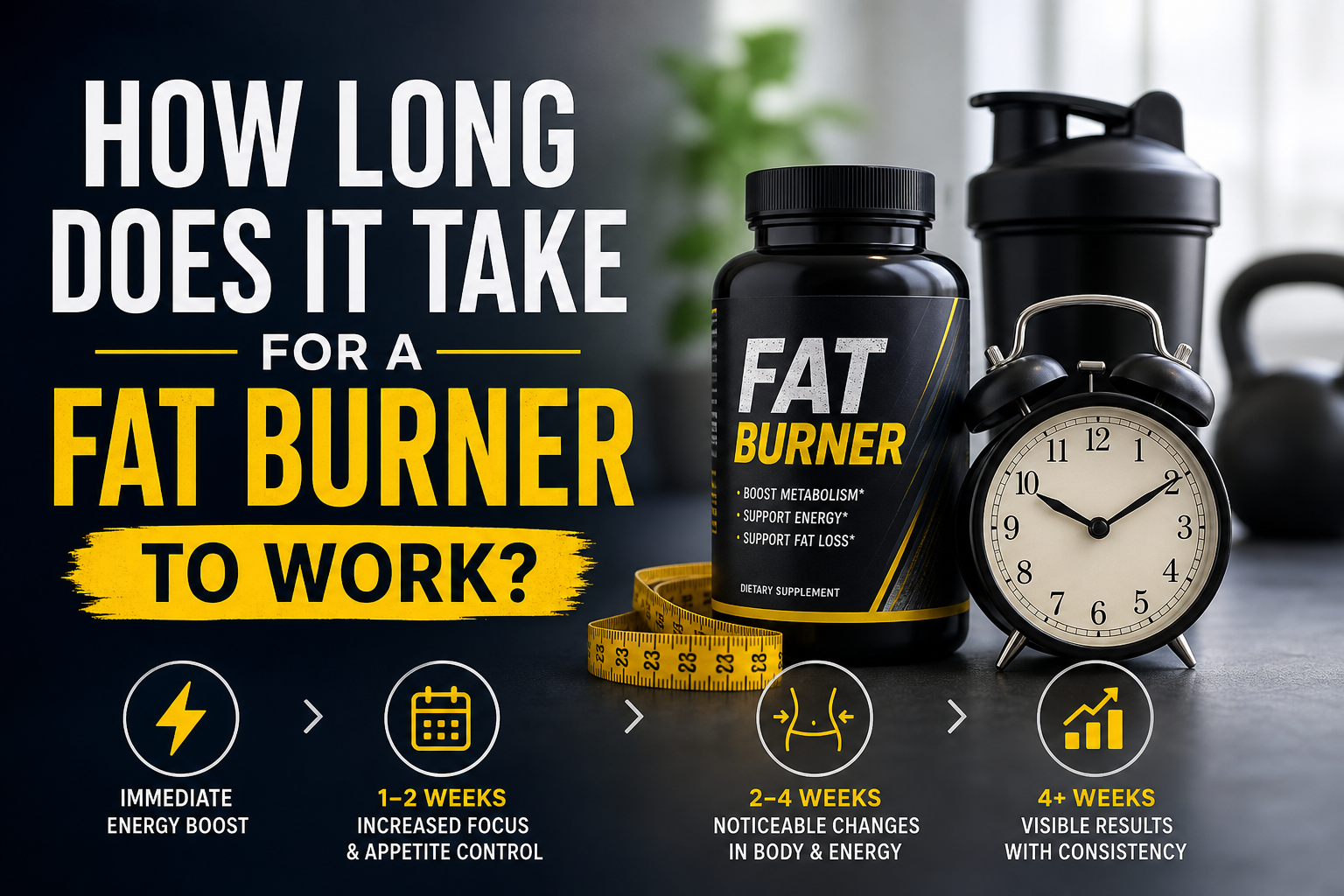
The short answer: A fat burner starts working within an hour, but that early effect is caffeine—more energy and less appetite, not fat loss. Any weight you drop in week one is water. Real fat loss begins in weeks 2–4 and only shows visibly after 2–3 months of a steady calorie deficit.
Do Fat Burners Actually Burn Fat?
A fat burner does not burn fat. That’s the first thing to understand. What these supplements actually do is smaller than the name suggests.
Most contain caffeine and a few plant extracts. They nudge your metabolism and energy a little. The fat loss still comes from a calorie deficit—eating less than you burn. The pill is a minor helper at best.
So do fat burners work? Sort of, but not the way the label implies. How long it takes for a fat burner to “work” depends entirely on what you think “working” means.
Fat Burner Results in Week 1: What You’ll Feel
In the first few days, you’ll notice something. But it’s probably not fat loss. Most people feel the caffeine. You get more energy and less appetite, and your workouts might feel a bit easier.
- More alertness within an hour of taking it
- Slightly reduced hunger during the day
- A jittery feeling if you took too much
Here’s the catch. The scale might drop 1–2 pounds this week. That’s mostly water, not fat. Caffeine is a mild diuretic, so it makes you shed water weight fast. That quick drop tricks people into thinking the product is working miracles.
Fat Burner Results in Weeks 2–4: Real Fat Loss Begins
This is where honesty matters most. Real fat loss is slow. One pound of fat holds about 3,500 calories. To burn it off, you need a real calorie deficit kept up over time. No pill shortcuts that math.
A safe, realistic rate is 0.5 to 1 pound of fat per week. That comes from your food and your movement, not the capsule. So after a month, you might see 2 to 4 pounds of true fat loss. A fat burner might add a sliver on top.
The research is blunt about how small that sliver is. In one classic study published in the American Journal of Clinical Nutrition, caffeine raised resting metabolism by just 3–4% and added only about 79 to 150 extra calories of burn across an entire day. Real, but tiny—roughly one banana’s worth. Green tea extract shows similar small effects. These help; they’re not the main event.
Why the ‘4–6 Weeks’ Fat Burner Claim Is Misleading
You’ve seen this promise on the bottle: “Visible results in 4–6 weeks.” It sounds specific and trustworthy. But read it closely. It never says the pill caused those results.
If you also started eating better and moving more, you’d lose weight anyway. The supplement just takes credit for your hard work. That’s the oldest trick in the industry.
Picture it this way. You study hard, walk in, and ace the test. Afterward someone hands you a “lucky pen” and says the pen did it. The pen was never the reason. Neither is the pill.
What Actually Speeds Up Fat Loss
Let’s talk about what truly moves the needle. These matter far more than any supplement—and none of them cost $40 a bottle.
Run a Real Calorie Deficit
Track your food honestly for two weeks. This one habit reveals more than any pill ever will.
Prioritize Protein and Strength Training
Protein and lifting protect your muscle while you lose fat. You end up looking leaner, faster.
Fix Your Sleep and Stress
Poor sleep wrecks your hunger hormones. Sleep badly and you’ll fight cravings all day long.
Be Patient—Fast Fat Loss Rebounds
Fat loss that lasts is slow. Fast loss almost always comes back. That’s the uncomfortable truth.
When Do Fat Burners Actually Work?
I’m not telling you to throw the bottle away. There are honest use cases.
The caffeine can help you push harder in a workout, and more effort means more calories burned. That’s a real, if small, benefit. The appetite dip can help you stick to your diet, too. If a pill helps you skip the afternoon cookie, that adds up, because consistency is what wins.
But here’s the key point: you could get the same caffeine from a cup of coffee. It costs pennies and works just as well.
Fat Burner Red Flags and Side Effects to Watch For
Some products cross the line from useless to risky. Watch for these fat burner side effects and marketing tricks:
- Promises of “melting fat” with no diet change
- Huge stimulant doses that spike your heart rate
- “Proprietary blends” that hide the real ingredient amounts
- Before-and-after photos with no context
If a product sounds too good to be true, it is. Your health isn’t worth the gamble. I’m not a doctor, and this isn’t medical advice—talk to yours before starting any supplement, especially if you take medication or have a heart condition. A registered dietitian can also tell you in ten minutes what a $40 label never will.
So How Long Does It Take for a Fat Burner to Work?
Let me bring it home with a clear fat burner results timeline:
- Days 1–7: You feel energy and less hunger. Any weight drop is water.
- Weeks 2–4: Real fat loss starts, but it’s slow and driven by your diet.
- Months 2–3: You see visible change—if you’ve kept the calorie deficit going.
The pill was never the hero of this story. You are. The habits you build do the heavy lifting.
Fat Burners: The Bottom Line
Here’s what it comes down to. A fat burner is a small tool, not a solution. It buys you a little caffeine, a little less appetite, and a slightly harder push in the gym. That’s the whole list. The scale moves because you ate at a deficit, slept enough, and stayed consistent—not because of a capsule.
So stop counting down the weeks on the label and asking how long it takes for a fat burner to work. Open a food tracker right now and log everything you eat today. That’s the first move that ever changed anyone’s body—including mine.