Does Green Tea Extract for Weight Loss Work? 5 Studies
If you’re searching for green tea extract for weight loss, you’ve probably been burned before. You’ve tried the pills. They made your heart race. They did nothing for your waistline. Then you read that green tea extract can hurt your liver. So why would you trust anything about it now?
Because this post won’t lie to you. That’s the whole pitch. Every number below comes from a named study or a government safety review, and each one is linked so you can check it yourself.
Table of Contents
Green Tea Extract for Weight Loss: Who This Guide Is For
Let me describe you. You’re maybe 40. You’ve bought a “thermogenic fat burner” with flames on the label. You spent $60 and lost zero pounds. You’ve seen the before-and-after photos. You know they’re fake. You roll your eyes at the word “metabolism” now.
Good. Keep that eye roll. You’re going to need it. Because most green tea extract marketing deserves it.
But here’s the thing. You’re skeptical of the hype, and you should be. The research is a different story. It’s smaller, more honest, and more useful.
What Green Tea Extract Can’t Do for Weight Loss
Let’s clear the air first. Green tea extract won’t melt 20 pounds. It won’t fix a bad diet. It won’t replace sleep or walking.
A big 2012 Cochrane review looked at green tea for weight loss. Cochrane reviews are the strictest in medicine. The weight loss they found was small. On its own, it was often too small to matter. The NIH Office of Dietary Supplements reaches a similar conclusion.
Did that surprise you? It shouldn’t. Anyone promising you huge results was selling you something. If you want to see how green tea stacks up against other popular ingredients, our diet pill ingredient guide breaks them down side by side.
So why am I still making the case? Because “small” is not “zero.” And small, safe, and steady beats big, risky, and fake.
Does Green Tea Extract Boost Metabolism? The 1999 Study
The Metabolic Chamber Test
In 1999, a team led by Dr. Abdul Dulloo at the University of Geneva ran a careful test. They put people in a sealed room that measures every calorie burned. It’s called a metabolic chamber. You can’t fake results in there.
People took green tea extract three times a day. Each dose had about 90 mg of EGCG and 50 mg of caffeine. EGCG is the main active compound in green tea.
Their 24-hour calorie burn went up about 4%. They also burned more fat for fuel.
Why Caffeine Alone Didn’t Explain It
Here’s the part skeptics miss. Another group got the same caffeine alone. Their calorie burn didn’t budge. So the effect wasn’t just caffeine. Something in the tea was doing work.
How EGCG Increases Fat Burning (In Plain English)
Your body uses a chemical messenger called norepinephrine. It tells your cells to burn energy. Think of it as a foot on the gas pedal.
Normally, an enzyme called COMT breaks that messenger down fast. The foot lifts off the pedal.
EGCG slows that enzyme down. So the messenger sticks around longer. Your foot stays on the gas a little longer.
Caffeine works on a different step. It blocks a second enzyme that would shut the burn signal off. So the signal stays on longer inside your cells. Together, they team up. That’s why studies pair them.
This isn’t magic. It’s a small nudge to a system you already have. That’s exactly why it’s believable.
Prefer to watch instead of read? This short video walks through how EGCG and caffeine affect energy burn and what the weight loss research shows:
Green Tea Extract Weight Loss Results: What the Research Shows
Average Weight Loss Across Studies
One study can be a fluke. So researchers pooled many studies together. A 2009 review by Rick Hursel and Margriet Westerterp-Plantenga at Maastricht University looked at green tea catechins plus caffeine. People lost about 1.3 kg more on average. That’s roughly 3 pounds over about 12 weeks.
How Many Extra Calories Green Tea Extract Burns
A follow-up review in 2011 looked at calorie burn directly. Green tea catechins with caffeine raised daily burn by around 100 calories.
Now, 100 calories sounds tiny. It’s about one banana. But do the math over a year.
100 extra calories a day
Times 365 days
Equals about 36,500 calories
That’s roughly 10 pounds of fat on paper. You won’t lose all of it, because your body adjusts. But it shows a small daily edge adds up.
Why a Modest Metabolism Boost Still Matters
Here’s what genuine users know. The win isn’t the pill. The win is having one honest tool that doesn’t betray you.
When you’ve been burned, you stop trying. You figure nothing works. So you stop walking. You stop cooking. You give up on the whole project.
A small, real effect does something big for your head. It gives you a reason to keep going. It’s a daily signal that you’re taking yourself seriously.
The critics say “the effect is modest.” They’re right. But they never talk about what modest does to someone who has felt hopeless. Modest and real can restart your momentum.
Green Tea Extract Liver Damage: The Real Risk
You’ve heard about liver damage. Let’s face it head on. Hiding it would make me just another salesperson.
The risk is real. Green tea extract is one of the herbal supplements most often linked to liver injury. That’s documented. The US Drug-Induced Liver Injury Network, which includes hepatologist Dr. Victor Navarro, found that supplements grew from about 7% to 20% of the drug-related liver injury cases it tracked over roughly a decade. Green tea extract shows up often in those cases. The NIH’s LiverTox database lists it as a well-established cause of liver injury. For a wider look at which diet pill ingredients carry liver and heart warnings, see our ingredient safety guide.
But look closer at when it happens.
The 800 mg EGCG Warning Line
In 2018, Europe’s food safety agency, EFSA, reviewed the data. They found liver warning signs showed up at 800 mg of EGCG a day or more. Brewed green tea? They called it generally safe.
The problem is concentrated doses, taken the wrong way. That’s the key insight. The danger lives in high doses and bad habits. It doesn’t live in the plant itself.
One honest caveat: rare cases have been reported at lower doses too, because some people are more sensitive, possibly for genetic reasons. That’s why the food rule and the warning signs below matter even at a modest dose.
Why You Should Never Take Green Tea Extract on an Empty Stomach
Here’s a detail most bottles won’t tell you. Taking EGCG on an empty stomach changes everything.
When people take EGCG while fasting, far more of it reaches the blood. In one study, levels ran more than three times higher. Same pill. Much bigger hit to your liver.
That’s why the US Pharmacopeia, after a comprehensive safety review, recommends a clear label warning. Take it with food. Don’t take it if you have liver problems.
Think about who gets hurt. Often it’s someone skipping breakfast, taking a mega-dose, hoping to burn fat faster. Desperation plus a big dose plus no food. That’s the danger combo.
How Much Green Tea Extract Should You Take Per Day?
Most research supports about 250 to 300 mg of EGCG per day from green tea extract, split into two or three doses and always taken with food. That’s close to the dose used in the 1999 Geneva metabolic chamber study and far below the 800 mg daily level where EFSA found signs of liver stress.
Safe EGCG Dosage, Step by Step
So what does a careful approach look like? Here’s a plan built from the studies and the safety data.
Read the EGCG number, not the “extract” number. A label might say 500 mg of extract. That could mean 250 mg of EGCG or less. The EGCG number is what counts.
Aim for about 250 to 300 mg of EGCG a day. That’s close to what the 1999 study used. It’s far below the 800 mg warning line.
Split it up. Take two or three smaller doses instead of one big one. The original study did this.
Always take it with a meal. Never on an empty stomach. This one rule cuts a huge chunk of the risk.
Pick third-party tested brands. Look for a USP Verified or NSF seal. It means the label actually matches what’s inside.
Don’t stack it. Skip other fat burner products while you take it. Many already hide green tea extract inside.
Brewed Green Tea vs. Green Tea Extract
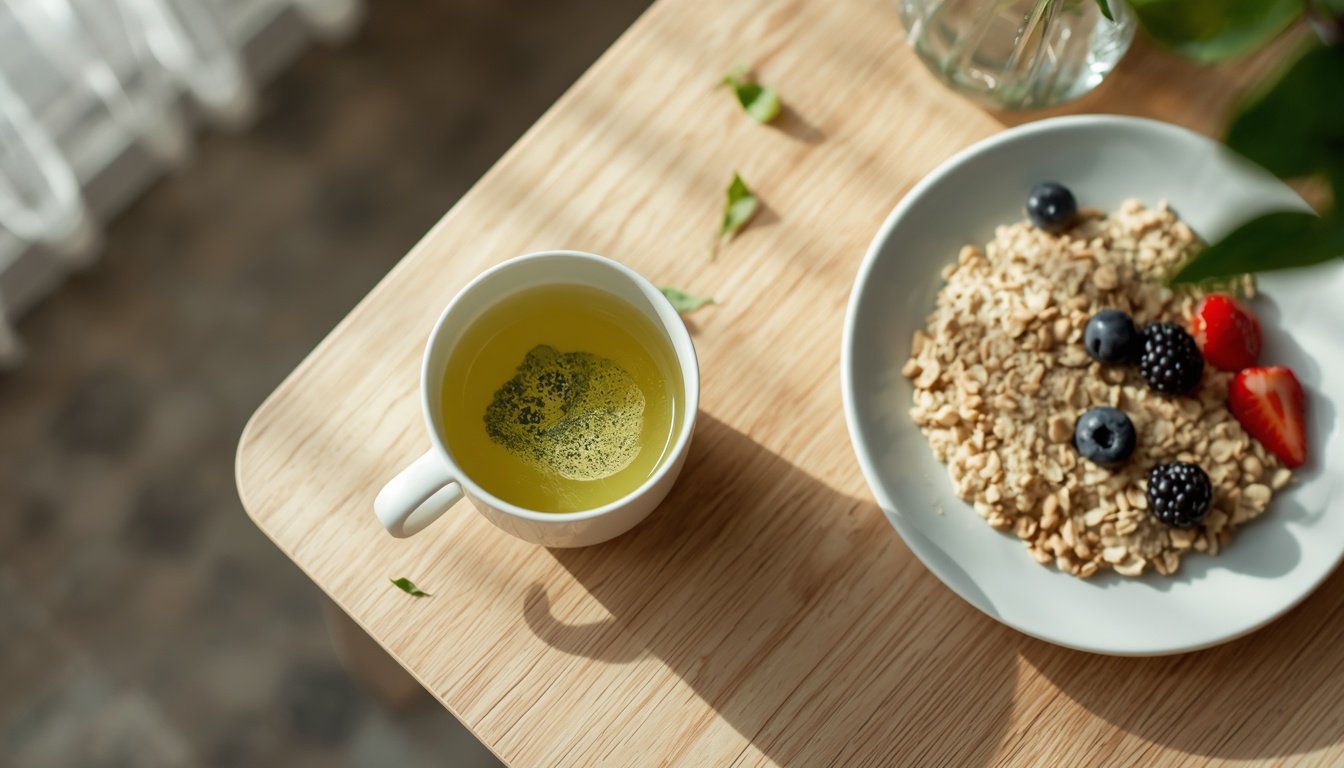
Want an even gentler start? Drink brewed green tea. One cup has roughly 50 to 100 mg of EGCG. Three cups a day gets you into the useful range naturally. It’s the simplest of all natural diet pill alternatives, and it’s the form EFSA considers generally safe.
Disclosure: This post contains affiliate links. As an Amazon Associate, I earn from qualifying purchases at no extra cost to you. This article is for education only and is not medical advice.
Green Tea Extract Supplements Worth Considering
These options fit the rules above: a clear dose, a reputable maker, and room to stay well under the warning line. Whatever you pick, take it with a meal, even if the bottle says otherwise, and check the EGCG number yourself.
NOW Foods EGCg Green Tea Extract 400 mg
Each capsule lists 200 mg of EGCG right on the label, so there’s no guessing. The label itself says to take it with a meal and never on an empty stomach. One capsule a day keeps you inside the research range.
Thorne Green Tea Phytosome
Decaffeinated and third-party certified, from a brand known for strict testing. A good fit if caffeine makes you jittery. The label lists total extract rather than an exact EGCG figure, so confirm the EGCG amount with the maker or your pharmacist before dosing.
Pure Encapsulations Green Tea Extract (Decaffeinated)
A small 100 mg capsule that makes it easy to start low and build slowly. Caffeine-free and made without common allergens. Label directions vary by listing, so stick to the rule that matters: with food, every time.
Bigelow Classic Green Tea
The gentlest route. Three cups a day of plain brewed green tea puts you in the useful EGCG range with the safety profile EFSA calls generally safe.
Green Tea Extract Side Effects: Who Should Skip It
A trustworthy guide tells you when to walk away. So here’s that list.
- Anyone with liver disease or past liver problems
- Pregnant or breastfeeding women
- People on blood thinners or the heart drug nadolol, which green tea can interfere with
- Anyone sensitive to caffeine or prone to anxiety
- Heavy drinkers, since alcohol also strains the liver
Our medical policy explains why we ask every reader to check with a healthcare provider before starting any supplement.
Warning Signs of Liver Trouble
Know the warning signs. Dark urine. Yellow skin or eyes. Pain in your upper right belly. Strange tiredness. If any show up, stop and call a doctor that day.
Is Green Tea Extract a Scam? Why Skeptics Are Half Right
Let’s give your inner critic its due. It’s right that the hype is overblown. It’s right that liver risk exists. It’s right that no pill replaces real habits.
But it’s wrong to throw out the whole thing. That’s like skipping seatbelts because some cars still crash.
The evidence points to a narrow, honest middle. A small metabolic boost. A clear safe dose. A few simple rules. That middle ground is where green tea extract actually lives.
Green Tea Extract for Weight Loss: FAQ
How much green tea extract should I take per day for weight loss?
Most studies used about 250 to 300 mg of EGCG a day, split into two or three doses with meals. Go by the EGCG number on the label, not the total extract number.
Is it safe to take green tea extract every day?
For most healthy adults, a moderate daily dose taken with food appears low risk. EFSA linked liver stress to 800 mg of EGCG a day or more. Skip it entirely if you have liver problems, are pregnant, or take nadolol or blood thinners.
What is the best time to take green tea extract?
With breakfast and lunch. Food lowers the EGCG spike in your blood, and taking it earlier in the day keeps its caffeine from disrupting your sleep.
How long does green tea extract take to work?
Expect weeks, not days. The pooled studies measured results over about 12 weeks, and the average extra loss was around 3 pounds.
Can green tea extract damage your liver?
Yes, in rare cases. The risk rises with high doses, fasting, and stacking several fat burners that contain it. Dark urine, yellow skin or eyes, or upper right belly pain mean stop and call a doctor that day.
Is drinking green tea as good as taking the extract?
Brewed tea delivers less EGCG per serving, but three cups a day reaches the useful range, and regulators consider it generally safe. It’s the best starting point if you’re cautious.
Can I combine green tea extract with other fat burners?
No. Many fat burners already contain green tea extract, so combining them can quietly push your EGCG dose toward the danger zone.
Is Green Tea Extract for Weight Loss Worth It?
Here’s where I land. The fat burner aisle lied to you, and you were right to walk out of it. But green tea extract for weight loss is the one thing in that aisle with a metabolic chamber behind it. It’ll hand you about 100 calories a day, and it won’t hand you a liver scare if you respect the dose. That’s not exciting. After everything you’ve been sold, boring and true is exactly what you need.
Before you buy another bottle, ask your doctor one question: “Is 250 mg of EGCG a day, taken with meals, safe for me?”
Sources
Dulloo AG et al. Efficacy of a green tea extract rich in catechin polyphenols and caffeine in increasing 24-h energy expenditure and fat oxidation in humans. American Journal of Clinical Nutrition, 1999.
Hursel R, Viechtbauer W, Westerterp-Plantenga MS. The effects of green tea on weight loss and weight maintenance: a meta-analysis. International Journal of Obesity, 2009.
Hursel R et al. The effects of catechin rich teas and caffeine on energy expenditure and fat oxidation: a meta-analysis. Obesity Reviews, 2011.
Jurgens TM et al. Green tea for weight loss and weight maintenance in overweight or obese adults. Cochrane Database of Systematic Reviews, 2012.
EFSA Panel on Food Additives and Nutrient Sources. Scientific opinion on the safety of green tea catechins. EFSA Journal, 2018.
Navarro VJ et al. Liver injury from herbals and dietary supplements in the U.S. Drug-Induced Liver Injury Network. Hepatology, 2014.
Oketch-Rabah HA et al. United States Pharmacopeia (USP) comprehensive review of the hepatotoxicity of green tea extracts. Toxicology Reports, 2020.
National Institutes of Health. LiverTox: Green Tea.