Caffeine in Fat Burners: How to Count Your Real Daily Total
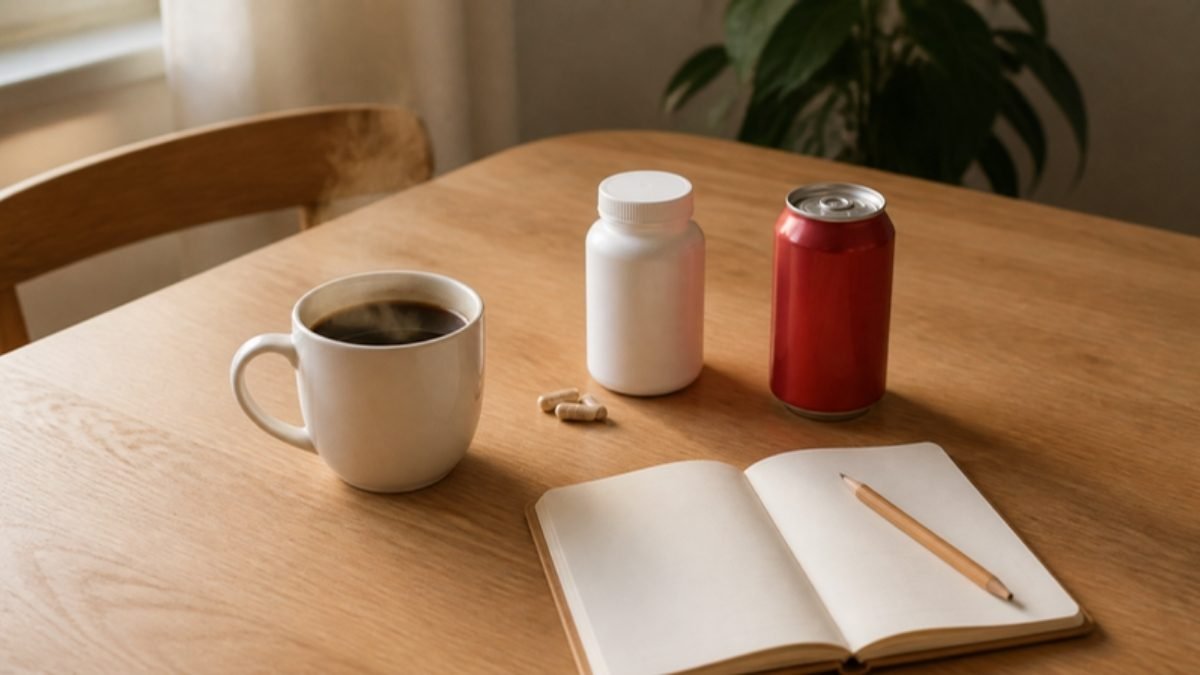
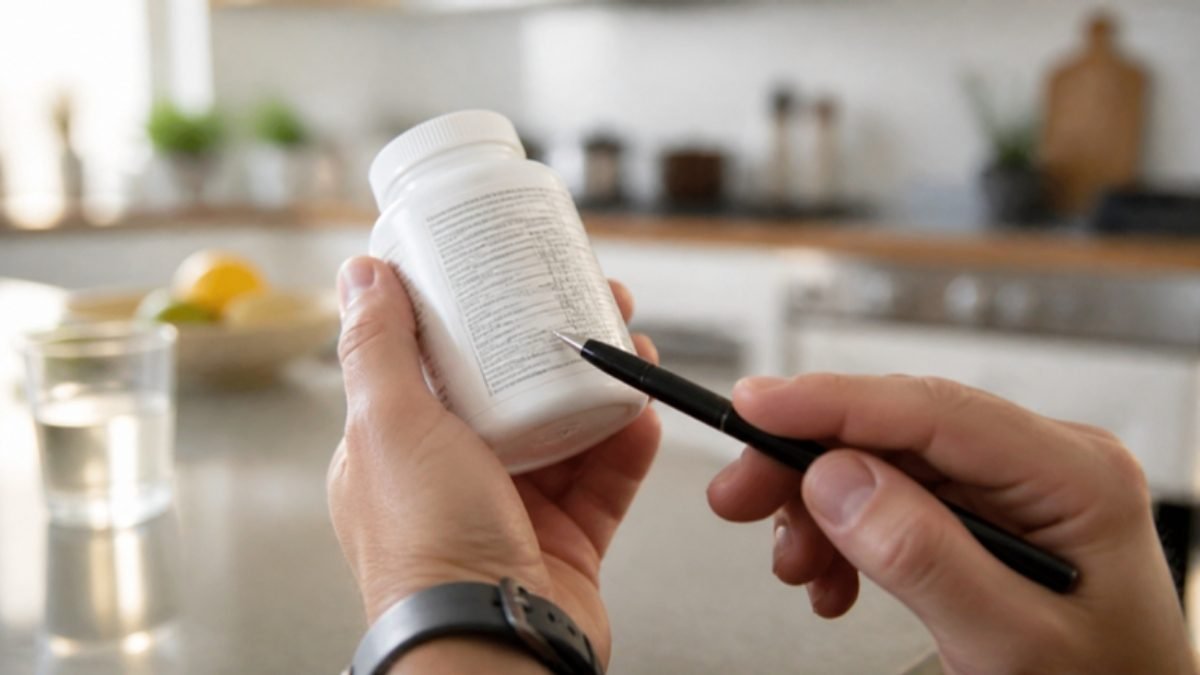
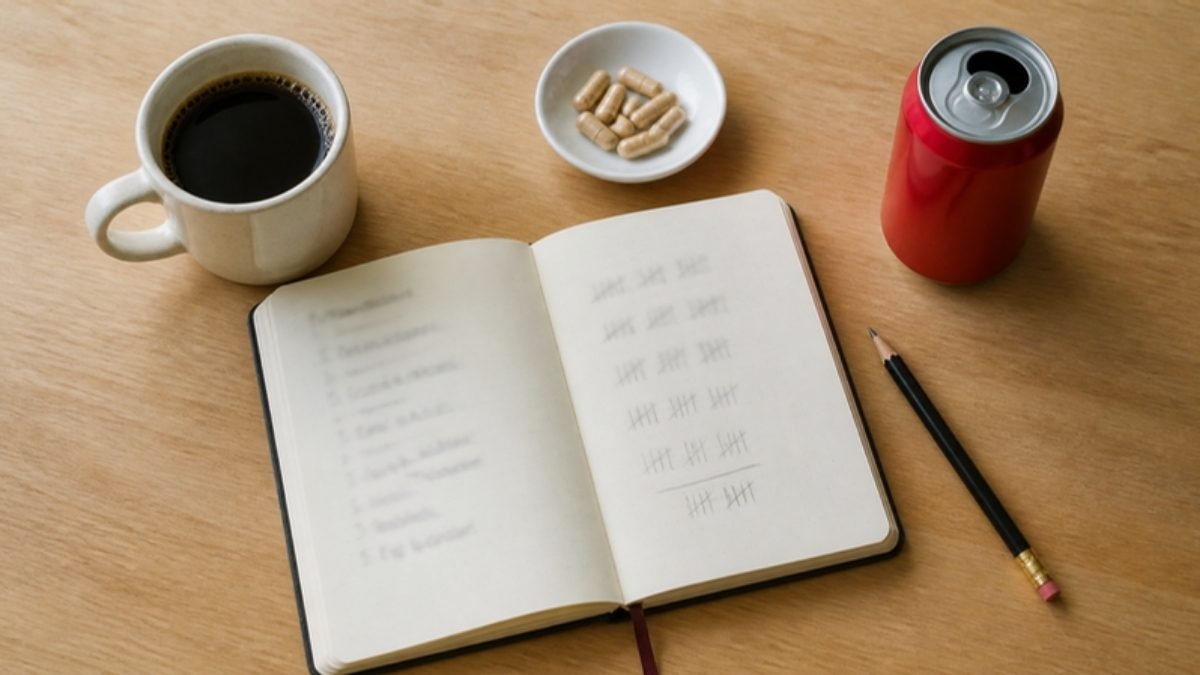
Images in this article are AI-generated illustrations created in Canva. They are not product photographs or evidence of product testing.
You drink a coffee on the way to work, take two fat-burner capsules before the gym, and grab a soda at 3 p.m. Each choice looks modest. Added together, they can push you past the amount most adults handle comfortably, and the capsule bottle may not even tell you how much caffeine it adds.
Here is the short answer. Count caffeine in fat burners the same way you count every other source: add up everything you consume in a day, use the label’s milligram figure where one exists, use the high end of a range where you only have a range, and treat any caffeine-containing ingredient without a listed amount as unknown, not zero. For most adults, the FDA cites 400 milligrams a day as an amount not generally associated with negative effects. That is a reference point, not a target, and your own limit may be lower.
This guide gives you a four-step method, the Caffeine Stack Audit, plus a worked example you can copy for your own day.
Table of Contents
Why caffeine in fat burners is easy to undercount
Most people track caffeine by the cup. A capsule doesn’t feel like a drink, so it rarely makes it into that mental tally. Yet the FDA notes that your body handles caffeine the same way whether it occurs naturally in coffee or tea or is added to a product, so every source belongs in one total.
Labels add a second problem. The NIH Office of Dietary Supplements warns that supplement labels don’t always list caffeine even when an ingredient such as guarana, kola nut, or yerba mate naturally contains it. The same fact sheet notes that combining caffeine with other stimulant ingredients can increase its effects, which is why stacked formulas deserve extra scrutiny. If you are still deciding whether you want a stimulant product at all, our comparison of stimulant vs stimulant-free fat burners covers that choice first.
Where caffeine hides on a fat burner label
Caffeine can appear on a Supplement Facts panel in several forms. Only some of them give you a number you can add.
| What the label shows | What it tells you | How to count it |
|---|---|---|
| Caffeine anhydrous, with mg | Dried caffeine at a stated amount | Count the stated mg |
| “Natural caffeine (from green coffee bean),” with mg | Plant-derived caffeine at a stated amount | Count the stated mg |
| Guarana, yerba mate, kola nut, or green tea extract, with extract weight only | The extract weight, not the caffeine weight | Unknown unless a caffeine mg or percentage is given |
| Extract with a caffeine percentage, e.g. 500 mg at 22% caffeine | Enough to calculate | 500 × 0.22 = 110 mg |
| Proprietary blend total that includes caffeine | The blend weight only | Unknown; the blend total is only an upper limit |
Two habits make this faster. First, multiply by the number of capsules in a serving, because the panel lists amounts per serving, not per capsule. Second, read the whole panel instead of the front of the bottle. Our guide on how to read a supplement label walks through serving sizes, blends, and the fine print in about a minute.
What the 400 mg figure does and doesn’t mean
The FDA describes 400 mg a day as roughly two to three 12-ounce cups of coffee for most adults. It also stresses wide variation in how sensitive people are and how quickly they clear caffeine. Certain conditions and medications can increase sensitivity, and the agency recommends talking with a health care provider about limits if you are pregnant, trying to become pregnant, or breastfeeding.
The NIH fact sheet places the safe range for most adults at up to 400 to 500 mg a day, while noting that caffeine can still make you nervous, jittery, or shaky and can disturb sleep. At higher doses it lists nausea, vomiting, rapid heartbeat, and seizures. The FDA adds that toxic effects such as seizures can occur with rapid consumption of about 1,200 mg, which is one reason it has acted against pure and highly concentrated caffeine products.
So treat 400 mg as a ceiling for healthy adults, not a dose to reach. If you have a heart condition, high blood pressure, or take regular medication, check our list of people who should avoid fat burners before you add any stimulant.
The Caffeine Stack Audit: count your real daily total
This is our editorial method for turning a confusing label into one decision. It uses published reference values, not lab testing, and it takes about five minutes.
- List every source for a typical day. Include coffee, tea, soda, energy drinks, pre-workout, the fat burner, chocolate, caffeinated gum, and over-the-counter medicines. The FDA notes that some pain relievers and other products contain added caffeine.
- Give each source a number or a range. Use the label’s mg where you have it. For drinks without a label, use typical values and write down the high end, not the middle.
- Flag unknowns instead of guessing. A botanical or blend with no caffeine figure is “unknown.” If your known total is already near your limit, an unknown ingredient is reason enough to wait.
- Compare and decide. Check the high-end total against 400 mg and against how you actually feel at your current intake. If it doesn’t fit, remove a source rather than squeezing it in.
For step two, these are the FDA’s typical caffeine amounts for 12-ounce drinks:
| Drink (12 fl oz) | Typical caffeine |
|---|---|
| Caffeinated soft drink | 23–83 mg |
| Green tea | 37 mg |
| Black tea | 71 mg |
| Brewed coffee (regular, non-specialty) | 113–247 mg |
| Energy drink | 41–246 mg |
Notice how wide some ranges are. Coffee alone can vary by more than 130 mg depending on beans and brewing, which matters far more than a small change in your capsule dose.
Worked example: one ordinary day, two very different totals
The day below is hypothetical. It shows what the audit looks like when you take ranges seriously.
| Source | Low estimate | High estimate |
|---|---|---|
| 12-oz brewed coffee | 113 mg | 247 mg |
| Fat burner serving (label states 200 mg caffeine) | 200 mg | 200 mg |
| 12-oz caffeinated soda | 23 mg | 83 mg |
| Daily total | 336 mg | 530 mg |
At the low end, this day looks comfortably under 400 mg. At the high end, it is 130 mg over. Same products, same schedule, opposite conclusions. That gap is why the audit uses the high end.
Now test the fixes. Dropping the soda still leaves a high estimate of 447 mg. Switching the coffee to decaf helps much more: the FDA puts decaf at 2 to 15 mg per 8 ounces, so a 12-ounce cup is roughly 3 to 23 mg by simple scaling. That brings the high estimate to about 306 mg. The source with the widest range is usually the one worth changing first.
When the label doesn’t give you a number
Even a listed number is not a guarantee. A 2013 study in JAMA Internal Medicine tested 31 caffeine-related supplements popular on U.S. military bases. Of 20 products that listed caffeine, only 9 had amounts within 10% of the label. Six that named caffeine without giving an amount contained 210 to 310 mg per serving. Products that listed only green tea as a botanical source contained little or no caffeine. The researchers tested one sample per product, and the findings describe products from over a decade ago, so they show a risk pattern rather than the state of today’s shelves.
The practical lesson: a stated mg figure is useful but approximate, and an unstated caffeine ingredient can be large. When a product gives you no number, you have three options:
- Look up the full label in the NIH Dietary Supplement Label Database. It shows what the label says, not lab-verified content, but it can reveal details the retail listing omits.
- Contact the manufacturer and ask for the caffeine mg per serving, as the FDA suggests for products without declared amounts.
- Skip the product. An unknown dose stacked on a known coffee habit is a poor bet.
Some newer formulas swap caffeine for related compounds. Our paraxanthine guide explains what is and isn’t known about that alternative. Count any such stimulant as part of your load rather than as a free pass.
Signs your stack is too high
The FDA lists these common signs of too much caffeine: faster heart rate, palpitations, higher blood pressure, trouble sleeping, anxiety, jitters, upset stomach, nausea, and headache. If you notice them after adding a fat burner, the simplest test is to remove it and see whether they ease.
Get urgent medical care for chest pain, fainting, or a racing or irregular heartbeat that does not settle. A fat burner should never be the reason you push through those symptoms.

Practical ways to shrink the stack
- Remove a whole source. Don’t split capsules or change servings against the label’s directions to make the math work.
- Cut back gradually. The FDA notes that withdrawal isn’t considered dangerous but can be unpleasant, so taper rather than quitting at once.
- Remember decaf isn’t zero. It still carries a few milligrams per cup.
- Keep a written log for a week. Real habits rarely match the day you imagine.
Disclosure: As an Amazon Associate I earn from qualifying purchases. The links below go to Amazon search results, not specific products we have tested.
- Weekly AM/PM pill organizer: pre-sorting servings makes it harder to take a second dose by mistake on a busy morning. Check that the compartments fit your capsule size.
- Swiss Water Process decaf coffee: swaps out the widest-range source in most people’s stack while keeping the ritual. Decaf still contains a small amount of caffeine.
Neither replaces advice from your doctor or pharmacist, especially if you take medication.
Video: why stacked caffeine sources add up
This 97-second explainer from Mayo Clinic Health System focuses on energy drinks, but its core point applies directly to fat burners: caffeine can arrive from several ingredients at once, sometimes listed under names like guarana rather than as caffeine.
Frequently asked questions
How much caffeine is in a typical fat burner?
There is no reliable typical figure. Amounts vary widely between products, and some labels give none. Read the Supplement Facts panel, multiply by the capsules per serving, and treat a missing amount as unknown rather than low.
Does caffeine from guarana count the same as coffee?
Yes. The FDA says the body handles naturally occurring and added caffeine the same way. Guarana, yerba mate, kola nut, and green coffee bean caffeine all belong in your daily total.
Is green tea extract a major caffeine source?
It can be, but it depends on the extract. Decaffeinated extracts exist, and the 2013 JAMA Internal Medicine analysis found little caffeine in products listing green tea alone. Count it only when the label gives a caffeine figure; otherwise mark it unknown.
Can I take a fat burner if I already drink coffee?
Only if the high-end total still fits your limit and you feel well at your current intake. Run the four-step audit first. If the numbers are tight, reducing coffee usually changes the total more than anything else.
Does decaf coffee count toward my caffeine total?
A little. The FDA puts decaf at about 2 to 15 mg per 8-ounce cup. That rarely decides the outcome, but several cups a day are worth writing down.
Is 400 mg of caffeine safe for everyone?
No. It is a reference figure for most healthy adults. People who are pregnant or breastfeeding, sensitive to caffeine, or managing heart conditions or medications should ask a health care provider about their own limit.
Run the audit before your next dose
Caffeine in fat burners is rarely the only caffeine in your day, so judge the product by the total it creates, not by its label in isolation. List your sources, use high-end numbers, refuse to count unknowns as zero, and remove a source when the math doesn’t fit.
Quick self-check: how many caffeine sources did you have yesterday? If the honest answer is more than you expected, write tomorrow’s list now and run the four steps before you open the next bottle.