Weight Loss Pills That Don’t Cause Jitters: What to Look For if Stimulants Wreck Your Day
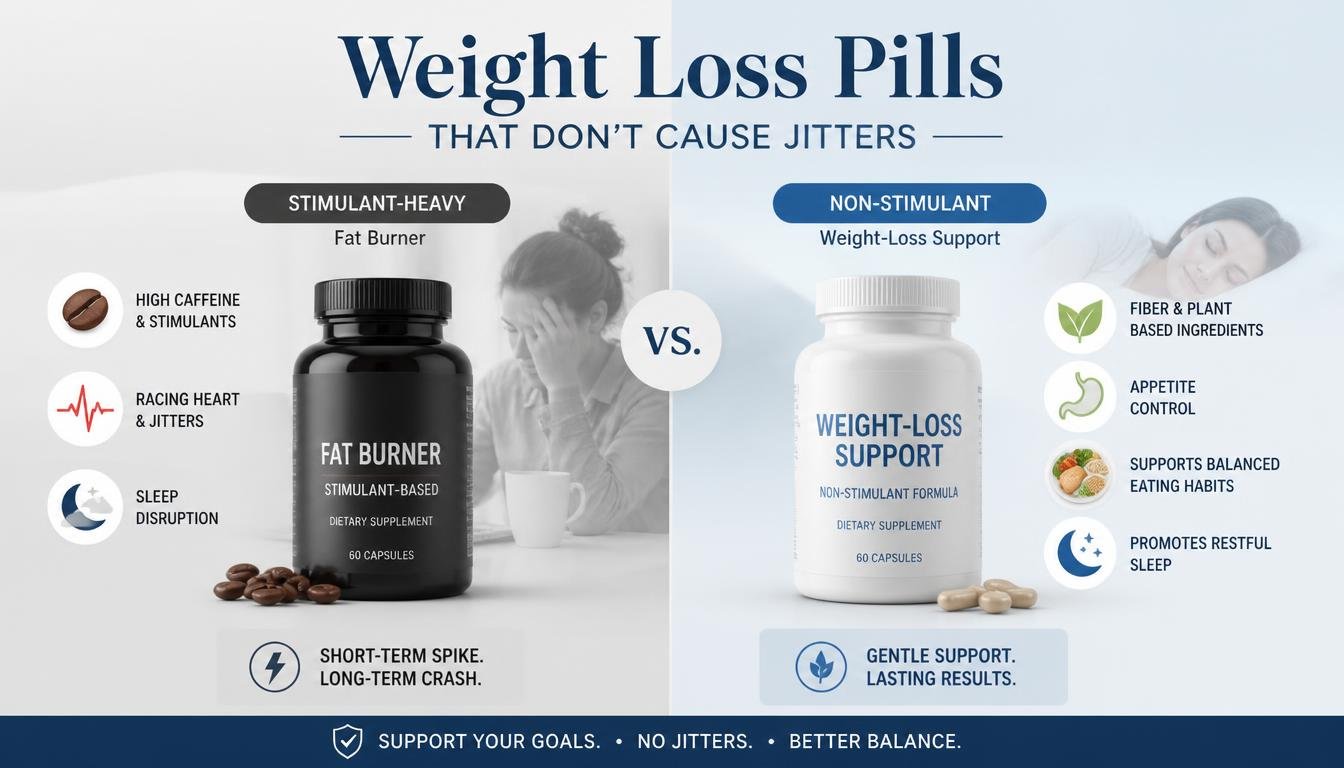
If every “fat burner” you try leaves you shaky, wired, anxious, or staring at the ceiling at 2 a.m., the problem usually is not you. It’s the formula. A huge chunk of the weight-loss supplement market leans hard on stimulants like caffeine and stimulant-adjacent blends because they make people feel something fast. That buzz gets marketed as effectiveness. A lot of the time, it is just stimulation dressed up as fat loss. The NIH notes that caffeine in weight-loss supplements may help only a little, tolerance builds over time, and it can make people feel nervous, jittery, and shaky. :contentReference[oaicite:0]{index=0}
The smarter play is to stop chasing “energy” and start looking for non-stimulant weight-loss options that fit your body, your risk level, and your actual goal. Some people need appetite support. Some need better meal control. Some need medical treatment, not another flashy capsule with a thermogenic label. And if your heart races every time you take a supplement, you should treat that as a red flag, not as proof the product is “working.”
Table of Contents
Why so many weight loss pills cause jitters in the first place
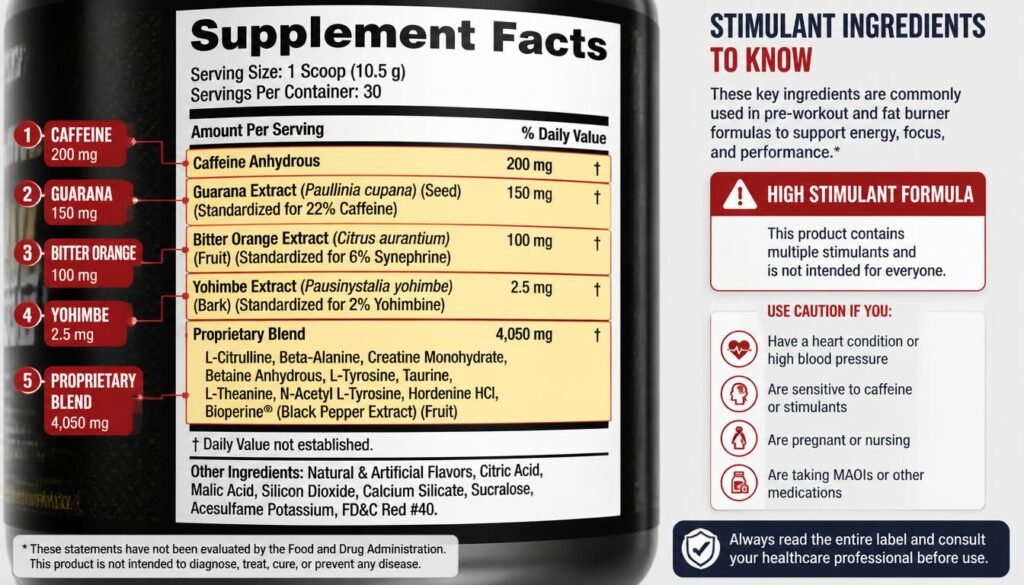
Most jittery formulas are built around one basic idea: stimulate the nervous system enough that you feel more alert, less hungry, or slightly more energized during workouts. The usual suspects are caffeine, guarana, yerba mate, bitter orange, and yohimbe. Some labels spread those across a “proprietary blend” so the stimulant load looks smaller than it feels in real life.
This is where buyers get burned. “Natural” does not mean gentle. NCCIH warns that many supplements marketed for weight loss have uncertain safety, and the FDA continues to flag weight-loss products contaminated with hidden drug ingredients. That is not a niche problem. It is a market-quality problem. :contentReference[oaicite:1]{index=1}
Caffeine alone can cause nervousness, shakiness, and sleep problems, and combining it with other stimulant ingredients can amplify those effects. NIH consumer guidance says regular caffeine use can also lead to tolerance, which means the “kick” may fade while side effects and dose escalation remain a problem. :contentReference[oaicite:2]{index=2}
Bitter orange is another ingredient worth watching. NCCIH says evidence on cardiovascular effects is mixed, but some studies show higher blood pressure and heart rate, and serious events have been reported in people using bitter-orange products, especially mixed-ingredient formulas. Yohimbe is even messier: the NIH consumer fact sheet says it does not help with weight loss and may cause anxiety, agitation, rapid heartbeat, and high blood pressure. :contentReference[oaicite:3]{index=3}
What “non-jittery” really means
A good non-jittery weight-loss pill is not just “lower caffeine.” It is usually one of three things:
- A genuinely non-stimulant supplement built around appetite support, satiety, or digestive mechanisms rather than nervous-system stimulation.
- A lower-risk support product that helps with adherence, like fiber-based appetite control, instead of pretending to melt fat while you do nothing.
- A clinically supervised medication route when over-the-counter supplements are not enough or are the wrong tool for the job.
That last point matters. A lot of readers searching for “weight loss pills that don’t cause jitters” are not really looking for magic. They are looking for something they can actually tolerate. Tolerability is not a side issue. It is the whole game. A pill you quit after three days because it makes you feel awful is not useful.
Better options if stimulants make you feel terrible
1) Non-stimulant appetite support
If your biggest problem is hunger, cravings, or mindless snacking, a stimulant-heavy fat burner is usually the wrong category anyway. Appetite support tends to make more sense than “energy” blends. This is where users often do better with products positioned closer to satiety support than thermogenesis.
That does not mean every appetite suppressant is automatically good. It means you should favor formulas that are transparent, realistic about results, and not padded with five different stimulant sources. For a broader look at this category, see our appetite suppressants guide.
What to look for on the label:
- No proprietary stimulant blend
- No caffeine, guarana, yohimbe, or bitter orange if you already know you react badly
- Clear serving sizes and full ingredient amounts
- Claims focused on appetite control or meal adherence, not “extreme thermogenesis”
2) Fiber-forward support products
Fiber is not sexy, which is exactly why it gets ignored in a market obsessed with hype. But for people who want fewer cravings without the wired feeling, fiber-based support is often a more rational place to start than stimulant pills. It works through fullness and eating control, not artificial buzz. It may not feel dramatic on day one, but that is the point. Stable beats dramatic when your body hates stimulants.
This approach is especially relevant if your problem is overeating between meals, not low energy. A calmer product that helps you stay in a calorie deficit is more useful than an aggressive formula that makes you sweat, shakes your hands, and still does not fix your eating pattern.
3) Medication options that are non-stimulant, but not side-effect free
If you want an actual weight-loss pill without jitteriness, the best-known non-stimulant medication route is orlistat. It works differently from stimulant products: it affects fat absorption instead of revving up your nervous system. That means it generally avoids the classic shaky, wired feeling tied to stimulants. But here is the tradeoff: it comes with its own side-effect profile, mainly gastrointestinal issues. NIDDK lists orlistat among FDA-approved medications for chronic weight management, and Mayo Clinic notes that gas, loose stools, and oily bowel-related effects are common with oral orlistat products. :contentReference[oaicite:4]{index=4}
So no, “non-jittery” does not mean “no downside.” It means a different downside. For some people, that trade is worth discussing with a clinician. For others, it is a hard no. Either way, it is smarter than pretending every pill has the same risk profile.
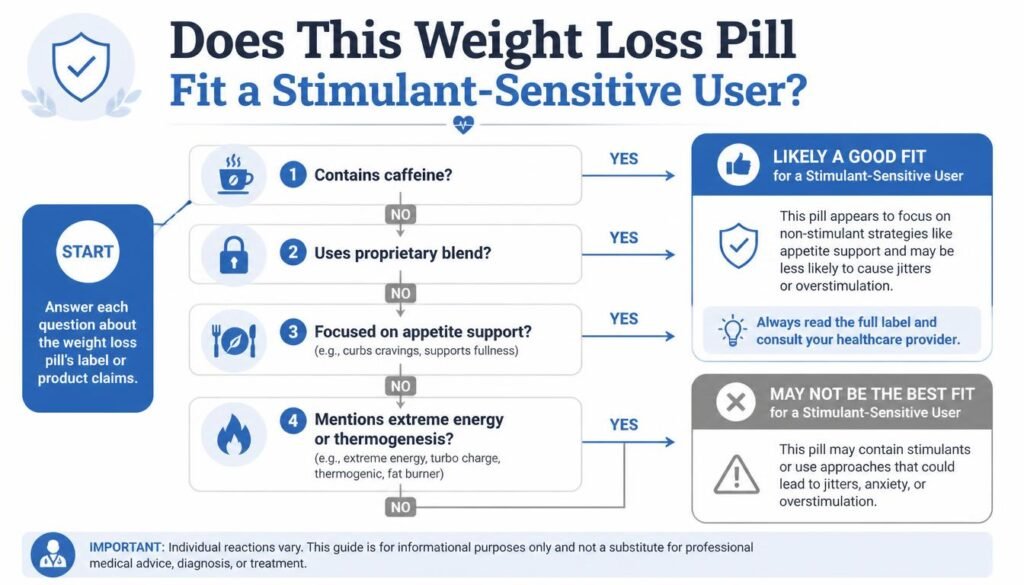
How to choose a weight-loss pill if you are sensitive to stimulants
Here is the filter I would use before buying anything:
- Read the full label, not the front of the bottle. The front sells the fantasy. The supplement facts panel tells the truth.
- Reject proprietary blends when possible. If the company hides amounts, you are flying blind.
- Scan for stacked stimulants. Even “moderate caffeine” can hit hard when paired with guarana, yerba mate, or synephrine-containing ingredients.
- Check the brand’s positioning. If the marketing is all “explosive energy,” “shred,” and “extreme heat,” you already know the angle.
- Think goal-first. Appetite issue, meal control issue, water-weight obsession, or genuine obesity treatment? Those are different problems.
- Avoid mystery imports and sketchy marketplace listings. FDA warnings on tainted weight-loss products are not theoretical. :contentReference[oaicite:5]{index=5}
If you are comparing categories, our best diet pills guide and fat burners breakdown can help you separate stimulant-heavy formulas from calmer options more quickly.
Red flags that should make you pass immediately
Some products tell on themselves fast. Skip the ones that:
- Use “proprietary matrix” language to hide doses
- Promise rapid fat loss with no diet changes
- Lead with “energy” more than appetite or adherence
- Contain multiple stimulant sources in one serving
- Have vague “herbal complex” labeling with no standardization
- Show aggressive before-and-after marketing but zero serious safety guidance
Also, if a supplement makes you feel your heartbeat, wrecks your sleep, spikes your anxiety, or leaves you shaky, stop treating that as a badge of honor. It is not “proof of fat burning.” It is a tolerance problem at best and a safety issue at worst.
What actually matters more than the pill
This part is less fun, but it is true: the pill matters less than whether it helps you consistently eat in a way you can sustain. NIH, NCCIH, and Mayo Clinic all land in roughly the same place here: evidence for many weight-loss supplements is limited, safety is uneven, and long-term success still depends heavily on food intake, physical activity, and realistic adherence. :contentReference[oaicite:6]{index=6}
So the winning product is not the one that feels strongest. It is the one that supports behavior without creating new problems. For stimulant-sensitive users, that usually means calmer, more targeted support or a clinician-guided medical option instead of chasing the loudest “burner” on the shelf.
Who should talk to a healthcare professional before taking anything
You should get professional guidance before using any weight-loss pill or supplement if you have high blood pressure, heart rhythm issues, anxiety, panic symptoms, thyroid disease, diabetes, are pregnant or breastfeeding, take prescription medications, or have reacted badly to stimulant products before. The FDA notes that dietary supplements can contain biologically active ingredients and may conflict with medicines or medical conditions. :contentReference[oaicite:7]{index=7}
That is especially important in this niche because the line between “supplement,” “hidden drug,” and “questionable internet product” is not always as clean as the label pretends.

Bottom line
If you want weight loss pills that do not cause jitters, stop shopping like a stimulant lover and start shopping like a risk manager. Avoid formulas built around caffeine stacking, hidden blends, bitter orange, and yohimbe. Favor transparent, non-stimulant appetite-support angles when appropriate. And if you want a true medication route, know that non-stimulant options like orlistat exist, but they come with a different side-effect tradeoff rather than a free pass.
The real goal is not to find the most intense pill. It is to find the most tolerable, evidence-aware, and sustainable option for your body. In this category, boring and transparent usually beats flashy and jittery.
Recommended expert resources
- NIH Office of Dietary Supplements: Weight-Loss Supplements Fact Sheet for Consumers
- NCCIH: Facts About Supplements Marketed for Weight Loss
- FDA: Weight Loss Product Notifications
- NIDDK: Prescription Medications to Treat Overweight and Obesity
Editorial note: This article is informational and not medical advice. If a supplement gives you palpitations, anxiety, chest discomfort, severe insomnia, or other concerning symptoms, stop using it and speak with a qualified healthcare professional.