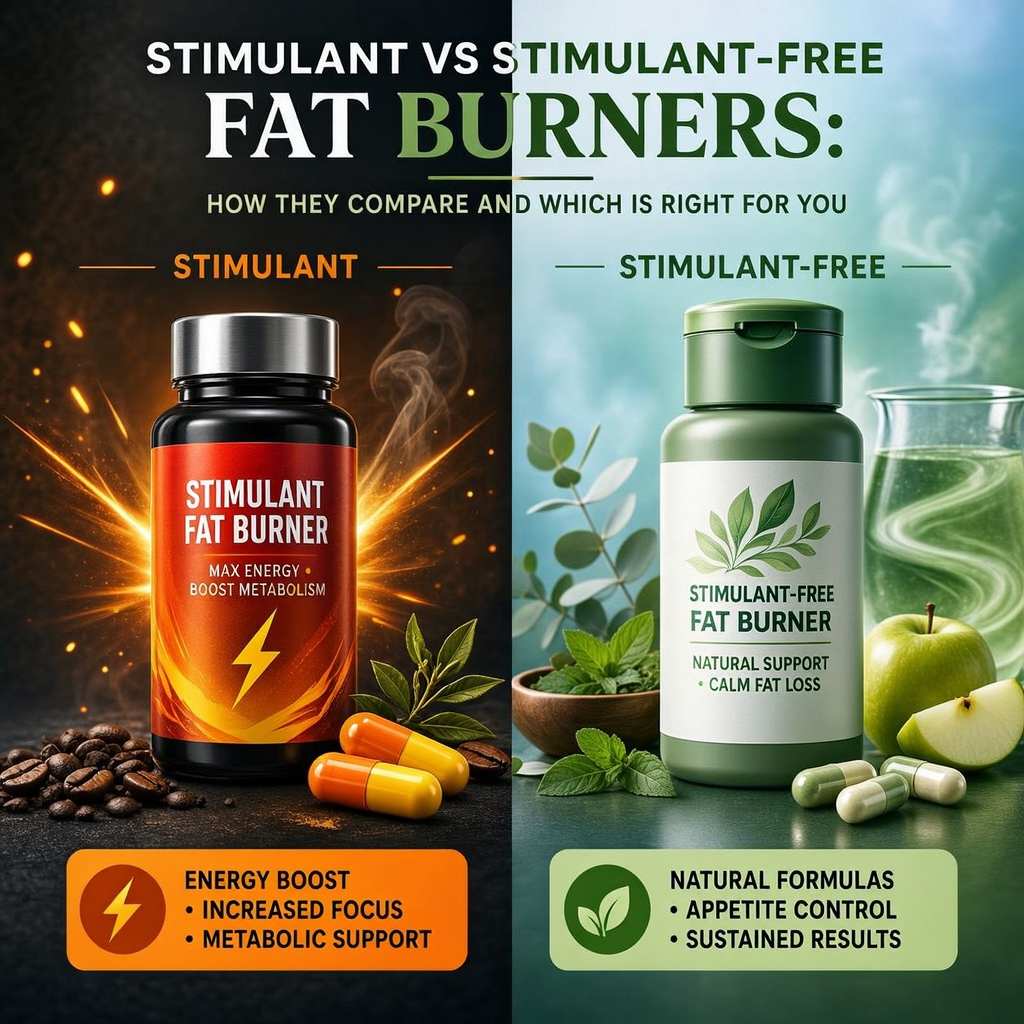
Stimulant vs Stimulant-Free Fat Burners: How They Compare and Which Is Right for You
Choosing between stimulant vs stimulant-free fat burners comes down to one honest truth most articles skip. Neither type melts fat off your body on its own. What a fat burner can do is nudge things—curb an appetite, sharpen a workout, take the edge off a hard diet day. That’s the whole job. Once you accept that the ceiling is low, picking the right one gets easy.
So which fat burner fits you? It depends on a few honest questions about your body and your day.
Table of Contents
What Is the Difference Between Stimulant and Stimulant-Free Fat Burners?
Stimulant fat burners rely on caffeine to boost energy and sharpen workouts, giving a noticeable buzz. Stimulant-free fat burners skip caffeine and lean on ingredients like L-carnitine, green tea extract, or fiber to help curb appetite. Both offer small effects—stimulants just feel more powerful. The right pick depends on your caffeine tolerance, timing, and goals.
A stimulant fat burner is basically your pre-workout, marketed for weight loss. A caffeine-free fat burner drops the buzz and works quietly in the background, if it works at all.
The big difference is what you feel. One hits hard. The other you barely notice.
How Much Caffeine Do You Already Drink Daily?
Here’s a simple gut check. Add up your coffee, tea, and energy drinks on a normal day.
Already at three or four cups of coffee? A stimulant fat burner just piles on. That’s when the racing heart and the 3 p.m. crash show up.
More caffeine does not mean more fat loss. Your body adapts to it fast. The jitters climb. The benefit stays flat. In fact, the FDA warns that too much caffeine can cause serious heart and nervous-system effects, which matters a lot once a fat burner stacks more on top of your coffee.
When Should You Take a Fat Burner?
Timing quietly decides a lot. Caffeine has a long tail—its half-life is around five to six hours, so half the dose is still in you that long after you swallow it.
- Morning workout? A stimulant is probably fine.
- Evening lifter? That same dose can wreck your sleep.
- Bad sleep tanks recovery and spikes your hunger the next day.
Train after 5 p.m.? A stimulant-free fat burner is the safer call. You lose the buzz but keep your rest.
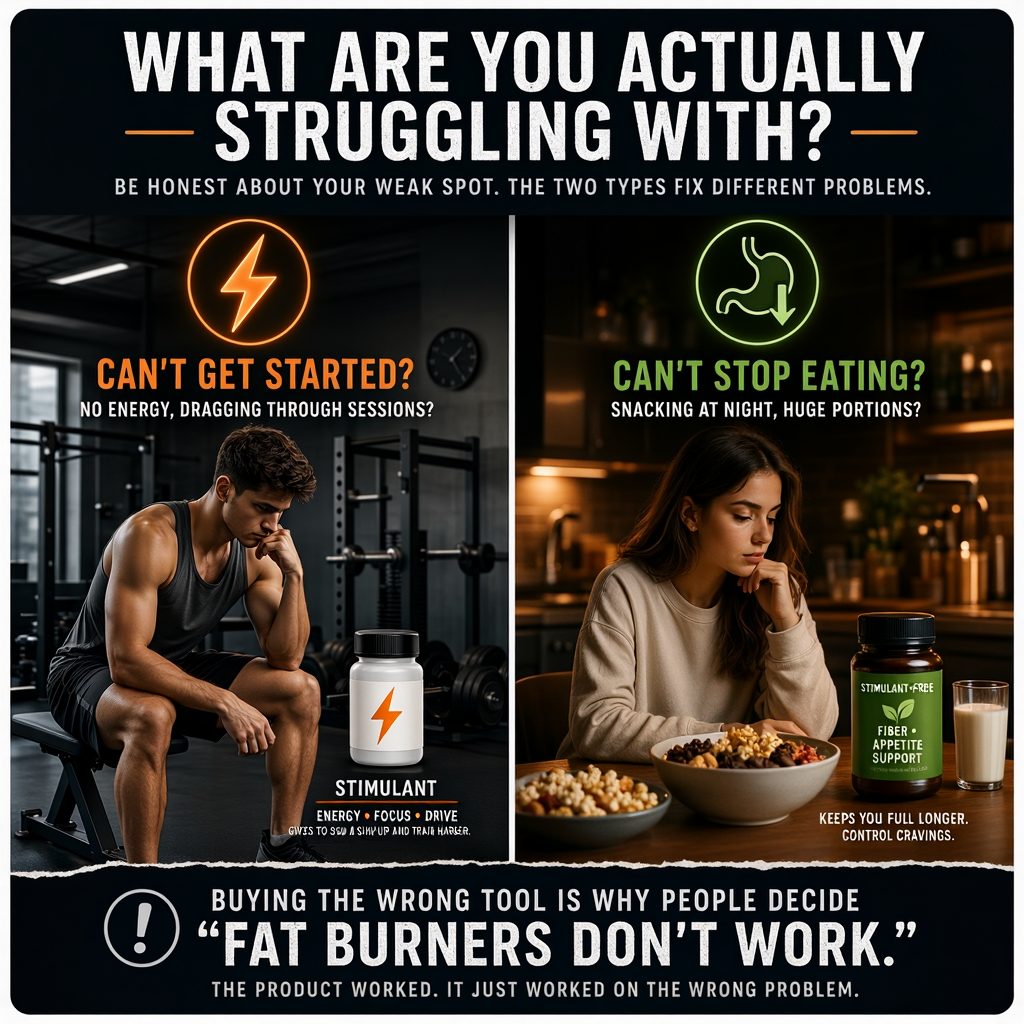
What Are You Actually Struggling With?
Be honest about your weak spot. The two types fix different problems.
Can’t get started—no energy, dragging through sessions? A stimulant gives you a push to show up and train harder.
Can’t stop eating—snacking at night, huge portions? A stimulant-free formula with fiber or appetite support fits you better.
Buying the wrong tool is why people decide “fat burners don’t work.” The product worked. It just worked on the wrong problem.
Are Stimulant Fat Burners Safe for Your Heart?
This isn’t a throwaway line. Stimulants raise your heart rate and blood pressure, full stop.
Got a heart condition, high blood pressure, anxiety, or a pregnancy? Skip the stimulants. And talk to a doctor before you take either type—that advice is not filler.
One more trust point: the National Institutes of Health says there’s little scientific evidence that weight-loss supplements actually work—and some can even interact with medications or cause harm. On top of that, they don’t get FDA review for safety before they hit the shelf. So look for a third-party testing seal on the label. That way you at least know what’s really in the bottle.
Stimulant-free fat burners aren’t automatically “safe” for everyone either. But they don’t carry the same load on your heart. For a lot of people, that settles it.
Does the Buzz Trick You Into Thinking It Works?
Here’s the trap. A stimulant feels powerful, so you assume it’s torching fat.
What you feel is the caffeine. That buzz is not fat leaving your body.
Stimulant-free fat burners feel like nothing, so people quit them early. But “feels like nothing” and “does nothing” are not the same thing. Both types offer small effects. One just comes with a loud soundtrack.
Do You Even Need a Fat Burner at All?
Fair question. For most people, the real levers are food, sleep, protein, and daily steps. A supplement is the small stuff you sprinkle on top. This lines up with Mayo Clinic’s guidance that lasting weight loss comes from diet and activity, not pills. The basics drive the results.
Want the quick decision?
- Choose a stimulant fat burner if you train in the morning, handle caffeine well, have a healthy heart, and need an energy push.
- Choose a stimulant-free fat burner if you train late, are caffeine-sensitive, want appetite help, or have any heart concern.
- Choose neither if your sleep, diet, or activity still have obvious room to grow. Fix those first. They’re free and they work better.
The Bottom Line on Stimulant vs Stimulant-Free Fat Burners
Stop hunting for the “better” category—it doesn’t exist. There’s only the fat burner that fits your body, your schedule, and the exact problem you’re trying to solve. What works for your gym buddy might be flat wrong for you.
Nail your sleep, protein, and step count first. If those are genuinely handled and you want a small edge, run the seven questions above tonight and pick your lane. Answer them straight, and they’ll point you at the right shelf—or tell you to keep your money. Then, if there’s any health flag at all, check with your doctor before you buy a thing.