Non-Stimulant Fat Burners: The Honest Truth
If you’re looking into non-stimulant fat burners, you’ve probably already seen the ads. “Melt fat while you sleep.” “The secret they don’t want you to know.” You rolled your eyes. Good. You should. Most fat burners are junk—overpriced caffeine with a scary-sounding label. So let’s skip the hype and talk about what’s real. Non-stimulant fat burners are a different category, and a few of them are actually backed by science. Not miracles. Just small, real effects that add up when the basics are already in place. Here’s the honest version.
I’ll be straight with you before we start: no brand paid for this, and there’s no checkout page waiting at the bottom. I’ve watched too many people white-knuckle through caffeine-loaded burners, sleep four hours a night, and wonder why the scale won’t budge. This is the article I wish they’d read first.
Table of Contents
What a Non-Stimulant Fat Burner Actually Is
Most fat burners work by jacking up your nervous system. Caffeine, yohimbine, synephrine. They make your heart race and your hands shake. They can work a little. But the crash is brutal. And if you’re sensitive to stimulants, they wreck your sleep and spike your anxiety.
That’s the whole idea behind fat burners without caffeine. They skip the nervous-system rollercoaster entirely. No jitters, no 3 p.m. crash, no lying awake at midnight. If you want the full breakdown of how stimulant and non-stimulant fat burners differ, that comparison is worth reading before you buy anything. Instead of hammering your nerves, these formulas target the boring mechanics of fat loss:
- How full you feel
- How your body handles blood sugar
- How efficiently you burn stored fat
Less dramatic. But that’s kind of the point.
Which Non-Stimulant Fat Burners Have Real Evidence?
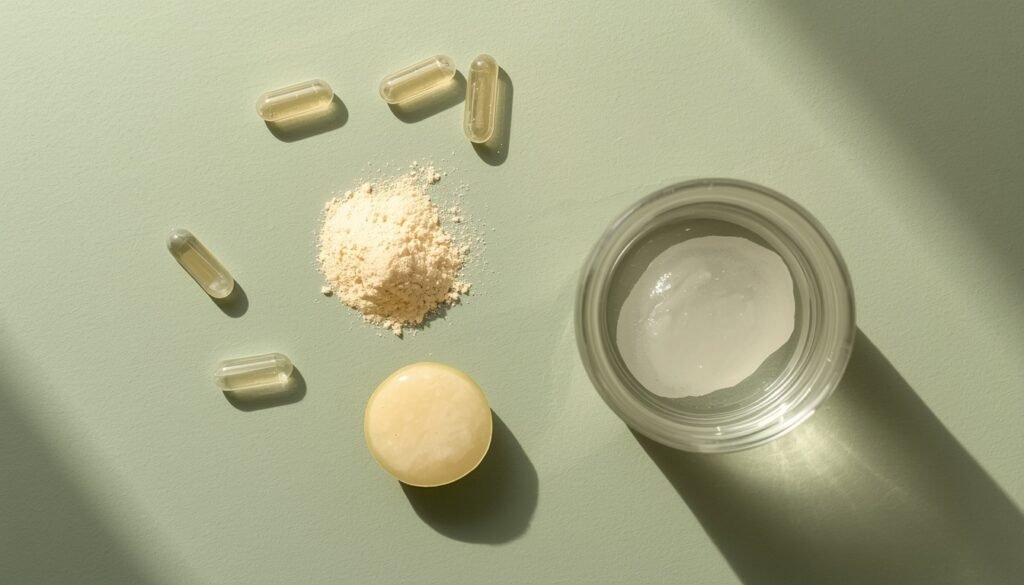
Glucomannan: The Fiber That Curbs Appetite
Yes, fiber. Stay with me. Soluble fiber like glucomannan absorbs water in your gut. It swells up. It makes you feel full on less food.
This isn’t a wellness-blog cliché. Glucomannan has been studied specifically for weight loss, with mixed but real results in some trials. In fact, the European Food Safety Authority (EFSA) reviewed the evidence and authorized an actual health claim: glucomannan can contribute to weight loss as part of a calorie-restricted diet, taken with water before meals. A regulator signing off on a supplement claim is rare in this industry—take the signal for what it’s worth.
The effect is still modest. But it’s a genuine mechanism, not marketing. Here’s why it matters for you: appetite is the whole game. Most diets fail because people get hungry and quit. Something that quietly takes the edge off hunger is worth more than any “metabolism booster”—which is exactly why appetite suppressants get more of my attention than flashy thermogenics. Boring? Completely. Effective for some people? Also yes.
Berberine: The Blood Sugar Angle
Ever notice how a big, carb-heavy meal leaves you starving two hours later? That’s the blood sugar rollercoaster. Some non-stimulant ingredients aim right at this problem.
Berberine is the standout. Research suggests it can improve how your body handles blood sugar and insulin. A few studies show modest weight loss too, though the quality is more mixed than the glucomannan data—so keep your expectations honest. If you want to see how ingredients like this are dosed and combined in real products, our ingredient guides break down what’s actually inside a formula.
Watch: why the “Nature’s Ozempic” hype around berberine doesn’t hold up
A short, evidence-based breakdown of where berberine genuinely delivers—and where the marketing runs way ahead of the science. It’s the same “modest, real, no miracles” message this whole article is built on.
Steadier blood sugar can mean a steadier appetite. Fewer crashes. Fewer cravings. Fewer moments where you demolish a bag of chips at 9 p.m. Again, this is a small lever. But small levers, pulled every day, move real weight over months.
How Well Do Non-Stimulant Fat Burners Really Work?
Non-stimulant fat burners work, but only modestly. Ingredients like glucomannan and berberine have real mechanisms—curbing appetite and steadying blood sugar—backed by some clinical evidence. The effect is small, not a transformation. They help most when your diet, sleep, and training are already consistent, acting as a nudge rather than a fix.
Here’s the part the sales pages skip. No pill—stimulant or not—outruns a bad diet. The effects we’re talking about are small. Think a helpful nudge, not a makeover. If someone promises double-digit fat loss from a capsule, they’re lying. Walk away.
What these ingredients actually do is make the hard part slightly easier:
- Slightly less hunger
- Slightly steadier energy
- Slightly better odds of sticking to your plan
“Slightly” doesn’t sell magazines. But add up all those small wins over months, and better consistency is exactly how people actually lose weight.
Why Stimulant-Free Fat Burners Have a Real Advantage
This is the genuinely underrated part. The best fat-loss tool is the one you can stick with. And stimulants sabotage that for a lot of people. Caffeine-heavy burners can:
- Trash your sleep, which itself makes fat loss harder
- Spike anxiety
- Push you to quit because you feel terrible
And bad sleep makes you hungrier. It ramps up cravings. So a stimulant that ruins your sleep can quietly undo your own progress.

Stimulant-free fat burners sidestep all of that. You can take them and still sleep like a normal human. For anyone stimulant-sensitive, that’s not a small perk—it’s the whole ballgame. If caffeine is the thing that keeps wrecking you, start with weight loss pills that don’t cause jitters and work from there.
Who Should Take Non-Stimulant Fat Burners?
Let me be specific, because “everyone” is a lie. Non-stimulant fat burners might genuinely help if you:
- Already have your diet and training mostly dialed in
- Struggle with appetite more than motivation
- Are sensitive to caffeine, or already drink a lot of it
- Want an edge without touching your sleep or your nerves
They make far less sense if your diet is chaos. No capsule fixes chaos. Fix that first—and if you’re not sure where to begin, start with the basics before you spend a cent on supplements.
How to Choose a Non-Stimulant Fat Burner
If you decide to try one, shop like a cynic. It’ll protect you.
- Look for real ingredients at real doses. Glucomannan and berberine have studied dose ranges. Check that the label actually hits them.
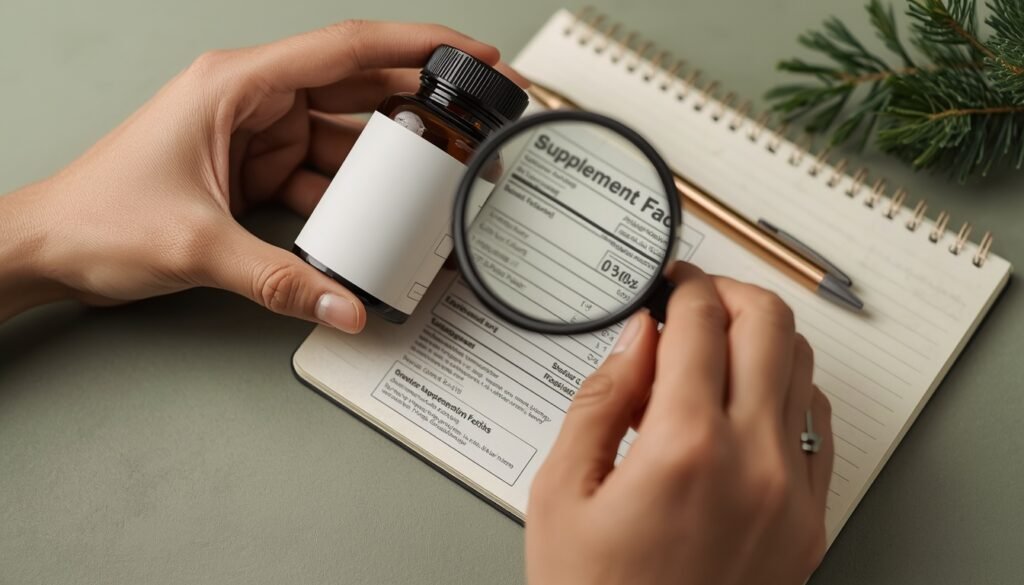
- Avoid “proprietary blends.” That label hides how little of each ingredient you’re really getting. Our guide on how to read a supplement label shows you how to catch this in about 60 seconds.
- Ignore the hype words. “Thermogenic miracle” means nothing.
- Give it a fair, boring trial. A few weeks, tracking honestly. Not one dramatic week.
A good product has nothing to hide. It tells you exactly what’s inside and how much.
The Honest Bottom Line on Non-Stimulant Fat Burners
Look, non-stimulant fat burners aren’t going to change your life. Anyone who tells you a capsule melts fat is lying to your face—walk away, every time. But writing off the whole category is a mistake too. A couple of these ingredients have real mechanisms and modest evidence, and they pull it off without torching your sleep or leaving you wired at midnight. Small, real help you can actually stick with. That’s the entire pitch.
So do this: get your diet and sleep sorted first, because nothing in a bottle fixes chaos. Then, if hunger is the thing that keeps sinking you, pick one well-formulated non-stimulant fat burner with proven ingredients at proper doses—our best fat burners guide is a sane place to start—and run it honestly for a month. Track it. Judge it on your own numbers—not on some ad that already burned you once.
This article is for informational purposes only and is not medical advice. Talk to a qualified healthcare professional before starting any supplement, especially if you take medication or have a health condition.
Sources: EFSA Scientific Opinion on glucomannan and body weight (2010) · Berberine and metabolic syndrome components: systematic review & meta-analysis (PubMed) · Berberine and obesity indices: dose–response meta-analysis (PubMed)