
Why a Fiber Appetite Suppressant Beats Stimulants
If you’re weighing a fiber appetite suppressant against a stimulant, let’s be honest about who you are. You’ve tried the fat burners. You’ve felt your heart pound at 2 a.m. You’ve read “clinically proven” so many times it means nothing anymore. So when someone says fiber beats stimulants, your first instinct is: sure, buddy. Good. Keep that instinct. I’m not asking you to drop it. I’m going to show you why a fiber appetite suppressant wins even while you stay skeptical the whole way through.
Full disclosure before we start: I’m not a doctor, and this isn’t medical advice. It’s one person’s read of the research, with the studies’ weaknesses left in on purpose. I’ve also been on both sides of this. I ran a stretch on a prescription stimulant, lost weight fast, then spent weeks wide awake at 3 a.m. and watched it come back. I’ve also spent months on plain glucomannan fiber. That contrast is the reason I’m writing this.
Table of Contents
Does a Fiber Appetite Suppressant Actually Work?
Here’s the thing most fiber cheerleaders won’t tell you: the evidence for fiber isn’t a slam dunk either. Clinical studies on glucomannan — the most popular fiber suppressant — are genuinely mixed. One trial found glucomannan plus a reduced-calorie diet significantly increased weight loss versus placebo. But other reviews were less impressed. A systematic review of the trials found only a small effect on body weight and flagged poor study quality and small sample sizes (MedExpress; GoodRx).
I’m telling you this on purpose. Because if I hid it, you’d smell the sales job — and you’d be right to walk. The honest version is more useful anyway. Fiber isn’t magic. Nothing here is.
The real question is simpler: which tool gives you the best odds with the lowest risk?
Are fiber appetite suppressants better than stimulants? A fiber appetite suppressant like glucomannan works by absorbing water and forming a gel that fills your stomach, increasing fullness. Stimulants like phentermine suppress hunger by triggering your nervous system, which can raise heart rate and blood pressure. Fiber carries a far lower risk profile, making it the safer long-term choice.
That’s where fiber pulls ahead. Not because it’s a miracle. Because the downside is so much smaller.

How Fiber and Stimulant Appetite Suppressants Work
This part matters. The mechanism is the whole argument — and it’s the piece most people skip when they search for how appetite suppressants work.
How Glucomannan Fiber Curbs Appetite
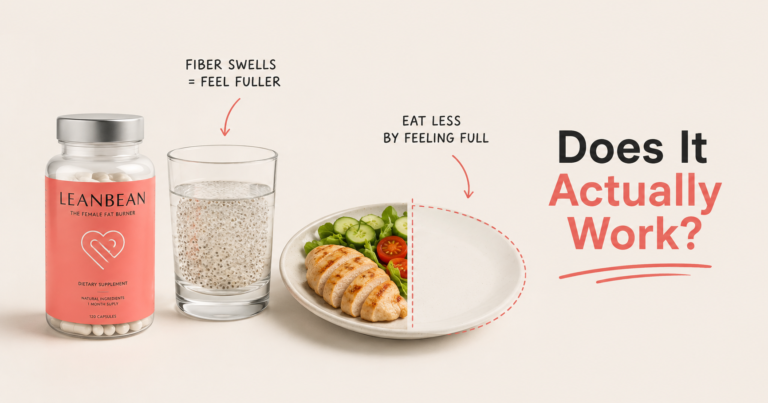
A natural appetite suppressant like glucomannan doesn’t touch your brain chemistry. It’s physical. Glucomannan absorbs 10 to 15 times its weight in water, forming a thick gel in your digestive tract (MedExpress). If you want the full breakdown, this guide covers how glucomannan works and how to dose it.
That gel takes up space. It sits in your stomach. It slows how fast food leaves your stomach, which increases that feeling of fullness (MedExpress).
Translation: you feel full because you are full. Your stomach is literally fuller.
How Phentermine and Stimulants Suppress Hunger
Now the stimulant side. Phentermine is a prescription stimulant — the same engine behind most stimulant fat burners. It’s chemically close to amphetamines. It flips on your fight-or-flight switch, flooding your body with norepinephrine and adrenaline (Signos; Ubie).
See the difference? One fills your stomach. The other hijacks your nervous system.
Phentermine Side Effects and the Stimulant Trade-Off
Stimulants work. I won’t pretend otherwise. Phentermine can produce real weight loss over a few months. But read how it does it. It raises your heart rate and blood pressure. That’s not a bug — that’s the mechanism firing (Ubie).
And the phentermine side effects are exactly what you’d expect from revving your engine. Common ones include insomnia, dry mouth, palpitations, anxiety, dependence, and even psychosis in rare cases (Straight Healthcare).
Here’s the trap nobody warns you about early enough. Phentermine is a Schedule IV controlled substance, meaning it has potential for abuse and dependence. It’s usually prescribed for just a few weeks — up to three months — to prevent tolerance and limit side effects.
Sit with that. Your appetite comes roaring back the moment you stop. And you have to stop.
Why Stimulant Appetite Suppressants Stop Working
This is the part that burns people. The part you already know if you’ve been burned. Stimulants stop working. Your body adapts. That’s biology doing its job.
The research shows the same pattern in real patients. People who’ve used stimulants before often need bigger doses to feel any hunger control. And even then, it may barely work (Rivasweightloss).
So the honeymoon ends. The dose creeps up. The side effects get louder. And there’s a cruel little irony baked in: phentermine can cause insomnia — and poor sleep undermines the very weight loss it’s supposed to help (Rivasweightloss). You lose sleep. Bad sleep raises hunger hormones. The tool fights itself. If the buzz is the exact thing wrecking your day, it’s worth looking at weight-loss pills that don’t cause jitters instead.
Fiber has no honeymoon and no crash. The gel forms today. It forms next month. It forms next year. Your body can’t build a tolerance to feeling physically full.

Fiber Appetite Suppressant Side Effects, Explained
I promised an honest map, so let’s look. Fiber suppressants aren’t free of problems. Some studies reported abdominal pain, constipation, and diarrhea in glucomannan groups (ScienceDirect). That’s real. Bloating and gas are common when you start.
There’s also one serious risk you must respect. Glucomannan swells fast. If you take it dry or with too little water, it can expand in your throat or esophagus and cause a blockage. That’s why the pill forms and proper water intake matter.
Now compare the two lists side by side:
- Stimulant risks: racing heart, high blood pressure, anxiety, insomnia, dependence, tolerance, rebound hunger.
- Fiber risks: gas, bloating, and a choking risk you neutralize by drinking a full glass of water.
One list can send you to the ER for chest pain. Emergency care is advised for chest pain, fainting, or a resting heart rate over 120 on phentermine (Ubie). The other list means you might be a little gassy on Tuesday.
That’s not a close call. That’s the whole argument in one glance.
Is a Small, Safe Weight-Loss Effect Worth It?
Here’s where a sharp critic pushes back: “Fine, it’s safer. But if the weight-loss effect is small and mixed, who cares?”
Fair. Let’s answer it straight.
Fiber’s win isn’t just the number on the scale. It’s the type of tool it is. Stimulants are a sprint you can’t sustain — three months, then you’re out, and hunger returns worse than before. Fiber is a habit you can run for years. And weight loss that lasts is a game of years, not weeks.
There’s also a bonus stimulants can’t touch. In a meta-analysis in the American Journal of Clinical Nutrition, glucomannan was tied to lower body weight, better cholesterol, and steadier blood sugar. And high-fiber diets are linked to lower risk of heart disease, stroke, diabetes, and dying of any cause.
Read that again. The “boring” option quietly protects your heart. The “exciting” option puts strain on it.
Best Fiber for Appetite: Glucomannan vs. Psyllium vs. Inulin
Not all fiber is equal, and pretending otherwise would be lazy. The research is clear that type matters — some fiber types have minimal or even negative effects on appetite and weight (MDPI). Here’s a simple way to think about the main players:
- Glucomannan — the viscous heavyweight. Forms the thickest gel, so it’s strong on fullness. Highest water demand, so drink up.
- Psyllium — gel-forming but ferments less. That means less gas and stomach discomfort for many people (nih).
- Inulin — fermentable and gut-friendly, but weaker on raw fullness on its own.
Interestingly, blends can beat any single fiber. In one trial, a mix of inulin, glucomannan, and psyllium was significantly more effective than glucomannan alone (MDPI). If you’re comparing labels, the fiber-based appetite suppressant ingredient guides break down effective doses versus marketing doses.
You don’t get that kind of “just combine them” flexibility with a controlled stimulant. You get a titration schedule and a prescriber watching your pulse.
Why Stimulant Weight Loss Ends in a Shame Cycle
Let me name the thing under all the data. Stimulant appetite control feels like willpower in a bottle. You feel sharp, wired, unstoppable. For a few weeks, you feel like the person you wanted to be.
Then it fades. And when it fades, you don’t just feel hungry. You feel like you failed — when really the chemistry just wore off on schedule. That shame cycle is brutal. I think it’s the real reason so many people get burned and stay bitter.
Fiber doesn’t offer that high. And that’s exactly why it doesn’t offer that crash. It just makes you a little fuller at dinner. Quietly. Every day. No drama. No comedown. No “am I becoming dependent on this?” at 3 a.m.
Boring is the feature. Boring is what you can live with for a decade.
Fiber vs. Stimulant Appetite Suppressant: The Verdict
So pick the tool you can still be using a year from now. A stimulant isn’t that tool — it’s a three-month loan with rebound hunger and a racing heart built into the repayment. A fiber appetite suppressant is. It works by physics, it can’t be out-adapted, and the worst regular day is a gassy Tuesday. That’s the whole gamble, and it’s not close. (If stimulants are off the table for you, the same logic runs through every option in non-stimulant fat burners.)
Do one thing before you spend a dollar: talk to your doctor — especially if you have heart issues, take other meds, or have a history of dependence. If you’re cleared, give a single viscous fiber like glucomannan or psyllium one honest month: a full glass of water before every meal, and track your hunger instead of the scale. And before you buy anything, learn to read the supplement label so you’re paying for a real dose, not a name on the front.
Boring is the one you’ll still be taking when the fat burners are back in a drawer.