Capsaicin for Weight Loss: The Dose That Works
Most cayenne fat burners lie to you about weight loss. Not with fake science — with math they hope you never check. If you searched whether capsaicin actually burns fat, here’s the honest answer before the sales pitch: it does something, but something small. I don’t have a bottle to sell you — just 24 randomized trials and the math the labels hope you skip.
This is what capsaicin for weight loss really does: the real numbers, the real limits, and the exact point where it stops being marketing and starts being useful. If supplements have burned you before, good. That instinct is about to save you money. (For the wider category, our guide to fat burners breaks down how these formulas actually differ.)
Table of Contents
Does capsaicin actually burn belly fat?
Does capsaicin help with weight loss? Yes, but modestly. Capsaicin, the compound in chili peppers, slightly raises how many calories you burn and lowers your appetite. At doses of 2 mg or more, it increases fat burning and curbs hunger while you diet. It’s a small, proven edge — not a fat-melting miracle.
Cayenne will not melt your belly fat. No pill does. Anyone who says otherwise is selling you a feeling, not a result. So walk away from those bottles right now.
Here’s the honest version. Capsaicin is the compound that makes chili peppers hot. It does two small, measurable things to your body. It nudges your metabolism up a little. It makes you a bit less hungry. That’s it — two small effects. But “small” and “fake” are not the same word, and the supplement industry is counting on you to confuse them.
Does capsaicin boost metabolism?
Here’s where most articles cheat. They shout “capsaicin boosts metabolism!” and stop. The truth has fine print — and the fine print is the whole story.
A systematic review of 20 trials found capsaicinoids raised the calories people burned by about 50 a day. That sounds tiny because it is tiny. But here’s the part critics skip: over one to two years, that small daily gap could add up to real weight loss. Fifty calories a day won’t change your Tuesday. It might quietly change your year.
How much capsaicin do you need for weight loss?
Now the detail that separates a working product from a scam: the dose.
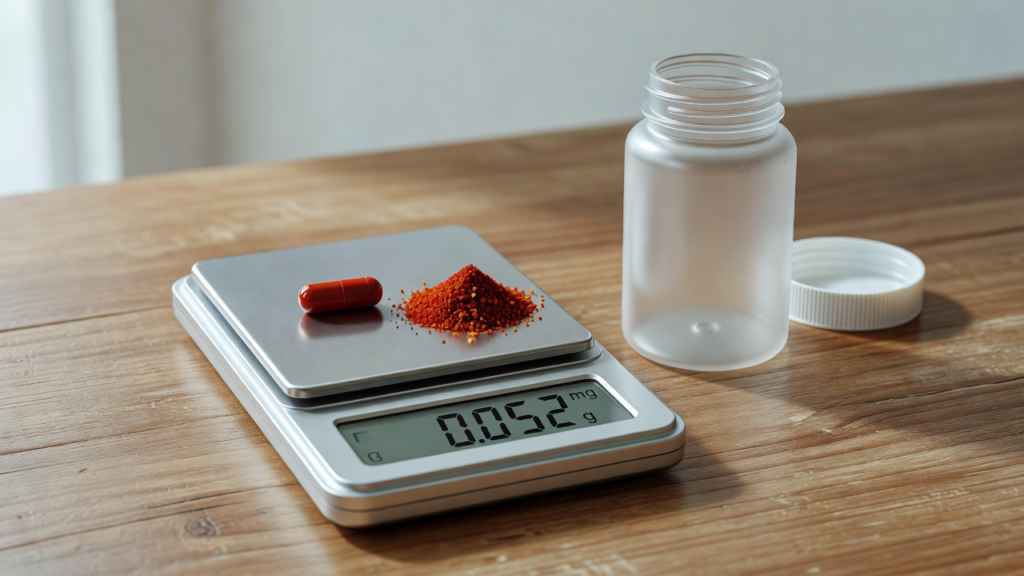
A review of 12 clinical studies found something clear. The metabolism effect only showed up at higher doses. Capsaicin raised calorie burn at high doses but did nothing at low or medium doses. Read that again. Low doses did nothing — and most cheap fat burners use low doses.
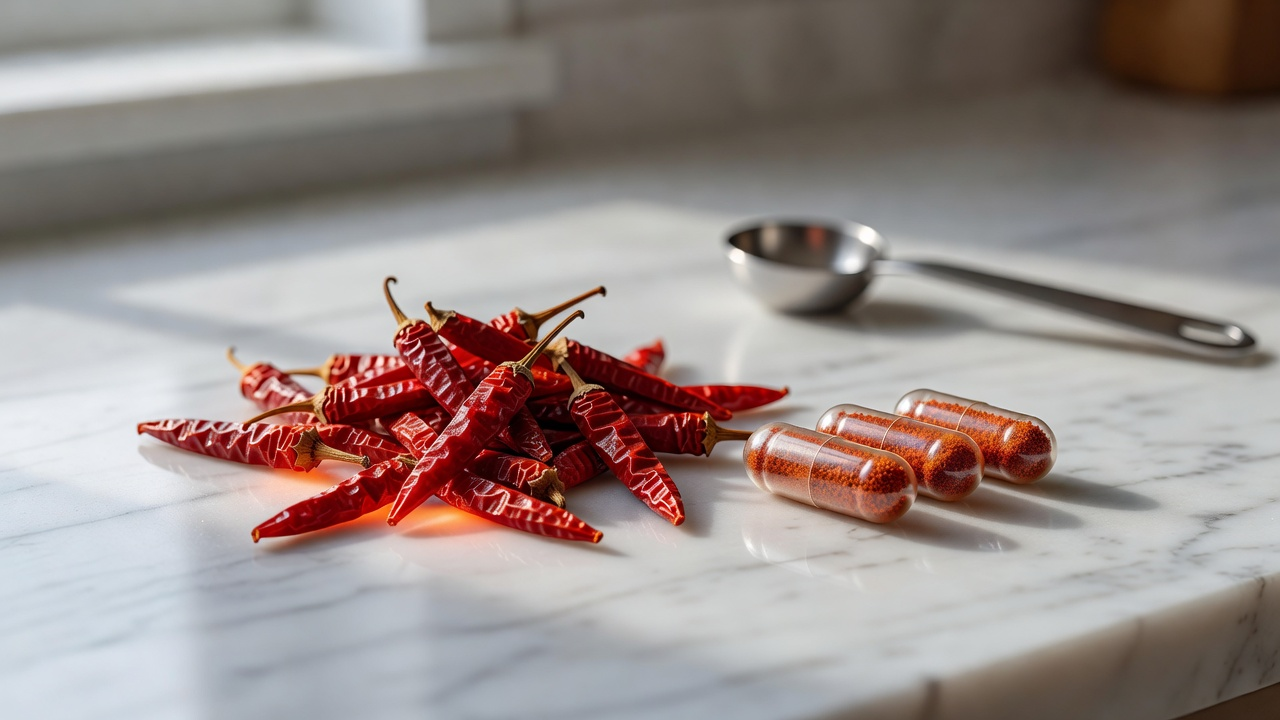
Here’s what that means in real terms. A 500 mg capsule of dried cayenne holds only about 1.2 mg of capsaicin. That’s often too little to matter. The studies that showed real fat burning used meaningful amounts: roughly 2.25 to 33 mg of capsaicin per meal. So if a label hides its capsaicin amount, assume it’s too low. That’s not cynicism. That’s how you dodge the trap. (If label-reading isn’t your thing yet, start with our ingredient guides — they show you exactly what to look for.)
Does capsaicin suppress appetite?
Here’s what the metabolism hype misses: the hunger effect is the stronger card.
A meta-analysis of energy-intake studies looked at what happens when people eat capsaicin before a meal. The result was consistent. Eating capsaicinoids before a meal cut how much people ate by about 74 calories at that meal. And there was a threshold: you need at least 2 mg of capsaicinoids to get the effect. Below that, nothing.
There’s a bonus buried in the same research. Capsaicin shifted people’s cravings away from fatty foods toward lighter choices. Eat a little less. Crave junk a little less. That’s a quiet, useful nudge. (This is why capsaicin shows up so often in appetite suppressant formulas.)
Watch: are cayenne and capsaicin supplements worth the hype?
Capsaicin and dieting: why it works best during a calorie deficit
Now the part that should make a skeptic sit up. Capsaicin seems to help most at the exact moment diets fail.
When you cut calories, your body fights back. Your metabolism slows down. Your hunger climbs. That’s why people regain the weight.
A controlled study tested capsaicin during a real calorie deficit. During a 20% deficit, capsaicin helped offset the drop in calorie burn that normally comes with dieting. In plain words, it softened the slowdown. The same study found more fat burning too: people taking 2.56 mg of capsaicin per meal burned more fat during the deficit.
A 2026 review backs this up. It looked at 24 randomized studies and found capsaicin’s long-term metabolism boost is minimal — but it consistently increased fat burning and helped fight the hunger that wrecks diets. The reviewers called it a useful add-on for keeping weight off. Notice the honest framing: not a miracle, an add-on. That’s the real pitch.
Who does capsaicin work best for?
Let me be blunt about the fit. This isn’t for everyone.
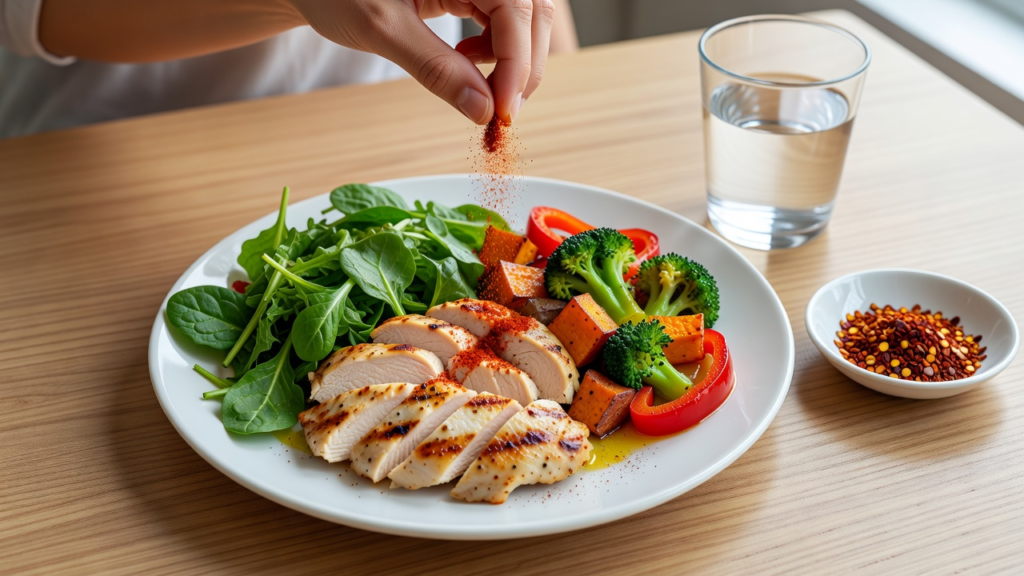
The research hints at who benefits most. People carrying extra weight see clearer effects. In a meta-analysis of overweight and obese subjects, people with a BMI over 25 showed more fat burning, while leaner people showed none. So if you’re already lean, temper your expectations.
Capsaicin for weight loss makes sense if you are:
- Actively dieting and fighting hunger
- Carrying extra weight you want to lose
- Willing to use a real dose, not a token sprinkle
It’s a lever, not an engine. It works alongside a calorie deficit. It never replaces one.
Capsaicin side effects and safety warnings
Here’s how you know I’m not selling you anything: I’ll list the downsides myself.
The most common problem is your gut. Oral capsaicin can upset your stomach — think acid reflux, nausea, and discomfort. For a lot of people, that burn is a dealbreaker. Honestly, that’s fair.
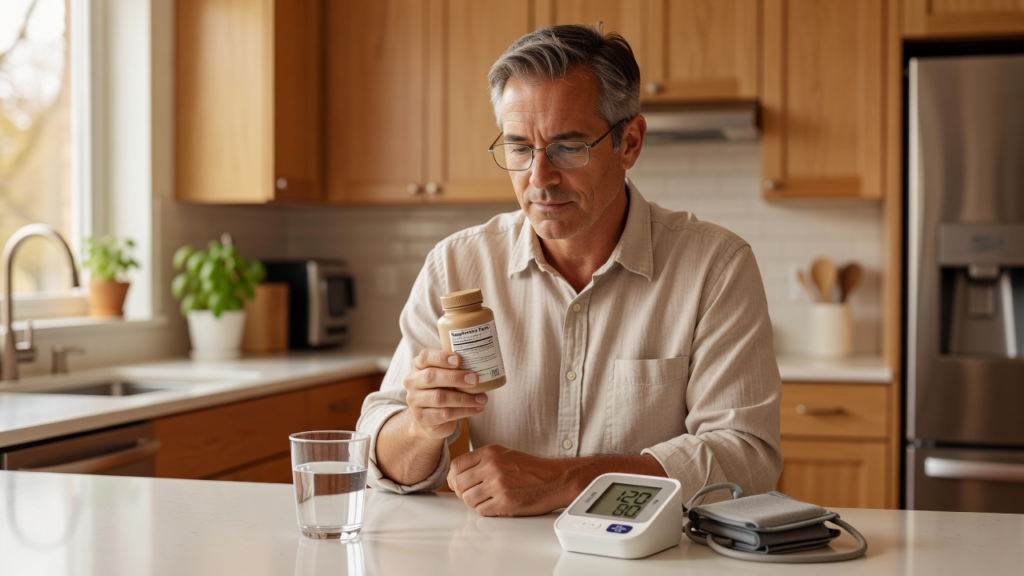
Blood pressure is the bigger flag. Some research shows capsicum might raise blood pressure and interfere with blood pressure drugs. It may also interact with ACE inhibitors, NSAIDs, blood thinners, and antiplatelet medicines. So this matters if you take certain medications. (We cover this in depth in fat burner side effects: 7 people who must stop.)
There’s one more honest gap. We don’t have good safety data on oral capsaicin during pregnancy and breastfeeding, so caution is warranted. And keep this in view: the FDA has not reviewed capsicum supplements for safety or effectiveness. Supplements aren’t held to drug standards. If you take medication or have a health condition, talk to your doctor first. That’s not a legal reflex. It’s the smart move.
What to actually buy (if you buy anything)
If you decide capsaicin earns a spot in your routine, buy on one rule: the label must state its capsaicinoid amount, and it must clear 2 mg per serving. Anything vaguer is a coin flip. A few honest starting points:
- Standardized capsaicinoids (Capsimax-style): the easiest way to hit a real, measured dose — see options on Amazon
- Cayenne pepper capsules: cheaper, but check the capsaicin content, not just the milligrams of pepper — browse on Amazon
- Capsaicin fat burners: fine only if the dose is printed on the label — compare on Amazon
- Plain cayenne powder: the whole-food route if capsules upset your stomach — find it on Amazon
Not sure a fat burner is even your best category? Compare the field first in our 3 weight loss supplements breakdown.
Disclosure: This article contains affiliate links. As an Amazon Associate we earn from qualifying purchases, at no extra cost to you. Content is informational only and isn’t medical advice.
Frequently asked questions
Does cayenne pepper burn belly fat?
Not on its own. Cayenne’s capsaicin slightly raises calorie burn and dampens appetite, which can support fat loss over time — but no pill or spice targets belly fat specifically. It only works alongside a calorie deficit.
How much capsaicin do I need for weight loss?
Studies point to at least 2 mg of capsaicinoids to affect appetite, and the fat-burning effects showed up at roughly 2.25 to 33 mg per meal. Low doses did nothing in the research, so a hidden or tiny dose is a red flag.
Does capsaicin actually suppress appetite?
Yes, modestly. Eating capsaicinoids before a meal cut intake by about 74 calories in a pooled analysis, and it nudged cravings away from fatty foods — but only above the 2 mg threshold.
Does capsaicin work better while dieting?
It seems to. During a 20% calorie deficit, capsaicin helped offset the metabolic slowdown that normally comes with dieting and increased fat burning — the exact moment most diets stall.
Is capsaicin safe with blood pressure medication?
Be careful. Some research suggests capsicum may raise blood pressure and interact with blood pressure drugs, ACE inhibitors, NSAIDs, blood thinners, and antiplatelet medicines. Talk to your doctor before combining them.
Who should not take capsaicin supplements?
Anyone pregnant or breastfeeding (safety data is thin), people with sensitive stomachs or reflux, and anyone on the medications above without a doctor’s sign-off.
The bottom line on capsaicin for weight loss
Capsaicin isn’t magic, and anyone who tells you it is wants your money, not your results. What it gives you is real and small: a little more fat burning and a little less hunger, right when your diet needs both. Your gut was right to laugh at the big claims. Now trust it enough to believe the small one.
If you want to try capsaicin for weight loss, skip any product that hides its dose or promises a melted waistline, find one with at least 2 mg of capsaicinoids per serving, clear it with your doctor if you take any medication, and then get back to the calorie deficit that actually does the work. Compare a few honestly-labeled options in our best diet pills guide, pick one, and move on. That’s the whole deal.
This article is for general information and isn’t medical advice. Talk to a healthcare professional before starting any supplement, especially if you take medication, have a health condition, or are pregnant or breastfeeding.