GLP-1 Constipation: What Actually Works on Shots and the New Pills
Affiliate disclosure: Some links in this article are Amazon affiliate links. If you buy through them, we may earn a small commission at no extra cost to you. Images are AI-generated illustrations created in Canva, not photos of real patients.
Medical disclaimer: This article is for general information only and is not medical advice. It does not replace a diagnosis or treatment plan from your doctor or pharmacist. Statements about supplements have not been evaluated by the FDA, and these products are not intended to diagnose, treat, cure or prevent any disease. Talk to your prescriber before starting a laxative, fiber or magnesium supplement with a GLP-1 medication, especially if you have kidney disease or take other prescriptions. Seek urgent care for severe abdominal pain, vomiting or a swollen belly.
GLP-1 constipation is the side effect people mention least and quit over most quietly. On Zepbound’s first big trial, 17% of people on the 5 mg and 10 mg doses reported it, against 6% on placebo. On the new Foundayo pill it reached 27% at the 9 mg step. Switching from a shot to a pill does not get you out of it.
The good news is that GLP-1 constipation is usually predictable. It tends to show up when you eat and drink less, and again after each dose increase. The tools that fix it are cheap and sitting in any pharmacy. What most guides miss is the order to use them in, and how to time fiber and magnesium around the new daily pills.
Below you’ll find the real numbers for each drug, a 72-hour rescue plan, a prevention routine built around dose increases, and the warning signs that mean you should stop self-treating.
Table of Contents
How common is GLP-1 constipation? The numbers by drug
Trial figures are the cleanest way to compare GLP-1 constipation risk, because each drug was tested against a placebo group eating the same reduced-calorie diet. Here is what the labels and manufacturer data show:
| Medication | Constipation on drug | Constipation on placebo | Source |
|---|---|---|---|
| Wegovy injection 2.4 mg (semaglutide) | 24% | 11% | FDA label |
| Zepbound 5 / 10 / 15 mg (tirzepatide) | 17% / 17% / 12% | 6% | SURMOUNT-1 |
| Foundayo 5.5 / 9 / 17.2 mg (orforglipron) | 20% / 27% / 24% | 9% | ATTAIN-1 and -2, pooled |
| Wegovy pill 25 mg (oral semaglutide) | Listed as a common reaction | — | FDA label |
The semaglutide figures come from the Wegovy prescribing information on DailyMed. The tirzepatide numbers come from Lilly’s SURMOUNT-1 data. The orforglipron figures are from Lilly’s Foundayo safety summary.
Two patterns stand out. First, the drug roughly doubles your baseline risk, but it doesn’t create it from nothing: about one in ten placebo users got constipated too, simply from eating less. Second, the highest dose isn’t always the worst. With both tirzepatide and orforglipron, a middle dose produced the most complaints.
Why switching to a pill won’t prevent GLP-1 constipation
Many people move to the Wegovy pill or Foundayo hoping for a gentler gut. For nausea, Foundayo looks a little gentler: 35% at its top dose, against 44% on the Wegovy injection. For constipation, the pooled Foundayo data show a rate in the same 20–27% range as the shots, and the Wegovy pill carries the same class warnings as the injection.
So plan for GLP-1 constipation whatever form you take. If you’re on Foundayo, our guide to Foundayo side effects by dose shows which step tends to hit hardest.
What causes GLP-1 constipation
Three things happen at once, and each one needs a different fix.
- Slower transit. GLP-1 receptors sit along the whole gut, not just the stomach. The drug slows how fast contents move, which gives the colon more time to pull water out of stool.
- Less going in. When appetite drops by a third, there is simply less bulk to push things along. Fiber intake often falls further, because vegetables and whole grains are the first foods people stop finishing.
- Less fluid. Reduced hunger often comes with reduced thirst. Food itself supplies a meaningful share of daily water, so eating less means drinking less without noticing.
That’s why “just eat more fiber” so often fails as a GLP-1 constipation fix. Adding a big fiber dose without extra water to a slowed gut can make hard stools harder. The order matters: fluid first, then gentle osmotic help if needed, then fiber in steps.
Stuck right now? A 72-hour plan for GLP-1 constipation
If GLP-1 constipation has lasted three days or more and you’re uncomfortable, aim for a soft, complete bowel movement first. Prevention comes after.
Day 1: water plus an osmotic laxative
Drink an extra 500–750 ml of water across the day, on top of your usual intake. Then take one dose of polyethylene glycol 3350 (PEG), the ingredient in MiraLAX. It pulls water into the colon rather than stimulating the muscle, so it rarely causes cramping. It is the one over-the-counter option the joint AGA–ACG constipation guideline gave a strong recommendation.
Expect results in one to three days, not one to three hours. The MiraLAX Drug Facts label says to ask a doctor before using it if you take a prescription drug, have kidney disease, or need it for more than a week. A GLP-1 counts as a prescription drug, so a quick message to your prescriber is worth sending.
Day 2: add movement and a scheduled toilet sit
Walk for 10 to 15 minutes after your largest meal. Then sit on the toilet for five unhurried minutes, with your feet raised on a stool so your knees sit above your hips. Your body’s gastrocolic reflex is strongest after eating, and this posture straightens the angle the stool has to pass through.
Day 3: a short stimulant rescue, if needed
If nothing has moved by day three, the guideline supports a stimulant laxative such as bisacodyl as a short-term rescue. Use one dose at bedtime, not a daily habit. Skip this step and call your prescriber instead if you have belly pain, vomiting or a swollen abdomen.
How to prevent GLP-1 constipation at every dose increase
Constipation on Ozempic, Wegovy, Mounjaro or Zepbound tends to cluster around dose increases. Lilly notes that nausea, vomiting and diarrhea on Foundayo peaked during dose escalation and then eased, and GLP-1 constipation often follows the same rhythm. Treat each step-up as a new week one, using this routine:
- Three days before the increase: raise water to at least 2 liters a day and start one fiber serving if you aren’t already taking one.
- Day of the increase: eat a normal-sized breakfast with some fruit. Skipping meals because you feel full is the single biggest constipation trigger.
- Days 2 to 7: log bowel movements on your phone. Two days without one is your cue to add PEG, not to wait for day five.
- Week 2 onward: if you needed PEG most days, ask your prescriber about staying on the current dose for an extra four weeks before moving up.

Timing fiber and magnesium around the Wegovy pill and Foundayo
This is where the daily pills change the routine. The Wegovy label says to take the tablet on an empty stomach in the morning with no more than 4 ounces of water. You must then wait at least 30 minutes before eating, drinking or taking other oral medicines. Absorption is fragile, and a fiber drink taken alongside it could cut how much drug reaches your blood.
Psyllium has its own rule. The Metamucil Drug Facts label tells you to take bulk fiber at least two hours apart from prescription medicines. A schedule that respects both:
- On waking: Wegovy pill with a sip of water only.
- 30+ minutes later: breakfast, coffee and other morning medicines.
- Mid-afternoon: fiber supplement with a full glass of water.
- Bedtime: magnesium, if you use it.
Foundayo is more forgiving, because you can take it at any time with or without food. Still keep fiber two hours away from it as a precaution, and the same rule covers thyroid medicine, iron and birth control pills.
Which over-the-counter fix suits GLP-1 constipation best?
Not every laxative fits a slowed gut. Here’s how the common options compare, based on the AGA–ACG guideline and what each one actually does.
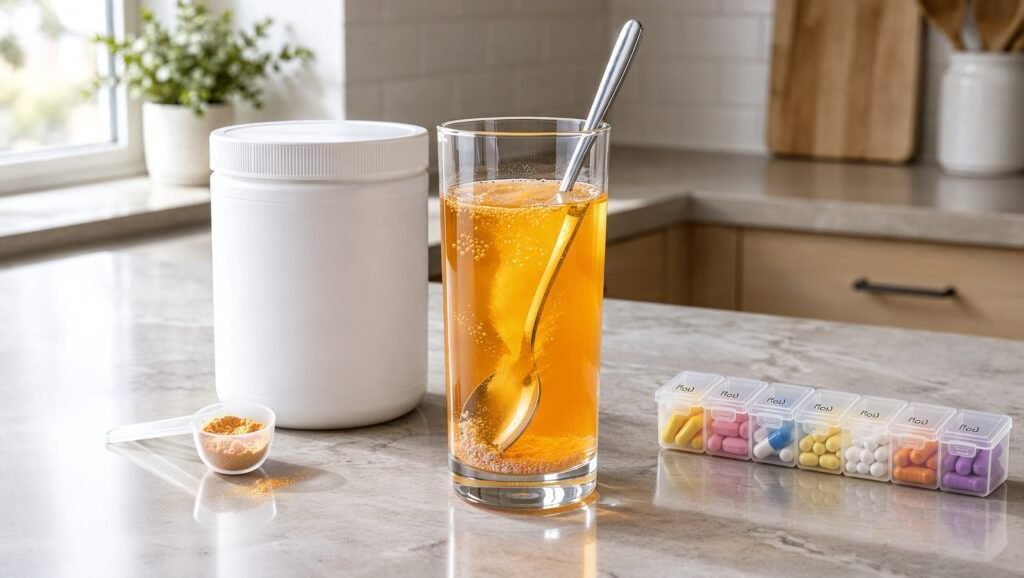
Polyethylene glycol (PEG 3350)
This is the most reliable first choice for GLP-1 constipation. It is flavorless, dissolves in any drink and isn’t habit-forming in the way stimulants can be. If you need it more than a few days a week for more than a week, that’s a conversation with your prescriber, not a reason to stop your GLP-1.
Psyllium fiber
Psyllium is the fiber with the most consistent trial support. Many other fibers, such as inulin, have weaker evidence and cause more gas. Sugar-free Metamucil psyllium powder is an easy pick because it dissolves fast and adds no sugar to a calorie-limited day. Start at one teaspoon in 8 ounces of water, and increase only after three days without bloating.
Capsules work too, but you need about six to match one spoonful. We compared both in our psyllium capsules vs powder guide.
Magnesium for constipation: dose, form and who should skip it
The 2023 AGA–ACG guideline was the first to recommend magnesium oxide, alongside senna. It works as an osmotic laxative, and the doses studied for constipation are usually 400–500 mg a day. A single Nature Made Magnesium Oxide 400 mg softgel at bedtime is a simple way to try it.
Know the trade-offs before you start. The NIH upper limit for supplemental magnesium is 350 mg a day, set because of diarrhea. A laxative dose deliberately goes past that, which is fine short-term for most healthy adults. It is not safe if you have kidney disease, because damaged kidneys can’t clear the excess. Magnesium citrate draws water faster but is harsher. Glycinate is gentle on the gut, which also means it does little for constipation.
What to skip
Docusate stool softeners weren’t among the guideline’s recommended treatments, so they are a weak buy for GLP-1 constipation despite their popularity. Stimulant teas often hide senna at unlabeled doses. And watch “GLP-1 support” blends that bundle a dozen ingredients at token amounts; our guide to reading a supplement label shows how to spot under-dosing.
Food moves that help on a reduced appetite
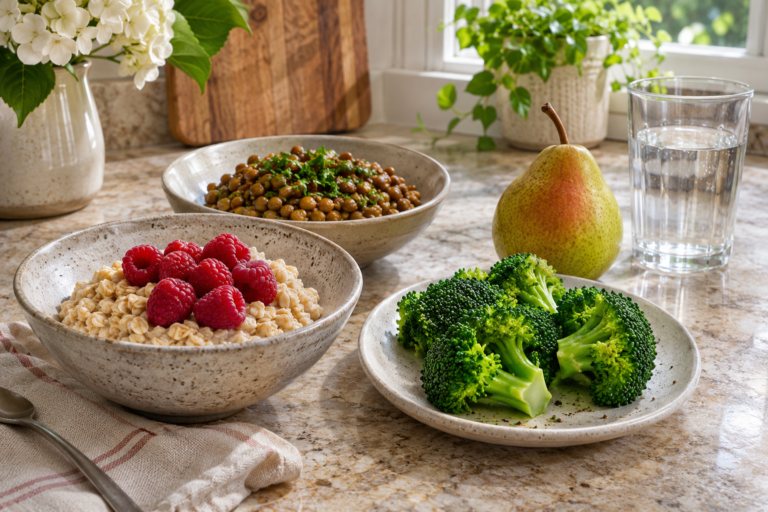
When you can only eat half a plate, every bite has to work harder. Three foods have real trial data behind them, and all three fit a GLP-1 constipation plan.
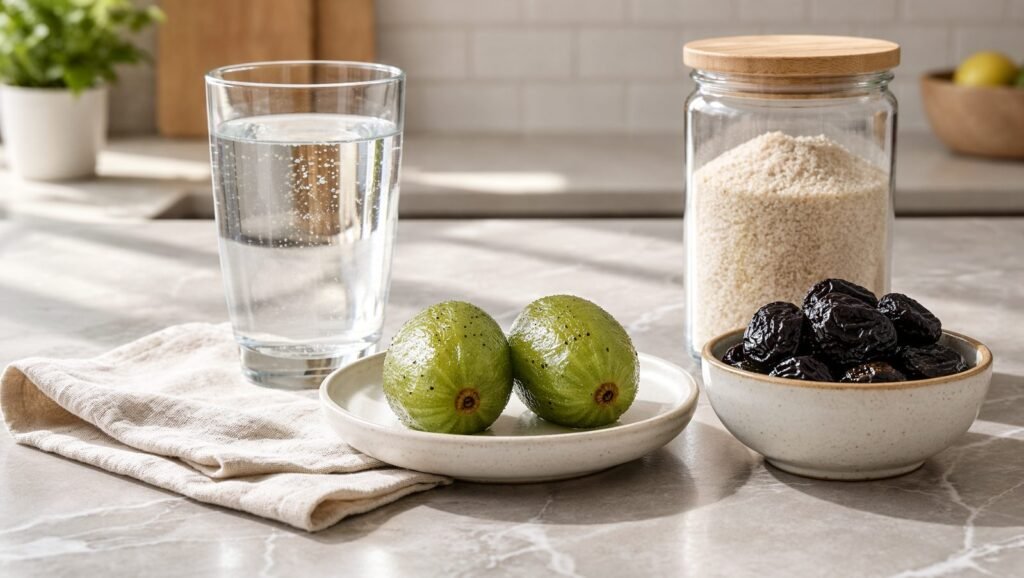
- Two green kiwifruits a day. In a 2021 American Journal of Gastroenterology trial, two kiwis worked about as well as 100 g of prunes or 12 g of psyllium over four weeks. They also caused the fewest side effects. They’re small and low in calories, which suits a GLP-1 appetite.
- Prunes, building toward about 100 g a day. That’s roughly 10 prunes, the amount used in the trial; start with 4 or 5. They combine fiber with sorbitol, a natural osmotic sugar. Eat them early in the day to avoid evening gas.
- Soups, smoothies and yogurt. These count toward fluid as well as food, which matters when thirst is muted.
Protein shakes deserve a caution. They’re essential for keeping muscle, but most contain little fiber, and a day built on two shakes is often a constipating day. Pair each one with a fruit or a fiber serving. Our protein on GLP-1 guide has targets that leave room for fiber.
If you’ve been tempted by the “fibermaxxing” trend, ramp up slowly. Jumping to 40-plus grams of fiber on a slowed gut is a reliable path to bloating, as we explain in our fibermaxxing mistakes guide.
Daily habits that prevent GLP-1 constipation
Supplements help, but the boring basics do much of the work against GLP-1 constipation.
- Set a water floor, not a target. Pick a bottle size and refill it a fixed number of times. Thirst won’t remind you on a GLP-1.
- Walk after the biggest meal. Ten minutes is enough to use the post-meal reflex.
- Keep a regular toilet time. The morning, about 20 to 30 minutes after breakfast, works for most people.
- Raise your feet. A Squatty Potty toilet stool puts you in a squat-like position with no effort. It’s a low-cost tweak that many people find reduces straining.
This short video from an obesity medicine doctor walks through the same basics, with a focus on prevention:
When GLP-1 constipation needs a doctor, not a laxative
Most cases of GLP-1 constipation are a nuisance, not a danger. But the Wegovy label lists ileus, intestinal obstruction and severe constipation with fecal impaction among events reported after approval. Stop self-treating and get same-day care if you have:
- Severe or worsening belly pain, especially with a swollen, hard abdomen
- Vomiting, particularly if you can’t keep fluids down
- No stool and no passing gas for more than a day while in pain
- Blood in your stool or black, tarry stools
- Constipation that lasts more than two weeks despite PEG
Tell any emergency team that you take a GLP-1, because it changes how they read your symptoms. And if constipation keeps you from moving up a dose, that is a valid reason to stay on your current one. The best dose is the one you can stay on.
Frequently asked questions about GLP-1 constipation
How long does GLP-1 constipation last?
GLP-1 constipation is usually worst in the first few weeks after starting and after each dose increase, then eases as the gut adapts. If it lasts more than two weeks despite water, fiber and PEG, talk to your prescriber about dose timing or a prescription option.
Is it safe to take MiraLAX with Ozempic or Mounjaro?
PEG 3350 doesn’t have a known interaction with GLP-1 drugs and is the first-choice over-the-counter laxative in the AGA–ACG guideline. Its label still says to ask a doctor before use if you take a prescription drug or have kidney disease, and to check in if you need it longer than a week.
Does magnesium help constipation on GLP-1 medications?
Magnesium oxide, usually 400 to 500 mg at bedtime, is a guideline-supported osmotic option. It goes above the 350 mg supplement upper limit, so use it short-term and avoid it entirely if you have kidney disease. Magnesium glycinate is too gentle to help much.
Can I take fiber at the same time as the Wegovy pill?
No. Take the Wegovy pill on an empty stomach with up to 4 ounces of water, then wait at least 30 minutes before anything else. Psyllium labels advise a two-hour gap from prescription medicines, so mid-afternoon is a safer time for fiber.
Which GLP-1 causes the least constipation?
There’s no head-to-head trial. In separate trials, constipation hit 24% on the Wegovy injection, 12–17% on Zepbound and 20–27% on Foundayo, each with its own placebo rate. For GLP-1 constipation, how you eat, drink and titrate matters more than which drug you pick.
Should I stop my GLP-1 if I’m constipated?
Usually not. In the Foundayo trials, only 3–6% of people quit because of GI side effects. Ask your prescriber about holding at your current dose longer, and seek urgent care for severe pain, vomiting or a swollen belly.
The bottom line
GLP-1 constipation is common, predictable and very manageable once you stop treating it as a surprise. Prepare before each dose increase, use PEG early instead of late, and add psyllium slowly. If you take the Wegovy pill, keep your fiber and magnesium well away from your morning dose.
If you’re still deciding which supplements belong next to your prescription, start with our review of GLP-1 supplements and what the evidence supports. Then bring your shortlist to your next appointment.