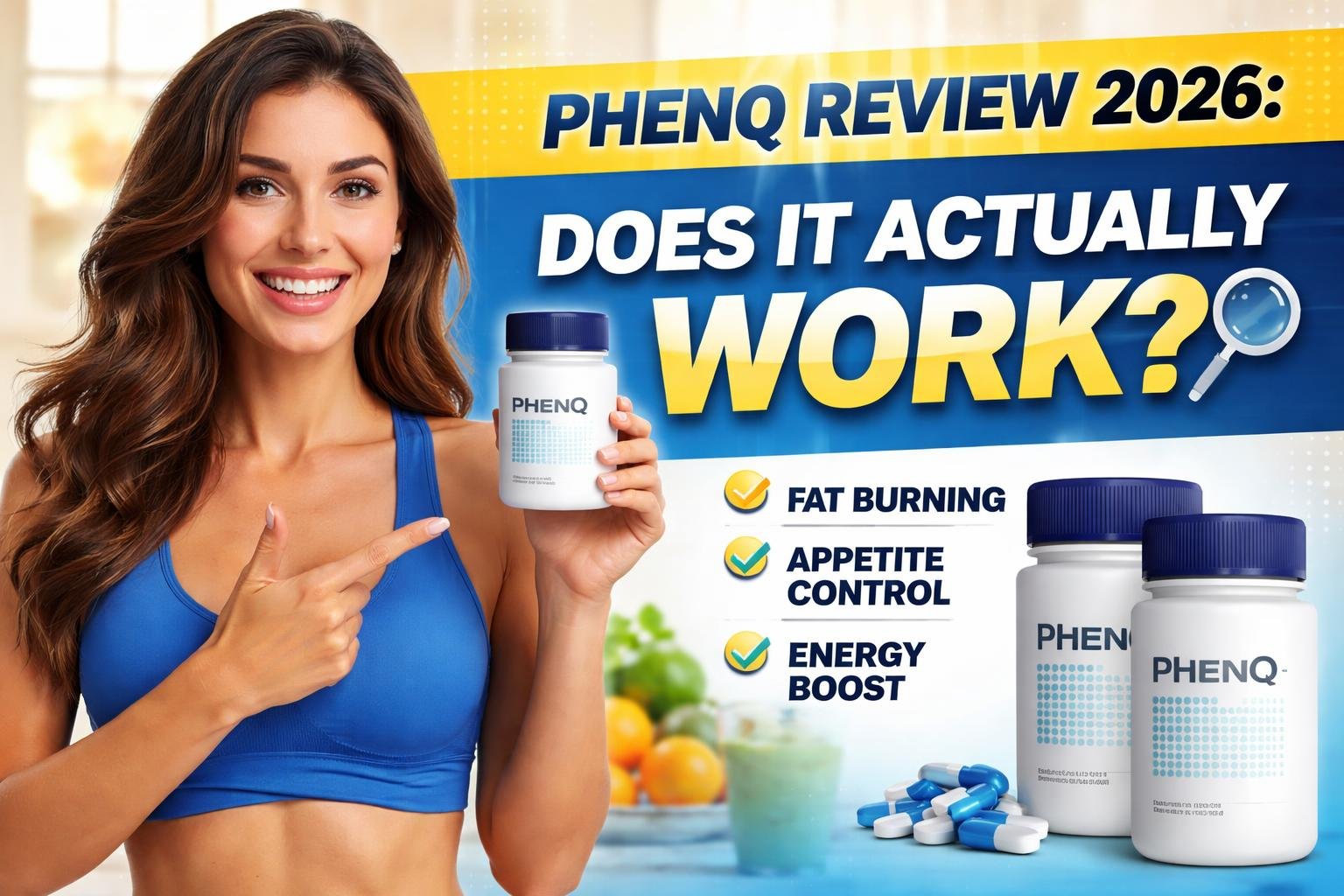
PhenQ Review 2026: Does It Actually Work?
This PhenQ review is for the part of you that already smells a scam. You’ve seen the before-and-after photos. You’ve read the “I lost 30 pounds” testimonials. And your gut said what it always says: sure you did. Good instinct. No hype, no “one weird trick” — just what PhenQ’s ingredients are, what the studies actually show, and what your money really buys. If a fat burner has burned you before, you deserve the plain truth. So let’s skip the sales pitch and check the receipts.
What Is PhenQ and How Does It Work?
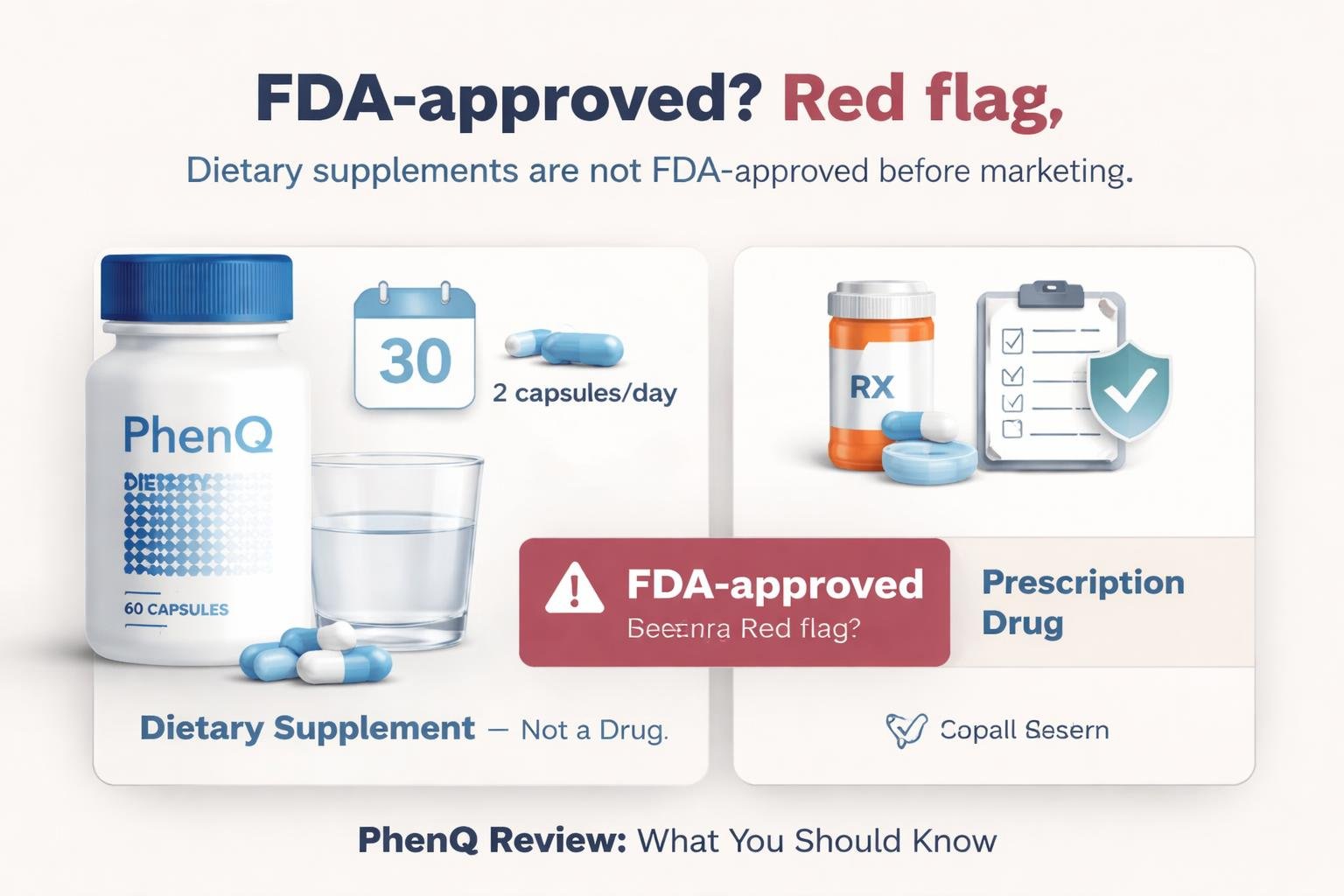
PhenQ is a weight-loss supplement you swallow as a pill. It’s made by Wolfson Brands, a UK company, and sold mostly through its own website. It is not a drug. It’s a dietary supplement — a line we unpack in OTC vs prescription weight loss pills. That difference matters more than almost anything else in this review.
Here’s why. Drugs must prove they work before they can be sold. Supplements don’t. The FDA does not test weight-loss supplements before they hit the market. So when a site calls PhenQ “FDA-approved,” that’s a red flag. No supplement is FDA-approved — under the 1994 law that governs them, the FDA reviews supplements only after they’re on the market, never before.
You take two pills a day. One bottle holds 60 pills, so it lasts a month.
PhenQ Ingredients: What’s Actually in the Bottle
Let’s open it up. As of early 2026, here’s what one daily dose of PhenQ contains:
- α-Lacys Reset (150 mg) — the “star” ingredient, a blend of alpha-lipoic acid and cysteine
- Capsimax Powder (100 mg) — a chili pepper extract
- Caffeine (150 mg per day) — about the same as a strong cup of coffee
- Nopal (200 mg) — a fiber from cactus
- Chromium Picolinate (100 mcg) — a mineral
- L-Carnitine Fumarate (50 mg) — an amino acid
- Calcium Carbonate (400 mg) — basically the stuff in antacids
Notice something? These are real, named ingredients with listed doses — and we break down what each one does in our ingredient guides. That already puts the PhenQ ingredients list ahead of the mystery “proprietary blends” that flood this market. Being honest about what’s in the bottle is a point in its favor. Whether those ingredients work is a separate question. Let’s answer it.
Does PhenQ Work? The Evidence, Ingredient by Ingredient
Here’s the single most important fact in this whole review.
Does PhenQ work? There is no clinical trial on the finished PhenQ formula, so no one has proven the pill itself works. Its ingredients — caffeine, chili extract, chromium and fiber — offer only small effects. Realistically, PhenQ may add about 1–3% extra weight loss on top of diet and exercise.
Read that again. Nobody has tested the actual pill against a placebo in a proper study. What we have is research on a few of the ingredients. Each one was tested on its own. Often at a different dose than PhenQ uses. So we can’t say “PhenQ was proven to work.” We can only ask: do its parts do anything?
- Caffeine. Yes, this one is real. Caffeine gives you energy and slightly bumps your metabolism. You already knew that. It’s coffee in a pill.
- Capsimax (chili extract). A 2012 research review found capsaicin can slightly raise how many calories you burn and gently curb appetite. Keyword: slightly.
- Chromium. Sometimes linked to fewer sugar cravings. The evidence is weak and mixed.
- Nopal. It’s fiber. Fiber helps you feel full — the same idea behind most appetite suppressants. You can get the same effect from beans or vegetables for pennies.
None of these are magic. They’re small nudges, not engines.
Is α-Lacys Reset Backed by Real Studies?
Now the “star” ingredient. This is where you should slow down and pay attention.
PhenQ points to one study on α-Lacys Reset. It reported a 7.2% drop in body fat and a 3.4% drop in weight. Sounds great, right?
Here’s the catch. That study was funded by the company that makes the ingredient. It had only 75 people. And no independent researchers have repeated it. A company studying its own product isn’t automatically lying. But it’s the weakest kind of evidence there is. You’d never buy a car based only on the carmaker’s own crash test.
What about independent research? Alpha-lipoic acid — the main part of α-Lacys Reset — has been studied on its own. Big independent reviews found it does help with weight. But only a little. One review found people lost about 0.7 kg on average. Another found around 2.3 kg. That’s roughly 1.5 to 5 pounds. And it took months to get there. One review flat-out said the ingredient “cannot be cost-effective.”
PhenQ Results: What Weight Loss Can You Actually Expect?
Let’s put the pieces together honestly. An independent review by Second Nature landed on a realistic number. PhenQ might add 1% to 3% extra weight loss on top of diet and exercise. In plain terms? Maybe 1 to 2 kilos over several months. That’s a few pounds. Not 30.
And here’s the fine print the testimonials hide. That small bump only happens if you’re already dieting and exercising. The pill is not doing the work. Your fork and your feet are. PhenQ is, at best, a tiny helper riding along.
If you were hoping to swallow a pill and skip the hard part, this review is your reality check. That product doesn’t exist. Not PhenQ, not anything on the shelf next to it.
PhenQ Side Effects and the Caffeine Catch
PhenQ packs 150 mg of caffeine a day, which puts it squarely in stimulant fat burner territory. For a lot of people, that’s fine. For some, it’s a problem. If you’re caffeine-sensitive, expect the usual: jitters, a racing heart, trouble sleeping. The company tells you not to take it after 3 p.m. for a reason.
Already drink coffee or energy drinks? Now you’re stacking caffeine on caffeine. Watch that.
Other possible PhenQ side effects are mild:
- Upset stomach (often from the chromium)
- Headaches
- Rare allergic reactions
Talk to your doctor before starting, especially if you take other medications or have a heart condition. This isn’t a throwaway line. It’s basic safety. And to be clear: this review is information, not medical advice — see our full disclaimer.
PhenQ Price and Refund Policy: What It Really Costs
Let’s talk money, because this is where skeptics get burned most. One bottle costs $69.99 on the official site. That’s one month. The bundles push you to buy more:
- 1 bottle: $69.99
- 2 bottles + 1 free: $139.99 (about $47 each)
- 3 bottles + 2 free: $209.99 (about $42 each)
So you’re looking at $42 to $70 per month. For a few pounds of extra loss, that’s a steep tab.
There’s a 60-day money-back guarantee, which sounds reassuring. But read the fine print. You can only claim a refund once per account. Get a refund once, and they won’t do it again. There’s also a 5% handling fee. And some buyers report fights over returned bottles.
My advice if you do buy: photograph your bottles, keep every receipt, and mark the 60-day deadline on your calendar.
Fake PhenQ: The Counterfeit Problem to Watch For
Here’s a genuinely alarming detail, and it’s a reason to be more careful, not less. Lab tests published in early 2026 checked PhenQ bought from unofficial sellers. The results were ugly.
- 43% had undeclared caffeine above safe levels
- 19% had no detectable α-Lacys Reset at all
Translation: the cheap “PhenQ” on random marketplaces may be fake, over-caffeinated, or missing the one ingredient it’s built around. If you buy at all, buy only from the official site. The bargain listings are a gamble with your health.
Who Should Buy PhenQ (and Who Should Skip It)
Let me be fair. PhenQ isn’t a scam in the classic sense. It’s a real company, with real ingredients, at honest doses. That’s more than many rivals can say. If you’re cross-shopping, see how it holds up in our LeanBean vs PhenQ comparison, or step back and scan the wider field in our best diet pills roundup.
It might be worth a look if all of these are true:
- You already eat well and exercise
- You want a small extra push, eyes open
- Caffeine agrees with you
- The cost doesn’t strain your budget
You should skip it if:
- You’re sensitive to caffeine
- You expect big, fast results
- You’re hoping to replace diet and exercise
- $50 a month is money you’d feel
That’s the honest split. No pressure either way.
PhenQ Review Verdict: Is It Worth It?
So here’s where this PhenQ review leaves you. It’s a caffeine pill with a few mild extras and one “star” ingredient propped up by a single company-funded study. On its best day it nudges. On its worst it just drains your card. The stuff that actually moves the scale is still free and boring: food, sleep, movement, patience.
You walked in skeptical. Keep it. Before you spend a single cent, book fifteen minutes with your doctor or a registered dietitian and say your real goal out loud. Still want to try it after that? Fine — buy only from the official site, and set the 60-day refund reminder before you click “order.”