Akkermansia for Weight Loss: What the 2026 Trial Actually Proves
Affiliate disclosure: Some links in this article are Amazon affiliate links. If you buy through them, we may earn a small commission at no extra cost to you. Images are AI-generated illustrations created in Canva, not photographs of real people or products. This guide is educational and does not replace advice from your doctor or pharmacist.
The best evidence for Akkermansia for weight loss doesn’t show faster fat loss at all. It shows something more useful: in a 2026 trial, people who took a pasteurized form of the bacterium after a strict diet regained about 2 kg less over six months than people on a placebo.
That distinction matters because most of the marketing on Amazon and TikTok promises the opposite. Labels talk about “boosting GLP-1” and “melting fat,” while the strongest human data points to a quieter job: helping you hold on to weight you’ve already lost.
This guide to Akkermansia for weight loss walks through every human trial that matters, explains why “live” and “pasteurized” products are not interchangeable, shows how to read three different dose units, and tells you who is a reasonable candidate and who should skip it. If you only have a minute, the short version is in the last section.
Table of Contents
What the 2026 Nature Medicine trial actually found
The study that put Akkermansia back in the headlines was published in Nature Medicine on May 13, 2026, by a team from Maastricht University Medical Center working with The Akkermansia Company. It is the largest placebo-controlled trial of the bacterium so far, and its design is worth understanding before you look at the result.
- Phase one: 90 adults with overweight or obesity spent eight weeks on a low-energy diet of meal-replacement soups and shakes, about 800 to 900 calories a day, with the goal of losing at least 8% of their body weight.
- Phase two: for the next 24 weeks they ate a healthy diet with no calorie limit and took either pasteurized Akkermansia muciniphila MucT or a placebo every day.
- Main outcome: weight regain during those 24 weeks.
According to the published abstract from Maastricht University, the pasteurized Akkermansia group regained 1.2 kg on average, compared with 3.2 kg on placebo. From the very start of the study to the end, the Akkermansia group finished 3.1 kg lighter than the placebo group. No serious treatment-related adverse events were reported.
The company’s own press release added that about 40% of the supplement group kept losing weight during maintenance, versus roughly 5% on placebo. Treat that figure as a manufacturer’s summary until you can read it in the full paper.
How much does Akkermansia for weight loss add in real pounds?
Two kilograms is about 4.4 pounds over six months. That is the most honest single number for Akkermansia for weight loss right now. It is real, statistically significant and clinically meaningful for maintenance, but it is not a transformation. For comparison, people in the same trial had just lost 8% or more of their body weight in eight weeks through diet alone.
Three caveats keep the result in proportion. The study was small. It lasted six months after the diet, so nobody knows what happens at year two. And as Rachel Woods of the University of Nottingham noted in her analysis, several authors declared links to the company that makes the supplement, and participants had dietitian support that a typical buyer won’t have.
Akkermansia for weight loss vs. weight maintenance: why the difference matters
Losing weight and keeping it off are different biological problems. After a diet, hunger hormones rise, energy expenditure falls, and the body pushes back toward its old weight. That pushback is where most diets fail.
The scale of the problem is clearest in the GLP-1 era. In the STEP 1 trial extension, people who stopped semaglutide 2.4 mg regained two-thirds of the weight they had lost within a year. They had lost an average of 17.3% of body weight on the drug, then regained 11.6 percentage points after stopping.
This weight regain gap is what Akkermansia researchers are now aiming at. Nobody has tested whether it reduces regain after a GLP-1 medication specifically; the 2026 trial used a diet. But the logic is the same, and it explains why the products have shifted their wording from “weight loss” to “weight maintenance.”
There’s also a practical reason the maintenance framing suits an Akkermansia supplement. During active dieting, the calorie deficit does the heavy lifting and any capsule is a rounding error. During maintenance, small daily nudges to appetite and insulin sensitivity add up over months, which is exactly the window where a 2 kg difference can appear.
So if you’re asking whether Akkermansia will help you lose 20 pounds, the honest answer is that no trial supports that. If you’re asking whether it might help you keep off weight you’ve already lost, there is now one good randomized trial that says yes, modestly.
The other human trials: smaller, mixed, and mostly about blood sugar
Before 2026, the human evidence came from two studies people still quote, often inaccurately.
The 2019 Belgian pilot
The first human trial, published in Nature Medicine in 2019 by Depommier and colleagues, enrolled 40 insulin-resistant adults with overweight or obesity; 32 finished. They took 10 billion live or pasteurized bacteria a day, or a placebo, for three months.
Pasteurized Akkermansia improved insulin sensitivity by about 28.6% and lowered blood insulin by about 34% and total cholesterol by about 8.7% compared with placebo. Body weight fell by 2.27 kg versus placebo, but that result was not statistically significant (P = 0.091). The live form did less than the pasteurized one.
The Pendulum diabetes trial
The second study, published in BMJ Open Diabetes Research & Care in 2020, tested a five-strain blend that included live Akkermansia in 76 adults with type 2 diabetes. After 12 weeks, the blend lowered after-meal blood glucose (the main outcome), while A1c fell by 0.6 points versus placebo, a result that just missed statistical significance. Body weight did not change. All the authors worked for Pendulum, the company that sells the blend.
Put together, the pre-2026 picture of Akkermansia for weight loss is consistent: better insulin and glucose markers, little or no direct weight loss. ConsumerLab’s review of the research reaches the same conclusion, noting that most clinical studies show no direct weight loss benefit and that maintenance is the one area with a possible advantage.
For a short, research-focused overview of these studies, this clinician explainer is a good companion:
Pasteurized vs live Akkermansia: which form matches the research
This is the single most useful thing to understand before buying, and it’s where most competitor articles go quiet.
Pasteurized Akkermansia is heat-treated so the bacteria are no longer alive. That sounds like a defect, but in mouse studies the pasteurized form worked as well as or better than live cells, likely because a protein on the bacterial surface survives heating. Both Nature Medicine trials that showed metabolic or maintenance benefits used the pasteurized MucT strain. The European Food Safety Authority also assessed pasteurized Akkermansia as a novel food and judged 3.4 × 10¹⁰ cells a day safe for adults, excluding pregnant and breastfeeding women.
Live Akkermansia is a living probiotic. It’s harder to manufacture because the bacterium dies on contact with oxygen, and products often need refrigeration. The live strain sold in the US by Pendulum (WB-STR-0001) is a different strain from MucT, and it has not been tested for weight maintenance.
Our judgment: if you’re considering Akkermansia for weight loss maintenance, choose a pasteurized MucT product, because that is the exact form and strain the 2026 trial used. If your goal is broader gut health and you like the idea of a live probiotic, a live product is reasonable, but don’t expect it to replicate the 2026 result.
Dose: why labels use three different units
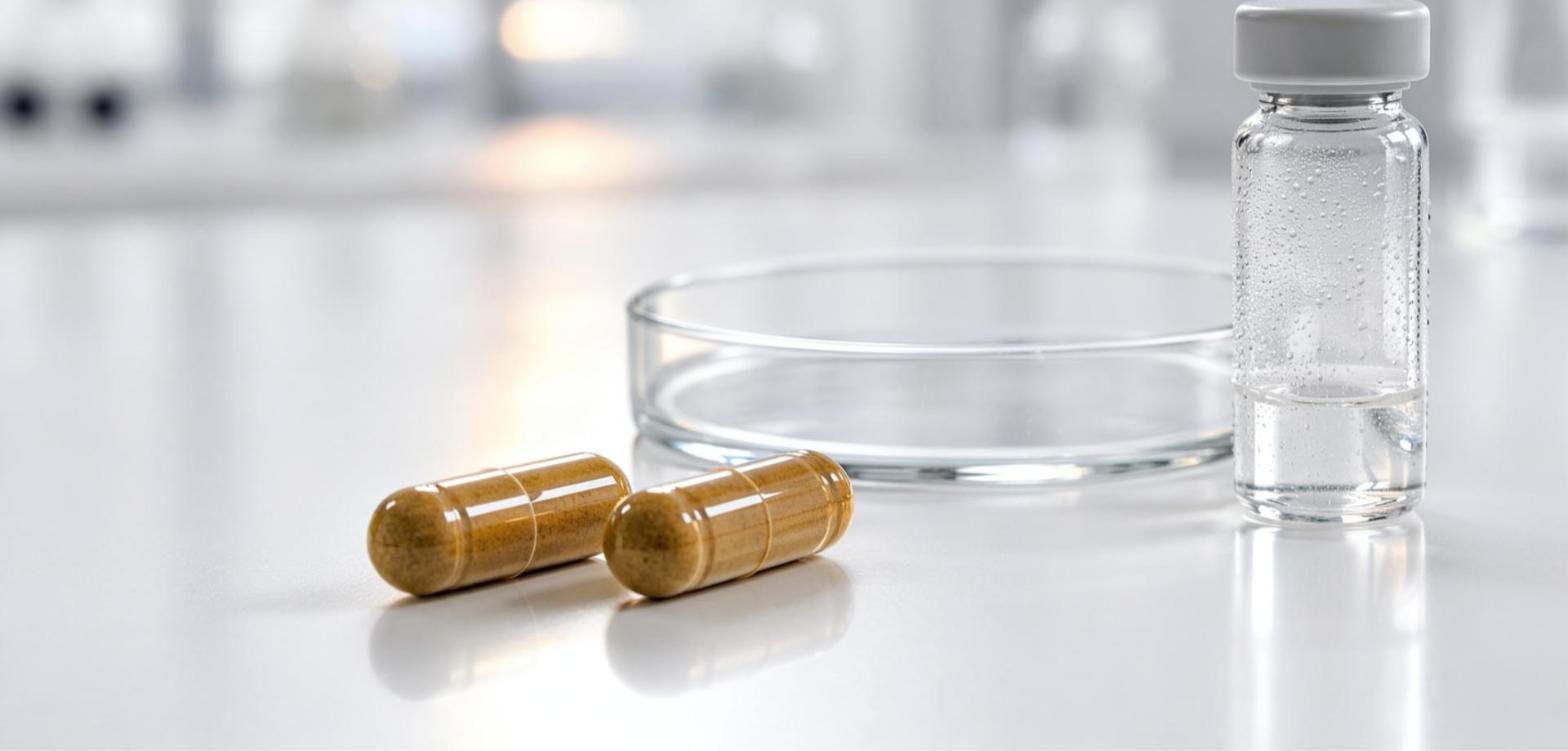
Akkermansia labels are confusing because brands count in different ways:
- Cells or TFU (total fluorescent units): counts all bacteria, alive or dead. Used for pasteurized products, typically 30 billion per tablet.
- AFU (active fluorescent units): counts live, active cells. Used by live products such as Pendulum, typically 100 million to 500 million per capsule.
- CFU (colony-forming units): the classic probiotic unit. Some cheap Amazon listings claim “300 billion CFU” of Akkermansia, a number that should make you suspicious rather than impressed, since the bacterium is notoriously hard to grow at scale.
The trials used 10 billion cells a day (2019) and the pasteurized MucT strain (2026). Units aren’t perfectly comparable, but a 100 million AFU live capsule is a very different product from the 10 billion cells tested in 2019. If a label doesn’t name the strain or give a count, you have no way to connect it to any study.
Who is a reasonable candidate (and who isn’t)
Based on how the trials were designed, the people most likely to get value from a pasteurized Akkermansia supplement are:
- People who have just finished a structured diet and lost a meaningful amount of weight, which is exactly the group studied in 2026.
- People tapering off or stopping a GLP-1 medication with their doctor’s input, who want every reasonable tool for the maintenance phase. This is an extrapolation, not a tested use.
- People with insulin resistance or prediabetes whose doctor is watching their glucose, given the insulin-sensitivity signal in 2019.
The trial also found that people’s starting Akkermansia levels were associated with how well their metabolism responded. You can’t easily act on that without a stool test, but it does mean some people will respond and others won’t.
Who should skip it
ConsumerLab flags caution for people with inflammatory bowel disease, because increasing Akkermansia might worsen gut inflammation, and notes animal data raising questions in colorectal cancer and Parkinson’s disease. These are early signals, not proven harms, but they’re reason enough to ask your doctor first if any apply to you. Pregnant and breastfeeding women were excluded from the European safety assessment.
And if you’re still in the active weight-loss phase, an Akkermansia supplement is a weak tool compared with diet, protein intake and, where appropriate, medication. Our guide to OTC vs prescription weight loss pills explains why the evidence gap is so large.
How to choose an Akkermansia supplement: 5 checks before you buy
The market for Akkermansia for weight loss has exploded. SPINS data reported by NutraIngredients showed Amazon sales of weight-management probiotics rising 84% in a year, from $3.3 million in 2024 to $6.4 million in 2025, and many new listings bolt the word “Akkermansia” onto a berberine or “GLP-1” blend. Use these five checks to cut through it.
- Named strain. Look for MucT (pasteurized) or WB-STR-0001 (live). “Akkermansia blend” without a strain is a red flag.
- A count you can compare. Billions of cells or TFU for pasteurized products, millions of AFU for live ones. No number, no purchase.
- Form that matches your goal. Pasteurized for maintenance, based on the 2026 trial.
- Sensible extras. Some products add green tea extract, chromium or berberine. Check each against its own evidence and dose.
- Storage and seller. Live products should arrive cold or be shelf-stable by design; buy from the brand’s official store rather than a third-party reseller.
Our step-by-step guide to reading a supplement label covers proprietary blends and serving sizes in more detail.
Products that pass the checks
Best match to the 2026 trial: the METAbiotics Weight Manager by The Akkermansia Company contains 30 billion cells of pasteurized MucT, the strain studied in both Nature Medicine trials. It also adds 200 mcg chromium and green tea extract with 100 mg EGCG; that EGCG dose is far below the 800 mg a day that EFSA linked to liver enzyme rises, but count it if you already take a green tea fat burner. See our deep dives on chromium picolinate and green tea extract.
If you want a live probiotic: Pendulum Akkermansia uses the live WB-STR-0001 strain with chicory inulin. It’s the most established live option in the US, but remember it has not been tested for weight maintenance.
Can you raise your own Akkermansia without a supplement?
Partly, and it’s cheap to try. Akkermansia feeds on the mucus lining of your gut, but certain foods appear to help it flourish.
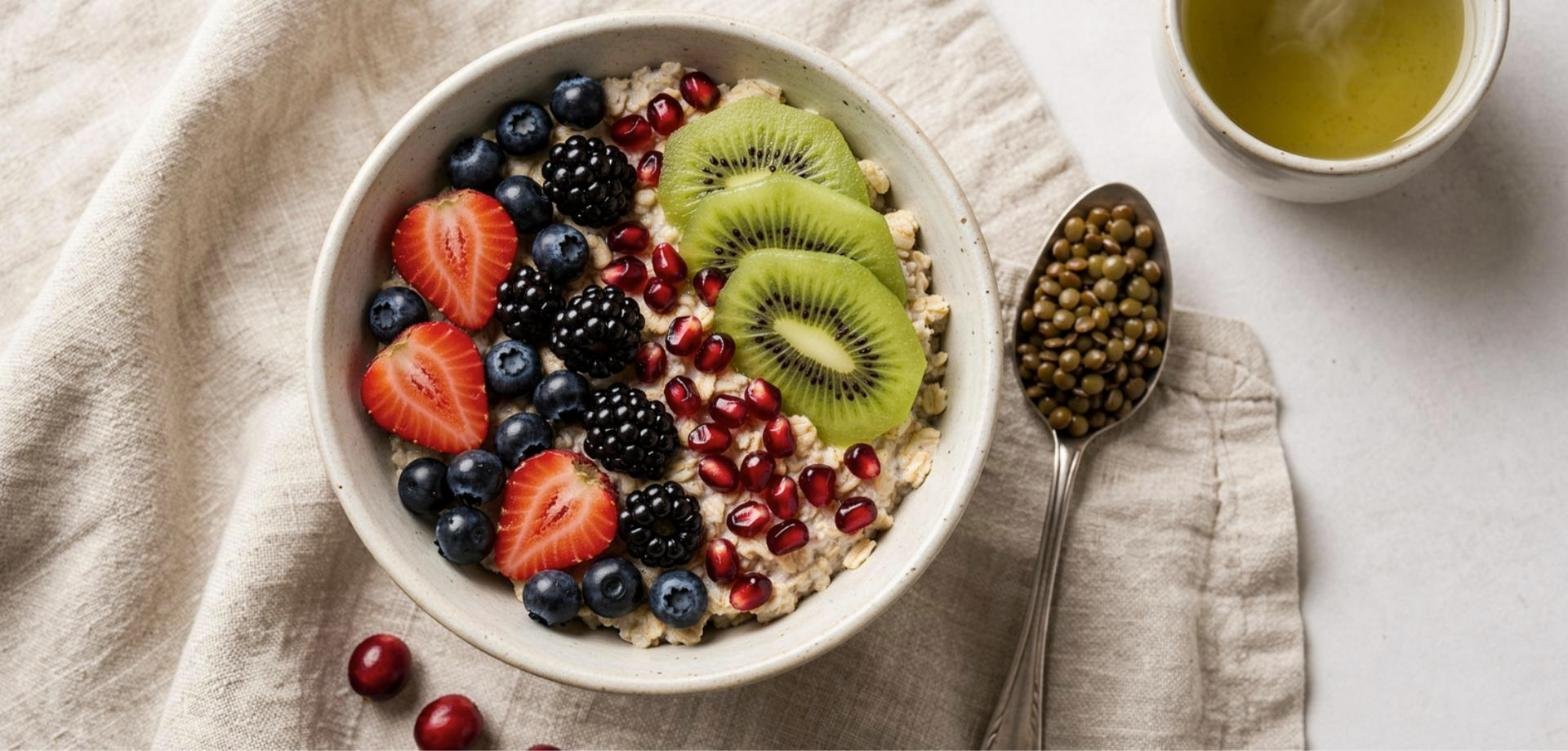
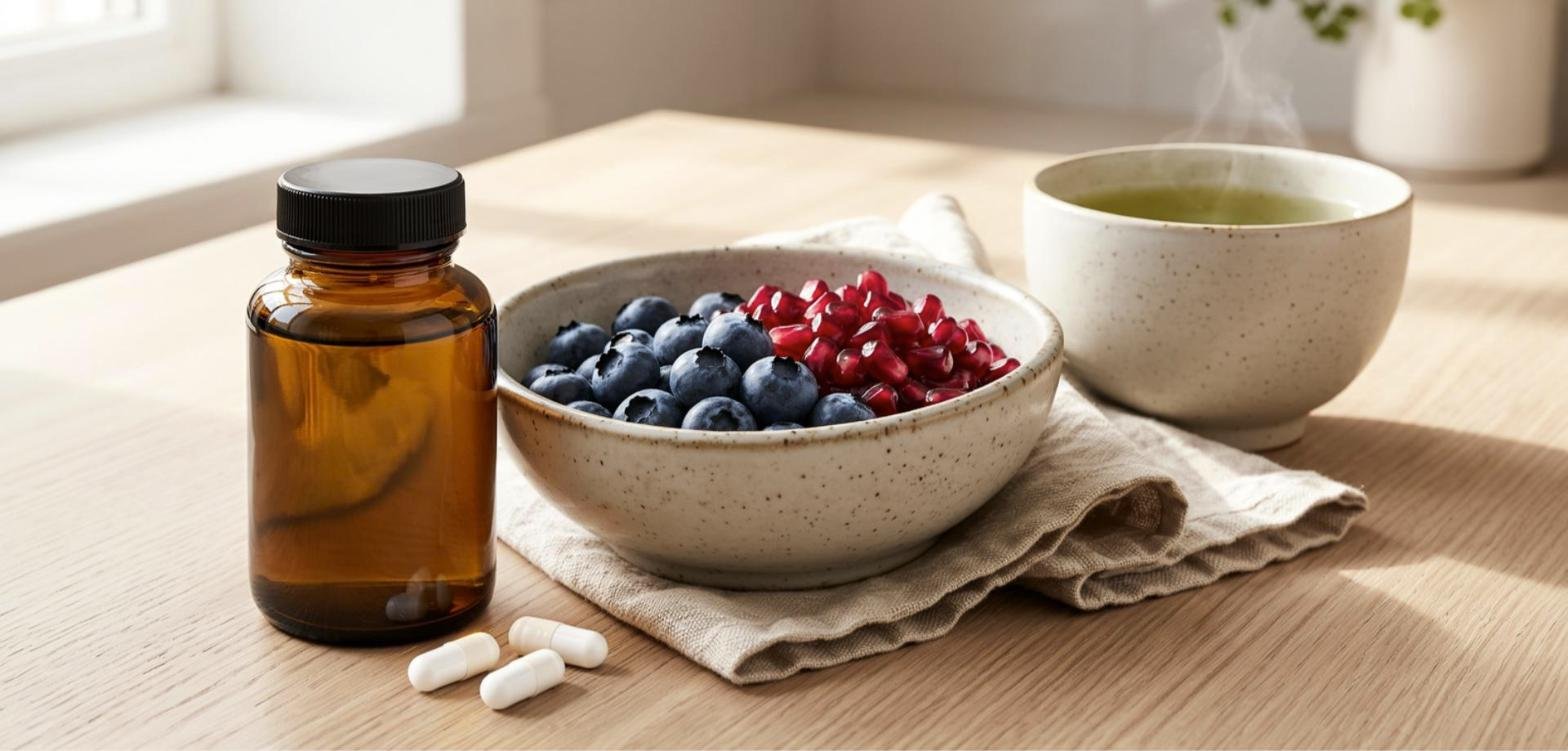
- Polyphenol-rich foods. A 2022 review in the International Journal of Molecular Sciences found that anthocyanins (berries, pomegranate, red grapes), flavan-3-ols (green tea, cocoa) and several other polyphenol groups raise Akkermansia levels, though responses vary widely from person to person.
- Galacto-oligosaccharides (GOS). A 2024 meta-analysis of six microbiome studies with 451 participants found that GOS increased Akkermansia in healthy people. A tasteless GOS powder such as Bimuno GutSupp stirs into coffee or yogurt and is an inexpensive way to test this.
- Fiber in general. Lentils, oats and vegetables feed the wider community of bacteria that Akkermansia lives alongside. Our fibermaxxing guide shows how to raise fiber without the bloating.
A food-first approach to Akkermansia for weight loss won’t replicate the trial dose, but it costs little, carries no supplement risk and supports the same gut environment.
Safety, side effects and how long to give it
In the trials, Akkermansia was well tolerated, which is one point in its favor over stimulant-based diet pills. The 2019 pilot found no changes in liver, kidney or inflammation markers, and the 2026 trial reported no serious treatment-related adverse events. Some users of live products report mild gas or loose stools in the first week, which is common with any new probiotic or prebiotic fiber.
Give a pasteurized Akkermansia product at least three months before judging it. The 2019 trial ran for three months and the 2026 maintenance phase for six. Judge it on the right metric: not whether the scale drops, but whether your weight holds steady after a diet. A smart scale like the RENPHO Elis 2XL makes that trend easy to track without obsessing over daily swings.
If you take metformin, insulin or other glucose-lowering drugs, tell your doctor before starting, since Akkermansia’s effects on insulin sensitivity could, in theory, add to them. And if you’re on a GLP-1 medication now, focus first on the basics that protect your results, especially eating enough protein on GLP-1. Our guide to GLP-1 supplements also explains why products like berberine are often oversold as “nature’s Ozempic.”
Frequently asked questions about Akkermansia
Does Akkermansia actually help you lose weight?
Not much on its own. Earlier trials found better insulin sensitivity but no statistically significant weight loss versus placebo. The strongest evidence, a 2026 Nature Medicine trial, showed that pasteurized Akkermansia helped people regain about 2 kg less over six months after a strict diet, so it looks more useful for maintenance than for losing weight.
Is pasteurized or live Akkermansia better for weight loss?
For weight maintenance, pasteurized Akkermansia has the better evidence. Both Nature Medicine trials that showed metabolic or maintenance benefits used the pasteurized MucT strain. Live products use a different strain that has not been tested for weight maintenance.
How long does it take for Akkermansia to work?
Plan on at least three months. The 2019 pilot ran for 12 weeks and the 2026 maintenance phase lasted 24 weeks. Judge it by whether your weight holds steady after a diet, not by quick drops on the scale.
Can you take Akkermansia with Ozempic or other GLP-1 drugs?
No trial has tested Akkermansia alongside semaglutide, tirzepatide or orforglipron, so there is no evidence it adds to their effect. It is not known to interact with them, but ask your prescriber first, especially if you also take insulin or metformin.
What are the side effects of Akkermansia supplements?
Trials reported it as well tolerated, with no serious treatment-related adverse events. Some people notice mild gas or loose stools in the first week. People with inflammatory bowel disease, and pregnant or breastfeeding women, should talk to a doctor before using it.
What foods increase Akkermansia naturally?
Polyphenol-rich foods such as berries, pomegranate, red grapes, green tea and cocoa are linked to higher Akkermansia levels, as is the prebiotic fiber GOS. Responses vary from person to person, but these foods are inexpensive and support gut health either way.
The bottom line: who should buy Akkermansia
Akkermansia for weight loss is the wrong frame; Akkermansia for weight maintenance is the right one. One solid 2026 trial showed pasteurized MucT cut weight regain by about 2 kg over six months after a strict diet. Earlier trials showed better insulin markers but no significant weight loss.
If you’ve just lost weight and want an extra edge in the maintenance phase, a pasteurized Akkermansia supplement with the MucT strain is the evidence-matched choice. Give it three months, track your weight weekly, and keep the habits that got you there. If you’re hoping a capsule will start the weight loss for you, save your money for better food and, if needed, a conversation with your doctor.